Government Assures Fuel Supplies And Seafarer Safety Amid West Asia Developments
OIL & GAS

Government Assures Fuel Supplies And Seafarer Safety Amid West Asia Developments

The Government of India has stepped up coordinated measures to maintain stability in critical sectors as developments in West Asia continue to unfold. It has prioritised uninterrupted energy supplies, safeguarded maritime operations and extended consular assistance to nationals. Central authorities are working with State and Union territory administrations to ensure timely information dissemination and operational continuity.

Refineries are reported to be operating at high capacity with adequate inventories of petrol and diesel, and domestic LPG production has been increased to support consumption. The Government has reduced excise duties on petrol and diesel by Rs 10 per litre and imposed export levies of Rs 21.5 per litre on diesel and Rs 29.5 per litre on aviation turbine fuel to protect domestic availability. Citizens have been urged not to act on rumours and State and Union territory governments have been requested to hold regular press briefings.

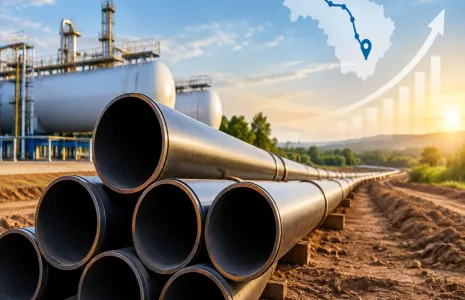
Domestic piped natural gas (PNG) and compressed natural gas for transport have been prioritised for one hundred per cent supplies while industrial and commercial grid consumers are receiving around eighty per cent of their average use. City Gas Distribution (CGD) entities have been directed to prioritise connections for commercial establishments and incentives have been offered by several CGD companies. The Petroleum and Natural Gas Regulatory Board (PNGRB) has asked CGD firms to connect residential institutions within five days where pipelines exist and the National PNG Drive 2.0 has been extended to 30 June 2026. During March more than 0.31 mn connections were gasified and a further 0.27 mn new connections are being gasified.

Supply of domestic liquefied petroleum gas has been sustained with online bookings rising to ninety-two per cent and Delivery Authentication Code (DAC) deliveries increasing from fifty-three per cent to eighty-three per cent. Since 1 March an average of 5 mn domestic LPG cylinders per day have been delivered by public sector companies. Commercial allocations have been adjusted to prioritise essential services and industries and an additional 48,000 kL of kerosene has been allocated for cooking and lighting where required. Five kilogram (kg) FTL cylinders totalling 0.32 mn have been sold to migrant labourers since 23 March, with 63,000 sold yesterday.

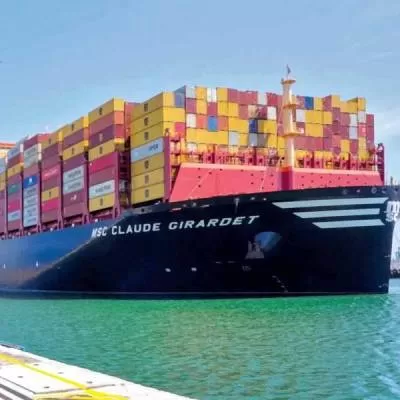
Maritime operations and seafarer welfare continue to be monitored and facilitated, with safe repatriation of over 959 seafarers so far and nine in the last 24 hours. Port operations across the country remain normal and enforcement action against hoarding and black marketing has continued, with more than 3,000 raids conducted, around 3,000 surprise inspections and some 540 show cause notices issued. The Government has reiterated advice to avoid panic buying, use digital LPG booking channels and conserve energy in daily use.

The Government of India has stepped up coordinated measures to maintain stability in critical sectors as developments in West Asia continue to unfold. It has prioritised uninterrupted energy supplies, safeguarded maritime operations and extended consular assistance to nationals. Central authorities are working with State and Union territory administrations to ensure timely information dissemination and operational continuity. Refineries are reported to be operating at high capacity with adequate inventories of petrol and diesel, and domestic LPG production has been increased to support consumption. The Government has reduced excise duties on petrol and diesel by Rs 10 per litre and imposed export levies of Rs 21.5 per litre on diesel and Rs 29.5 per litre on aviation turbine fuel to protect domestic availability. Citizens have been urged not to act on rumours and State and Union territory governments have been requested to hold regular press briefings. Domestic piped natural gas (PNG) and compressed natural gas for transport have been prioritised for one hundred per cent supplies while industrial and commercial grid consumers are receiving around eighty per cent of their average use. City Gas Distribution (CGD) entities have been directed to prioritise connections for commercial establishments and incentives have been offered by several CGD companies. The Petroleum and Natural Gas Regulatory Board (PNGRB) has asked CGD firms to connect residential institutions within five days where pipelines exist and the National PNG Drive 2.0 has been extended to 30 June 2026. During March more than 0.31 mn connections were gasified and a further 0.27 mn new connections are being gasified. Supply of domestic liquefied petroleum gas has been sustained with online bookings rising to ninety-two per cent and Delivery Authentication Code (DAC) deliveries increasing from fifty-three per cent to eighty-three per cent. Since 1 March an average of 5 mn domestic LPG cylinders per day have been delivered by public sector companies. Commercial allocations have been adjusted to prioritise essential services and industries and an additional 48,000 kL of kerosene has been allocated for cooking and lighting where required. Five kilogram (kg) FTL cylinders totalling 0.32 mn have been sold to migrant labourers since 23 March, with 63,000 sold yesterday. Maritime operations and seafarer welfare continue to be monitored and facilitated, with safe repatriation of over 959 seafarers so far and nine in the last 24 hours. Port operations across the country remain normal and enforcement action against hoarding and black marketing has continued, with more than 3,000 raids conducted, around 3,000 surprise inspections and some 540 show cause notices issued. The Government has reiterated advice to avoid panic buying, use digital LPG booking channels and conserve energy in daily use.

Related Stories

Gold Stories

Next Story
Resources

Schindler named among Forbes’ World’s Best Employers 2026

Schindler has been named among Forbes’ World’s Best Employers 2026, a global ranking recognising companies for their workplace environments.Compiled by Forbes in partnership with Statista, the ranking is based on independent employee feedback, including whether employees would recommend their organisation to friends and family.The company said the recognition reflected its focus on creating a workplace where employees can develop their expertise and build careers. ..

Next Story
Infrastructure Urban

India needs an export-execution mindset: Vishesh Jain

Interview with Vishesh Jain, Founder & CEO, EximpleWhat gaps in India’s global trade ecosystem led you to build Eximple, and what problem did you see businesses struggling with most?Eximple came out of a problem that all three founders had seen from different choke points in the trade ecosystem. India has millions of MSMEs and manufacturers, and many of them can make products that are genuinely competitive on quality. Yet only a small fraction is able to build meaningful international businesses. In our experience, the gap is usually not manufacturing capability; it is the ability to exe..

Next Story
Building Material

Nuvoco reports 13.5% revenue growth in Q2 FY27

Nuvoco Vistas Corp. Ltd. reported consolidated revenue of Rs 27.9 billion for Q2 FY27, up 13.5% year on year. Cement sales volume rose 9% to 4.7 million tonnes (MMT), while EBITDA increased 11% to Rs 4.11 billion.The company said it began its cement operations in 2014 with a 2.3 MMT per annum (MMTPA) operation at Nimbol. It now aims to reach 35 MMTPA of cement capacity by FY28, nearly 15 times its initial capacity. Its portfolio spans cement, ready-mix concrete and modern building materials.On sustainability and cost efficiency, Nuvoco partnered with CleanMax for a 46.4 MW wind-solar hybrid re..

Advertisement

Subscribe to Our Newsletter

Get daily newsletters around different themes from Construction world.

STAY CONNECTED

Advertisement

SPECIAL OFFER
QR Code