

Gurugram To Control Streetlights Via Mobile App
ECONOMY & POLICY

Gurugram To Control Streetlights Via Mobile App

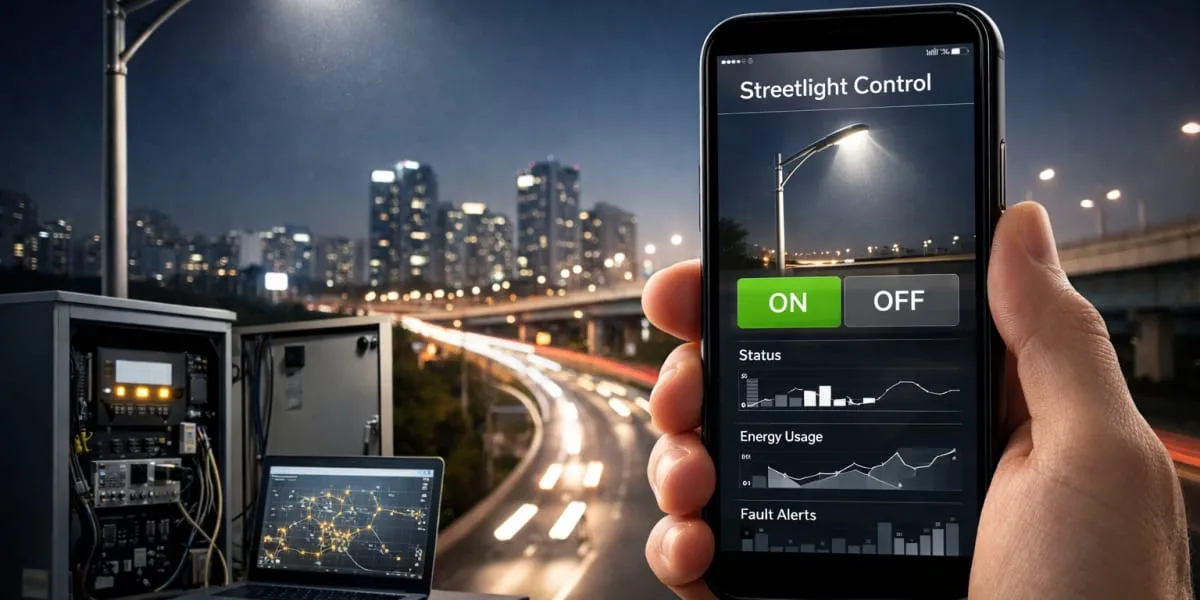
The Municipal Corporation of Gurugram has announced a mobile app based system to operate and monitor the city streetlighting network as part of a smart city upgrade. The initiative will bring 0.112 million streetlights under digital control, replacing the previous practice in which workers manually switched lights across different sectors. The programme is intended to improve maintenance efficiency and strengthen the digital infrastructure of the city. The move aligns with broader urban digitalisation efforts in the region.

The platform will allow officials to operate the streetlights remotely from a central control centre and to manage multiple units simultaneously. Scheduling will be automated to follow sunset and sunrise timings so that lights switch on and off precisely and electricity wastage is reduced. Continuous monitoring will record electricity consumption and lighting performance across the network. Operators will be able to implement grouped commands and remote diagnostics.

About 20,000 lights are already connected to the centralised control and monitoring system through 798 control panels installed across sectors and road networks. Officials have approved the installation of 500 additional control panels which are expected to connect nearly 50,000 more streetlights to the centralised system. The tender process for panel installation has commenced and work is planned to begin after final approvals and contractor selection. Authorities expect phased roll out to limit disruption during installation.

The centralised system will generate instant alerts when a light fails, enabling maintenance teams to diagnose and resolve faults quickly rather than awaiting public complaints. Over time the automated schedules and remote operations are anticipated to address longstanding operational challenges such as lights remaining on during daylight or off at night, which have posed safety concerns for residents and motorists. The project is presented as a step towards more resilient and efficient urban lighting management. Officials describe the scheme as improving both service reliability and energy use.

The Municipal Corporation of Gurugram has announced a mobile app based system to operate and monitor the city streetlighting network as part of a smart city upgrade. The initiative will bring 0.112 million streetlights under digital control, replacing the previous practice in which workers manually switched lights across different sectors. The programme is intended to improve maintenance efficiency and strengthen the digital infrastructure of the city. The move aligns with broader urban digitalisation efforts in the region. The platform will allow officials to operate the streetlights remotely from a central control centre and to manage multiple units simultaneously. Scheduling will be automated to follow sunset and sunrise timings so that lights switch on and off precisely and electricity wastage is reduced. Continuous monitoring will record electricity consumption and lighting performance across the network. Operators will be able to implement grouped commands and remote diagnostics. About 20,000 lights are already connected to the centralised control and monitoring system through 798 control panels installed across sectors and road networks. Officials have approved the installation of 500 additional control panels which are expected to connect nearly 50,000 more streetlights to the centralised system. The tender process for panel installation has commenced and work is planned to begin after final approvals and contractor selection. Authorities expect phased roll out to limit disruption during installation. The centralised system will generate instant alerts when a light fails, enabling maintenance teams to diagnose and resolve faults quickly rather than awaiting public complaints. Over time the automated schedules and remote operations are anticipated to address longstanding operational challenges such as lights remaining on during daylight or off at night, which have posed safety concerns for residents and motorists. The project is presented as a step towards more resilient and efficient urban lighting management. Officials describe the scheme as improving both service reliability and energy use.

Next Story
Building Material

Enlight Metals to Expand Raipur Plant Capacity

Enlight Metals has announced plans to expand the production capacity of its Raipur manufacturing facility from around 1,200 tonnes to nearly 4,000 tonnes.The expansion is aimed at strengthening the company’s ability to serve rising demand across industrial, infrastructure and contract manufacturing requirements.Located in Raipur, Chhattisgarh, the facility serves as a key manufacturing hub for Enlight Metals. The planned capacity enhancement is expected to improve supply capabilities, operational efficiency and the company’s ability to handle larger project requirements.The facility includ..

Next Story
Infrastructure Urban

Hindustan Zinc Partners Sulfozyme for Zinc Park Project

Hindustan Zinc has signed a Memorandum of Understanding with Sulfozyme Agro India under its Zinc Industrial Park initiative at Khankhala in Bhilwara district, Rajasthan. The partnership aims to strengthen India’s downstream zinc sector through sustainable metal recovery, resource efficiency and industrial development.Under the agreement, Sulfozyme Agro will establish proposed operations at the Zinc Industrial Park to process zinc-based materials into value-added products for industrial and downstream applications.Hindustan Zinc will support the venture through assured raw material linkage an..

Next Story
Infrastructure Urban

Cortec MCI Technology Restores Croatia Monuments

Cortec’s Migrating Corrosion Inhibitor technology has been used in restoration works for historic monuments in Croatia, including the Church of St Donatus in Zadar and the medieval city walls of Ilok.The Church of St Donatus, one of the most significant pre-Romanesque churches in Europe, is listed in the Register of Cultural Goods of the Republic of Croatia and is under UNESCO protection. The monument required urgent rehabilitation after 3D scanning analysis identified critical issues in the church walls, main structure and roof.The reinforced concrete support structure beneath the roof, ins..

Advertisement

Subscribe to Our Newsletter

Get daily newsletters around different themes from Construction world.

STAY CONNECTED

Advertisement

Advertisement

Advertisement