+
Government Rejigs Gas Allocation Prioritising Cooking Fuels
OIL & GAS

Government Rejigs Gas Allocation Prioritising Cooking Fuels

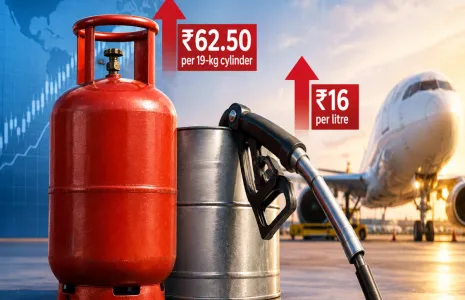
The Government has rejigged allocation of natural gas and related fuels, placing liquid petroleum gas, compressed natural gas and piped cooking gas at the highest priority to secure household cooking supplies. The move was described by officials as intended to protect domestic consumers and vulnerable households while ensuring continuity of piped networks. The reallocation entails shifting volumes away from some industrial and commercial users, a decision framed as temporary until supply stabilises.

The adjustment has already created uncertainty for the hospitality sector, with the restaurant industry reporting interruptions to regular deliveries and facing logistical difficulties in sourcing cylinders and bulk supplies. Operators have been urged to adopt conservation measures and explore alternative arrangements such as piped connections where available. Small and medium enterprises dependent on cylinder supplies are likely to encounter higher procurement costs and occasional rationing, which may affect staffing patterns and opening hours in densely populated urban centres.

The wider energy and transport markets are expected to feel secondary effects as distribution priorities change. Market observers signalled that reallocation could put pressure on downstream logistics and increase operating costs for businesses with heavy reliance on bottled gas, prompting some carriers to review fares. Airlines and other transport providers could adjust pricing to reflect higher ground handling and fuel logistics costs, an eventuality that may be transmitted to consumers through ticket price increases.

Authorities indicated that allocations will be kept under regular review and that efforts will be made to minimise disruption to industrial users while safeguarding household supplies. Infrastructure projects with tight timelines, including airport expansion work, may need scheduling adjustments to account for revised resource flows and contractor availability. Consumers were advised to moderate non-essential usage and to register grievances through designated helplines as the government seeks to rebalance supplies and restore normal distribution patterns.

The Government has rejigged allocation of natural gas and related fuels, placing liquid petroleum gas, compressed natural gas and piped cooking gas at the highest priority to secure household cooking supplies. The move was described by officials as intended to protect domestic consumers and vulnerable households while ensuring continuity of piped networks. The reallocation entails shifting volumes away from some industrial and commercial users, a decision framed as temporary until supply stabilises. The adjustment has already created uncertainty for the hospitality sector, with the restaurant industry reporting interruptions to regular deliveries and facing logistical difficulties in sourcing cylinders and bulk supplies. Operators have been urged to adopt conservation measures and explore alternative arrangements such as piped connections where available. Small and medium enterprises dependent on cylinder supplies are likely to encounter higher procurement costs and occasional rationing, which may affect staffing patterns and opening hours in densely populated urban centres. The wider energy and transport markets are expected to feel secondary effects as distribution priorities change. Market observers signalled that reallocation could put pressure on downstream logistics and increase operating costs for businesses with heavy reliance on bottled gas, prompting some carriers to review fares. Airlines and other transport providers could adjust pricing to reflect higher ground handling and fuel logistics costs, an eventuality that may be transmitted to consumers through ticket price increases. Authorities indicated that allocations will be kept under regular review and that efforts will be made to minimise disruption to industrial users while safeguarding household supplies. Infrastructure projects with tight timelines, including airport expansion work, may need scheduling adjustments to account for revised resource flows and contractor availability. Consumers were advised to moderate non-essential usage and to register grievances through designated helplines as the government seeks to rebalance supplies and restore normal distribution patterns.

Next Story
Infrastructure Urban

Implementation Status of Jal Jeevan Mission

Since August 2019 the Government has implemented Jal Jeevan Mission to provide assured potable water through household tap connections in rural India. At the start of the mission only 32.3 million (mn) rural households, representing 16.7 per cent, were reported to have tap water connections. States and union territories have reported that 125.8 mn additional rural households have since been provided with tap connections. As a result, of about 193.6 mn rural households roughly 158.2 mn, or 81.71 per cent, are reported to have tap water supply at home.\n\nThe State, district and village level st..

Next Story
Infrastructure Urban

Jal Jeevan Mission Reaches Eighty One Per Cent Rural Coverage

The Government reported substantial progress under the Jal Jeevan Mission, launched in August 2019 to provide tap water to every rural household. At launch only 32.3 million (mn) rural households had tap connections and states and Union territories reported provision of 125.8 mn additional households by March 2026. Consequently, out of about 193.6 mn rural households around 158.2 mn, or 81.71 per cent, are reported to have tap water at home. The Finance Minister announced extension of the mission until 2028 in the 2025-26 budget speech. The Swachh Bharat Mission Grameen, launched in October 20..

Next Story
Infrastructure Urban

Empowering Local Governance for Sustainable Rural Water Supply

The Ministry of Jal Shakti has aligned the Jal Jeevan Mission (JJM) with the 73rd Amendment to strengthen village level planning and community ownership of water supply. Gram Panchayats, village water and sanitation committees and Pani Samitis are to plan, implement, manage and maintain piped water systems, with gram sabha processes formalising handover and oversight. Implementation support agencies including non government organisations, community based organisations and self help groups have been empanelled to train local committees and promote women participation. Under JJM, the department ..

Advertisement

Subscribe to Our Newsletter

Get daily newsletters around different themes from Construction world.

STAY CONNECTED

Advertisement

Advertisement

Advertisement