India Faces Higher Oil Import Costs as Crude Prices Surge
OIL & GAS

India Faces Higher Oil Import Costs as Crude Prices Surge

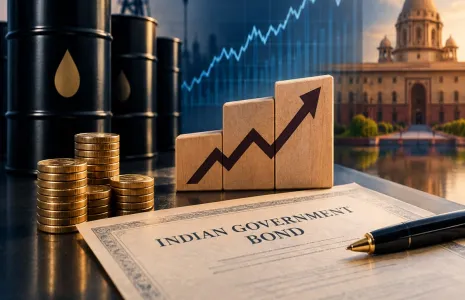
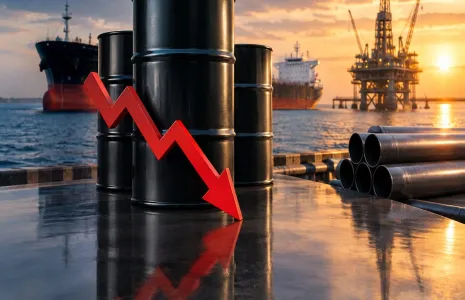
India faces a higher oil import bill as international crude prices surged, with Brent nearing USD 100 a barrel amid rising tensions in West Asia that threaten supply routes. Brent traded near USD 99 while US West Texas Intermediate was around USD 94, elevating concern for an economy that imports over 88 per cent of its crude. The reliance on seaborne oil leaves the country exposed to swings in global energy costs.

A sustained increase in crude would raise the dollar-denominated import bill and put pressure on the rupee and the trade balance, while higher international prices can feed into domestic inflation through fuel, transport and other energy-related costs. Retail petrol and diesel prices have been frozen for more than three months after the last revision on May 25, when petrol was raised by Rs 2.61 a litre and diesel by Rs 2.71 a litre.

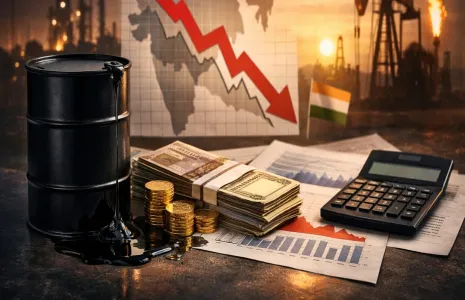
Fuel distributors have absorbed part of the cost rise, compressing marketing margins and weighing on profitability at major retailers. India’s crude oil import bill surged by over 56 per cent in April–July to USD 63.4 billion (bn) from USD 40.5 billion in the same period last year, according to the Petroleum Planning and Analysis Cell. Volumes were almost unchanged at 81.9 million (mn) tonnes in the first five months of the fiscal year, compared with 81.5 million (mn) tonnes last year.

Traffic through the Strait of Hormuz has slowed sharply, reducing West Asian shipments from roughly 18 million (mn) barrels a day to about 11 million (mn) barrels a day and altering regional supply dynamics. Analysis suggests Asia Pacific oil demand will remain below pre-conflict levels until late 2027 after a projected decline of 1.24 million (mn) barrels per day in 2026, and extended hostilities would further tighten markets. For India a prolonged period of elevated crude would pose greater challenges for inflation, the current account and the currency.

India faces a higher oil import bill as international crude prices surged, with Brent nearing USD 100 a barrel amid rising tensions in West Asia that threaten supply routes. Brent traded near USD 99 while US West Texas Intermediate was around USD 94, elevating concern for an economy that imports over 88 per cent of its crude. The reliance on seaborne oil leaves the country exposed to swings in global energy costs. A sustained increase in crude would raise the dollar-denominated import bill and put pressure on the rupee and the trade balance, while higher international prices can feed into domestic inflation through fuel, transport and other energy-related costs. Retail petrol and diesel prices have been frozen for more than three months after the last revision on May 25, when petrol was raised by Rs 2.61 a litre and diesel by Rs 2.71 a litre. Fuel distributors have absorbed part of the cost rise, compressing marketing margins and weighing on profitability at major retailers. India’s crude oil import bill surged by over 56 per cent in April–July to USD 63.4 billion (bn) from USD 40.5 billion in the same period last year, according to the Petroleum Planning and Analysis Cell. Volumes were almost unchanged at 81.9 million (mn) tonnes in the first five months of the fiscal year, compared with 81.5 million (mn) tonnes last year. Traffic through the Strait of Hormuz has slowed sharply, reducing West Asian shipments from roughly 18 million (mn) barrels a day to about 11 million (mn) barrels a day and altering regional supply dynamics. Analysis suggests Asia Pacific oil demand will remain below pre-conflict levels until late 2027 after a projected decline of 1.24 million (mn) barrels per day in 2026, and extended hostilities would further tighten markets. For India a prolonged period of elevated crude would pose greater challenges for inflation, the current account and the currency.

Related Stories

Gold Stories
Next Story
Infrastructure Urban

India needs an export-execution mindset: Vishesh Jain

Interview with Vishesh Jain, Founder & CEO, EximpleWhat gaps in India’s global trade ecosystem led you to build Eximple, and what problem did you see businesses struggling with most?Eximple came out of a problem that all three founders had seen from different choke points in the trade ecosystem. India has millions of MSMEs and manufacturers, and many of them can make products that are genuinely competitive on quality. Yet only a small fraction is able to build meaningful international businesses. In our experience, the gap is usually not manufacturing capability; it is the ability to exe..

Next Story
Building Material

Nuvoco reports 13.5% revenue growth in Q2 FY27

Nuvoco Vistas Corp. Ltd. reported consolidated revenue of Rs 27.9 billion for Q2 FY27, up 13.5% year on year. Cement sales volume rose 9% to 4.7 million tonnes (MMT), while EBITDA increased 11% to Rs 4.11 billion.The company said it began its cement operations in 2014 with a 2.3 MMT per annum (MMTPA) operation at Nimbol. It now aims to reach 35 MMTPA of cement capacity by FY28, nearly 15 times its initial capacity. Its portfolio spans cement, ready-mix concrete and modern building materials.On sustainability and cost efficiency, Nuvoco partnered with CleanMax for a 46.4 MW wind-solar hybrid re..

Next Story
Infrastructure Urban

Thermax showcases water technologies at WETEX 2026

Thermax Limited showcased its seawater desalination and industrial water recovery technologies at the Water, Energy, Technology and Environment Exhibition 2026 (WETEX), held at Dubai World Trade Centre from October 20 to 22. Its digital showcase featured solutions intended to help industries secure reliable water supplies, improve resource efficiency and reduce environmental impact.Dubai Electricity and Water Authority’s (DEWA) financial annual report stated that desalinated water production rose 5.51% year on year in the first quarter of 2026 to 37.57 billion imperial gallons. By June 2026,..

Advertisement

Subscribe to Our Newsletter

Get daily newsletters around different themes from Construction world.

STAY CONNECTED

Advertisement

SPECIAL OFFER
QR Code