

India Needs Energy Innovation To Cut Oil Import Dependence
OIL & GAS

India Needs Energy Innovation To Cut Oil Import Dependence

Arun Kumar Singh, chairman and chief executive of the Oil and Natural Gas Corporation (ONGC), said India must raise domestic oil and gas production and strengthen innovation to reduce heavy import dependence. He spoke at the MC²? Ignite Mumbai City Connect at the Indian Institute of Technology Bombay and linked energy self-reliance to the wider aim of Atma Nirbhar Bharat. He said energy autonomy is essential for strategic resilience.

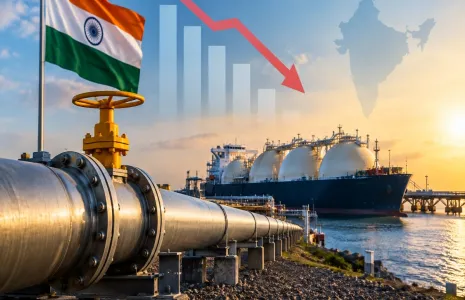
Singh noted India currently imports about 88 per cent of its oil requirement and 50 per cent of its gas requirement, making higher domestic output critical to national security and economic stability. He said technological advances will be important for finding large oil and gas reserves and for improving recovery from existing fields. He added that the sector must adopt new tools and methods to boost supply.

He pointed out that only zero point two per cent of the startup ecosystem works in oil and gas and around two per cent operates in energy more broadly, and he urged far greater participation. Singh said public sector energy companies have pooled resources under the MC²? initiative to identify priority areas and to attract startups and young innovators for technological solutions. The programme, organised by ONGC with the MC²? Foundation at IIT Bombay, will support up to 30 early-stage energy startups.

Selected startups can receive up to Rs 5 mn in convertible funding and a further Rs 15 mn in milestone-based funding, taking potential support to Rs 20 mn per startup, the company said. The event also saw a tripartite memorandum of understanding between the MC²? Foundation, IIT Bombay and the Society for Innovation and Entrepreneurship, IIT Bombay to back research, pilots and commercial deployment of energy technologies. Institute of Chemical Technology Mumbai vice-chancellor Aniruddha B Pandit urged changes to procurement rules of oil public sector undertakings to ease market access for new technologies and described the registration requirement as a catch-22 that hinders innovation.

Arun Kumar Singh, chairman and chief executive of the Oil and Natural Gas Corporation (ONGC), said India must raise domestic oil and gas production and strengthen innovation to reduce heavy import dependence. He spoke at the MC²? Ignite Mumbai City Connect at the Indian Institute of Technology Bombay and linked energy self-reliance to the wider aim of Atma Nirbhar Bharat. He said energy autonomy is essential for strategic resilience. Singh noted India currently imports about 88 per cent of its oil requirement and 50 per cent of its gas requirement, making higher domestic output critical to national security and economic stability. He said technological advances will be important for finding large oil and gas reserves and for improving recovery from existing fields. He added that the sector must adopt new tools and methods to boost supply. He pointed out that only zero point two per cent of the startup ecosystem works in oil and gas and around two per cent operates in energy more broadly, and he urged far greater participation. Singh said public sector energy companies have pooled resources under the MC²? initiative to identify priority areas and to attract startups and young innovators for technological solutions. The programme, organised by ONGC with the MC²? Foundation at IIT Bombay, will support up to 30 early-stage energy startups. Selected startups can receive up to Rs 5 mn in convertible funding and a further Rs 15 mn in milestone-based funding, taking potential support to Rs 20 mn per startup, the company said. The event also saw a tripartite memorandum of understanding between the MC²? Foundation, IIT Bombay and the Society for Innovation and Entrepreneurship, IIT Bombay to back research, pilots and commercial deployment of energy technologies. Institute of Chemical Technology Mumbai vice-chancellor Aniruddha B Pandit urged changes to procurement rules of oil public sector undertakings to ease market access for new technologies and described the registration requirement as a catch-22 that hinders innovation.

Related Stories

Gold Stories
Next Story
Real Estate

Landmark Group plans Rs 150 billion NCR expansion

Landmark Group has announced expansion plans across two real estate projects in the National Capital Region (NCR), with a combined estimated sales potential of Rs 150 billion. The projects include Landmark One, a 2.1 million sq ft corporate office development on Golf Course Extension Road in Gurugram, and a proposed integrated hospitality, commercial and residential development on Dwarka Expressway.Landmark One has an estimated sales value of Rs 40 billion. The project involves an estimated construction investment of Rs 10 billion, apart from the underlying land, currently valued at around Rs ..
Next Story
Real Estate

RMZ entities secure 5-Star ratings in GRESB 2026

RMZ has been recognised as a Global and Regional Sector Leader in the 2026 Global Real Estate Sustainability Benchmark (GRESB) Real Estate Development Assessment, with three of its entities scoring 99.6 out of 100. RMZ Nexus LLP, Millenia Realtors Private Limited and Infralogix LLP secured 5-Star ratings in their respective categories across the Office and Industrial sectors.In the 2026 Development Benchmark, RMZ Nexus LLP and Millenia Realtors Private Limited were named Sector Leaders in the Office and Office Non-Listed categories in Asia. Infralogix LLP received the distinction in the Indust..

Next Story
Products

Schneider Electric deploys smart building systems at Jupiter Hospitals

Schneider Electric has partnered with Jupiter Hospitals to deploy connected building technologies aimed at improving energy efficiency, patient comfort and operational performance across its hospital campus. The deployment of its EcoStruxure Building Operation platform and SpaceLogic thermostats is helping the hospital achieve energy savings of up to 28 per cent, according to the company.With heating, ventilation and air-conditioning (HVAC) systems accounting for nearly 60 per cent of the hospital's total energy consumption, improving efficiency while maintaining the conditions required for pa..

Advertisement

Subscribe to Our Newsletter

Get daily newsletters around different themes from Construction world.

STAY CONNECTED

Advertisement

SPECIAL OFFER
QR Code