Panel Urges Excise Duty Removal On CNG And GST For Natural Gas
OIL & GAS

Panel Urges Excise Duty Removal On CNG And GST For Natural Gas

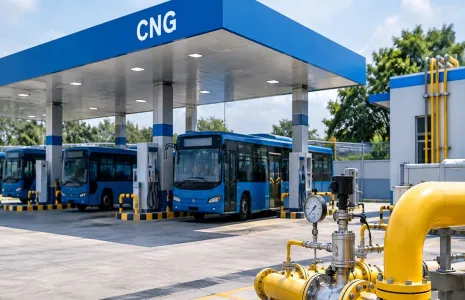
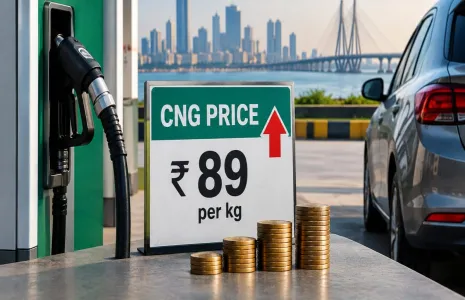
A high-level government committee has recommended removal of excise duty on the compression of natural gas to accelerate the use of gas across transport and industry. The Petroleum and Natural Gas Regulatory Board (PNGRB) published the committee report recommending that compression arising from liquefied natural gas (LNG) be relieved of excise, and that compressed natural gas (CNG) and liquid CNG become more financially attractive to consumers and businesses. The panel positioned the measures as timely amid concerns over energy supply.

The committee further proposed bringing natural gas within the goods and services tax (GST) framework in a lower tax bracket with full input tax credit to ensure uniform taxation and to reduce cascading levies. The report recommended that input tax credit be extended to sectors such as power and petrochemicals even where outputs remain outside GST, and that states should be encouraged to lower value added tax (VAT) on natural gas until a GST solution is in place. The move was framed as a way to promote interstate commerce.

Regarding imports, the panel urged extension of exemptions from basic customs duty and the social welfare surcharge on LNG to captive power plants and the city gas distribution (CGD) sector, mirroring treatment available to power generation firms. The committee noted that such measures would support fuel security as the country contends with supply disruptions linked to the West Asia conflict and would lower costs for entities that use imported LNG for captive generation or distribution.

In parallel, PNGRB instructed CGD entities to ensure pipeline connectivity for 19 priority geographical areas (GAs) and to address operational bottlenecks. CGD firms reported delays in land handovers, procurement of metering equipment and permissions from statutory authorities including the National Highways Authority of India (NHAI) and the Petroleum and Explosives Safety Organisation (PESO). The panel regarded resolving these impediments and the proposed tax and duty reforms as complementary steps to broaden adoption of gas across sectors.

A high-level government committee has recommended removal of excise duty on the compression of natural gas to accelerate the use of gas across transport and industry. The Petroleum and Natural Gas Regulatory Board (PNGRB) published the committee report recommending that compression arising from liquefied natural gas (LNG) be relieved of excise, and that compressed natural gas (CNG) and liquid CNG become more financially attractive to consumers and businesses. The panel positioned the measures as timely amid concerns over energy supply. The committee further proposed bringing natural gas within the goods and services tax (GST) framework in a lower tax bracket with full input tax credit to ensure uniform taxation and to reduce cascading levies. The report recommended that input tax credit be extended to sectors such as power and petrochemicals even where outputs remain outside GST, and that states should be encouraged to lower value added tax (VAT) on natural gas until a GST solution is in place. The move was framed as a way to promote interstate commerce. Regarding imports, the panel urged extension of exemptions from basic customs duty and the social welfare surcharge on LNG to captive power plants and the city gas distribution (CGD) sector, mirroring treatment available to power generation firms. The committee noted that such measures would support fuel security as the country contends with supply disruptions linked to the West Asia conflict and would lower costs for entities that use imported LNG for captive generation or distribution. In parallel, PNGRB instructed CGD entities to ensure pipeline connectivity for 19 priority geographical areas (GAs) and to address operational bottlenecks. CGD firms reported delays in land handovers, procurement of metering equipment and permissions from statutory authorities including the National Highways Authority of India (NHAI) and the Petroleum and Explosives Safety Organisation (PESO). The panel regarded resolving these impediments and the proposed tax and duty reforms as complementary steps to broaden adoption of gas across sectors.

Next Story
Resources

Anant Raj Appoints Anish Sarin as Director

Anant Raj has appointed Anish Sarin as Director on its Board, marking a key step in the company’s leadership transition and long-term growth strategy. The announcement was made during the company’s Q4 and FY26 results declaration, reflecting the induction of next-generation leadership as the company expands across real estate, cloud infrastructure and data centre businesses. Anish Sarin, grandson of veteran industrialist Ashok Sarin, represents the emerging leadership at Anant Raj. Educated at Regent’s University London, he brings a global business outlook along with a strong focus on t..

Next Story
Technology

Vedanta eyes AI-led value growth

Vedanta Group expects to unlock USD 300–400 million in additional value over the next three years through large-scale deployment of AI-led industrial technologies across its businesses. The group said its V-Spark DeepTech Ventures platform has already delivered nearly four times return on investment since inception.Vedanta is scaling AI, predictive analytics, Industrial Internet of Things, digital twins, machine learning, automation and connected manufacturing technologies across its metals, mining, energy and industrial operations. These deployments are aimed at improving productivity, lowe..

Next Story
Infrastructure Urban

Hindustan Zinc inks pact with Group Nirmal

Hindustan Zinc has signed an MoU with Group Nirmal to set up a zinc wire manufacturing facility at its Zinc Industrial Park in Khankhala, Bhilwara district, Rajasthan. The partnership will expand downstream manufacturing activity and support value-added zinc applications in India.Under the agreement, Group Nirmal will manufacture zinc wire products using Hindustan Zinc’s Special High Grade zinc. The products will cater to infrastructure, renewable energy, automotive and industrial engineering sectors.Zinc wire is used in thermal spray coating and metallising processes to protect steel struct..

Advertisement

Subscribe to Our Newsletter

Get daily newsletters around different themes from Construction world.

STAY CONNECTED

Advertisement

Advertisement

Advertisement