

Retail Leasing Touches 3.1 Million sq ft in Q1 2026
Real Estate

Retail Leasing Touches 3.1 Million sq ft in Q1 2026

India’s retail sector recorded steady demand in Q1 2026, with gross leasing reaching 3.1 million sq ft across the top seven cities, according to JLL. While leasing activity moderated 15% quarter-on-quarter due to limited new institutional-grade mall supply, it still posted a marginal 1% year-on-year rise, indicating continued resilience in retailer expansion.

Healthy demand also led to a 40-basis point drop in mall vacancy levels, with overall vacancy reducing from 12.3% in the previous quarter to 11.9%. JLL attributed the quarterly moderation largely to the absence of sizeable new mall supply following a strong 2.5 million sq ft infusion in Q4 2025. Only 0.25 million sq ft of new mall supply was added in Q1 2026, taking total retail stock to 92.4 million sq ft.

“India’s retail sector is navigating a pivotal transition with remarkable agility. First quarter’s 3.1 million sq. ft leasing, anchored by a 48% high street surge and domestic retailers commanding 79% market share, reflects strategic format diversification as supply constraints drive innovation,” said Rahul Arora, Head - Office Leasing & Retail Services, Senior Managing Director (Karnataka, Kerala), India, JLL.

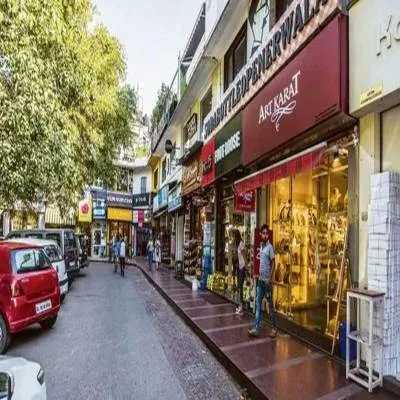
With limited mall supply, high streets emerged as the leading leasing format, accounting for 48% of transactions, while malls contributed 40%. Mumbai led leasing activity with a 26% share, followed by Bengaluru and Delhi NCR at 21% each. Together, the three cities accounted for 68% of total leasing. Kolkata captured 10%, while Hyderabad, Chennai and Pune contributed 9%, 7% and 6% respectively.

Fashion and apparel continued to dominate category demand, while entertainment emerged as the second-largest segment with a 16% share. Food and beverage followed at 15%, reflecting sustained expansion by restaurant and café operators.

Domestic retailers contributed 79% of total leasing, driven by strong activity from D2C brands. International retailers also recorded a 48% year-on-year rise in leasing, supported by India’s growing consumption demand.

JLL noted that a 46.1 million sq ft institutional-grade pipeline is expected between 2026 and 2030, positioning India’s retail market for a major growth cycle over the coming years.

India’s retail sector recorded steady demand in Q1 2026, with gross leasing reaching 3.1 million sq ft across the top seven cities, according to JLL. While leasing activity moderated 15% quarter-on-quarter due to limited new institutional-grade mall supply, it still posted a marginal 1% year-on-year rise, indicating continued resilience in retailer expansion.Healthy demand also led to a 40-basis point drop in mall vacancy levels, with overall vacancy reducing from 12.3% in the previous quarter to 11.9%. JLL attributed the quarterly moderation largely to the absence of sizeable new mall supply following a strong 2.5 million sq ft infusion in Q4 2025. Only 0.25 million sq ft of new mall supply was added in Q1 2026, taking total retail stock to 92.4 million sq ft.“India’s retail sector is navigating a pivotal transition with remarkable agility. First quarter’s 3.1 million sq. ft leasing, anchored by a 48% high street surge and domestic retailers commanding 79% market share, reflects strategic format diversification as supply constraints drive innovation,” said Rahul Arora, Head - Office Leasing & Retail Services, Senior Managing Director (Karnataka, Kerala), India, JLL.With limited mall supply, high streets emerged as the leading leasing format, accounting for 48% of transactions, while malls contributed 40%. Mumbai led leasing activity with a 26% share, followed by Bengaluru and Delhi NCR at 21% each. Together, the three cities accounted for 68% of total leasing. Kolkata captured 10%, while Hyderabad, Chennai and Pune contributed 9%, 7% and 6% respectively.Fashion and apparel continued to dominate category demand, while entertainment emerged as the second-largest segment with a 16% share. Food and beverage followed at 15%, reflecting sustained expansion by restaurant and café operators.Domestic retailers contributed 79% of total leasing, driven by strong activity from D2C brands. International retailers also recorded a 48% year-on-year rise in leasing, supported by India’s growing consumption demand.JLL noted that a 46.1 million sq ft institutional-grade pipeline is expected between 2026 and 2030, positioning India’s retail market for a major growth cycle over the coming years.

Next Story
Infrastructure Transport

MMRDA Removes 1.14 lakh m of Metro Barricades

In a bid to ease congestion and improve urban mobility during monsoon, MMRDA has undertaken one of the largest coordinated barricade removal and monsoon preparedness drives across its ongoing metro and infrastructure projects.With substantial progress achieved in viaduct and structural works across multiple metro corridors, barricades from completed stretches beneath metro viaducts are being systematically removed, restoring maximum possible road space before the monsoon. Wider carriageways across key arterial roads are expected to improve traffic flow, reduce congestion, support better rainwa..

Next Story
Infrastructure Transport

Pune Division to Remove All Diamond Crossings by Year-End

The Pune railway division has announced plans to remove all 16 diamond crossings by the end of 2026 as part of a major yard remodelling project following the derailment of a Vande Bharat Express at Pune Junction on April 27. Railway authorities said the replacements aim to improve safety and streamline train operations across the busy station. The decision followed a Central Railway finding that the accident involved a non-standard diamond crossing and highlighted the need for replacement. Regular maintenance of existing crossings will continue until the replacement work is completed. Official..

Next Story
Infrastructure Urban

Goa Declares 80 Million Square Metres No Development Zone

The Goa state government has declared 80 million square metres (mn) of land a no development zone, designating the area as protected from new construction. The notification reclassifies tracts across the state under a no development category for planning and regulatory purposes. The declaration signals a formal halt to new building permits within the defined zone. Authorities indicated that maps will be issued to show broad boundaries while detailed surveys will refine precise limits. The move transfers responsibility for enforcement to local planning authorities and relevant departments, whic..

Advertisement

Subscribe to Our Newsletter

Get daily newsletters around different themes from Construction world.

STAY CONNECTED

Advertisement

Advertisement

Advertisement