


PSERC Sets Tariff For Six MW Biomass Plant
OIL & GAS

PSERC Sets Tariff For Six MW Biomass Plant

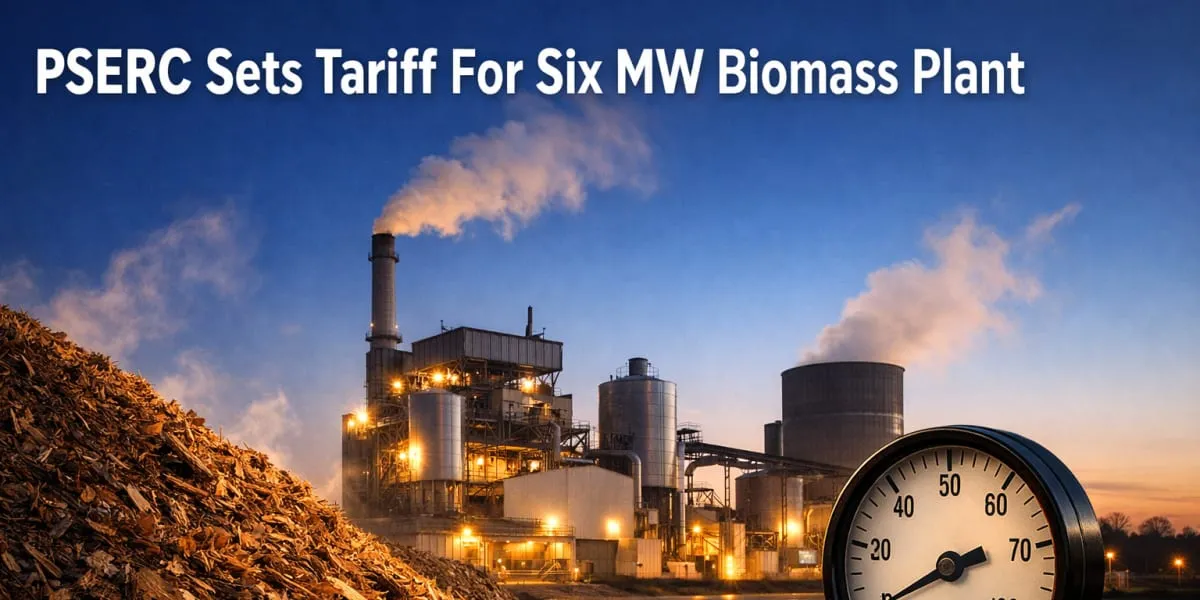
The Punjab State Electricity Regulatory Commission, vide order dated 27 March 2026 in Petition No. 59 of 2024, determined the tariff for the six megawatt (MW) biomass-based power plant of the wholly owned subsidiary Malwa Power Pvt. Ltd for an extended ten year term following expiry of the initial twenty year power purchase agreement. The plant was commissioned on 27 April 2005 and operated under a PPA dated 19 February 2004 with Punjab State Power Corporation Limited that expired on 26 April 2025, and it received an interim tariff of Rs three point five per kWh during litigation.

The Commission determined an applicable tariff of Rs five point two two four per kWh for fiscal year 2025-26, with a five per cent escalation on the variable component annually, after examining submissions and benchmarking standalone biomass independent power producers against co-generation plants. The fixed component was determined at Rs zero point nine seven per kWh which the company regards as low, and the regulator relied on earlier CERC regulations from 2012 rather than the CERC RE Regulations 2024 referenced by the company.

Between May 2025 and February 2026 the plant supplied approximately 33.7 million (mn) kWh at the interim rate and the company is entitled to recover a differential of about Rs 58.0 mn for that period. Based on projected operations at an 85 per cent plant load factor, maximum generation is projected at 65.7 mn kWh with net export of 45.32 mn kWh for fiscal 2026-27 and estimated power revenue of Rs 243.1 mn.

The biomass pellet plant at Village Gulabewala has an installed capacity of 72,000 tonne (t) per annum and at 50 per cent operating capacity is expected to produce 36,000 t and generate approximately Rs 234.0 mn annually, implying combined MPPL revenue of about Rs 477.1 mn for the year. The company indicated it is actively evaluating legal and regulatory options including an appeal to the Appellate Tribunal for Electricity to seek tariff revision and will pursue steps to protect contractual rights and commercial interests.

The Punjab State Electricity Regulatory Commission, vide order dated 27 March 2026 in Petition No. 59 of 2024, determined the tariff for the six megawatt (MW) biomass-based power plant of the wholly owned subsidiary Malwa Power Pvt. Ltd for an extended ten year term following expiry of the initial twenty year power purchase agreement. The plant was commissioned on 27 April 2005 and operated under a PPA dated 19 February 2004 with Punjab State Power Corporation Limited that expired on 26 April 2025, and it received an interim tariff of Rs three point five per kWh during litigation. The Commission determined an applicable tariff of Rs five point two two four per kWh for fiscal year 2025-26, with a five per cent escalation on the variable component annually, after examining submissions and benchmarking standalone biomass independent power producers against co-generation plants. The fixed component was determined at Rs zero point nine seven per kWh which the company regards as low, and the regulator relied on earlier CERC regulations from 2012 rather than the CERC RE Regulations 2024 referenced by the company. Between May 2025 and February 2026 the plant supplied approximately 33.7 million (mn) kWh at the interim rate and the company is entitled to recover a differential of about Rs 58.0 mn for that period. Based on projected operations at an 85 per cent plant load factor, maximum generation is projected at 65.7 mn kWh with net export of 45.32 mn kWh for fiscal 2026-27 and estimated power revenue of Rs 243.1 mn. The biomass pellet plant at Village Gulabewala has an installed capacity of 72,000 tonne (t) per annum and at 50 per cent operating capacity is expected to produce 36,000 t and generate approximately Rs 234.0 mn annually, implying combined MPPL revenue of about Rs 477.1 mn for the year. The company indicated it is actively evaluating legal and regulatory options including an appeal to the Appellate Tribunal for Electricity to seek tariff revision and will pursue steps to protect contractual rights and commercial interests.

Next Story
Infrastructure Urban

Centre Disburses Over Rs 24,610 mn in XV Finance Commission Grants

The Union Government has released XV Finance Commission tied grants during the financial year 2025–26 to rural local bodies in Chhattisgarh, Gujarat, Madhya Pradesh, Punjab and Sikkim and has released withheld portions of tied and untied grants to Himachal Pradesh, Odisha and Tripura. The total disbursal exceeded Rs 24,610 mn, with figures expressed in million (mn) thereafter. The releases cover allocations pertaining to different financial years and aim to strengthen rural local governance. State-wise disbursements included Rs 3,324.6 mn for Punjab, Rs 9,432.7 mn for Madhya Pradesh, Rs 3,47..

Next Story
Infrastructure Urban

Centre Releases Over Rs 15 bn as XV FC Grants to Rural Bodies

The Union Government has released over Rs 15 bn in grants recommended by the Fifteenth Finance Commission (XV FC) to strengthen Panchayati Raj Institutions (PRIs) and Rural Local Bodies (RLBs) in six states. The funds comprise tied and untied grants disbursed in FY 2025–26. Telangana received Rs 2.48 bn as the first instalment of untied grants for FY 2025–26, benefitting 12600 Gram Panchayats (GPs). Uttarakhand received Rs 913.1 mn as the second instalment and an additional Rs 18.4 mn of a withheld first instalment was released to a further 216 GPs. Mizoram is included among beneficiary st..

Next Story
Infrastructure Energy

Government Assures Fuel Supplies And Seafarer Safety Amid West Asia Developments

The Government of India has stepped up coordinated measures to maintain stability in critical sectors as developments in West Asia continue to unfold. It has prioritised uninterrupted energy supplies, safeguarded maritime operations and extended consular assistance to nationals. Central authorities are working with State and Union territory administrations to ensure timely information dissemination and operational continuity. Refineries are reported to be operating at high capacity with adequate inventories of petrol and diesel, and domestic LPG production has been increased to support consump..

Advertisement

Subscribe to Our Newsletter

Get daily newsletters around different themes from Construction world.

STAY CONNECTED

Advertisement

Advertisement

Advertisement