Mumbai to Double Water Supply by 2030 with Two New Plants
WATER & WASTE

Mumbai to Double Water Supply by 2030 with Two New Plants

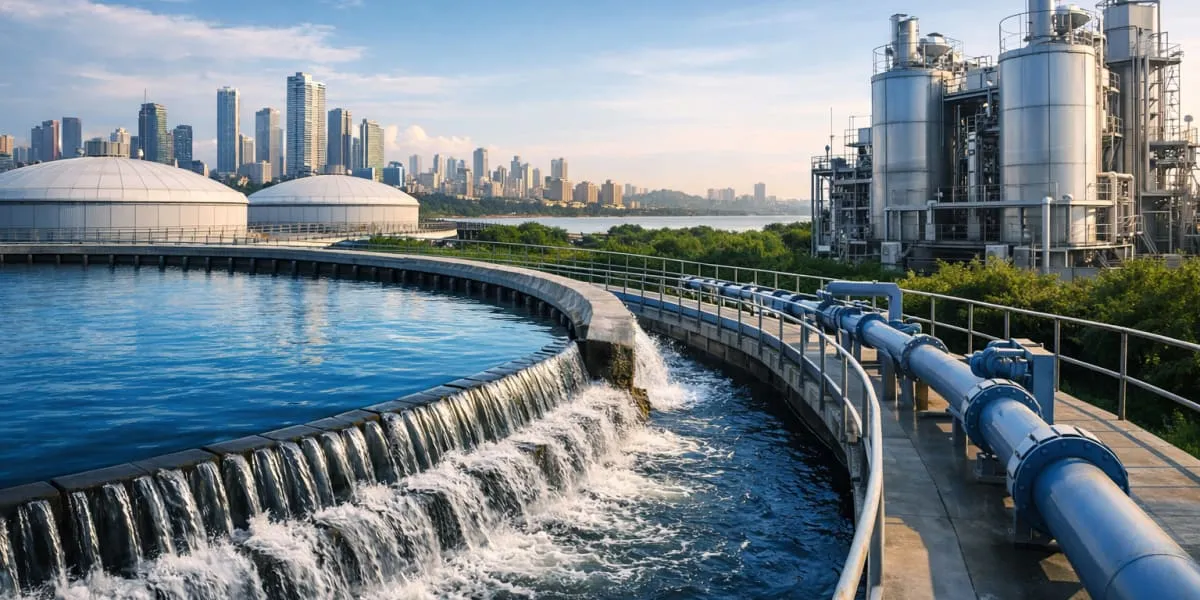
Mumbai’s water supply is due to receive a boost of 3,000 million litres per day (MLD) by 2030 as the Brihanmumbai Municipal Corporation (BMC) plans two new water treatment plants at Bhandup and Panjrapur. The additional capacity will nearly double current potable supply, addressing a gap between demand of 4,300 MLD and present delivery of 3,850 MLD. The existing Bhandup filtration plant, commissioned in 1978, is currently the city’s sole treatment facility and has a maximum treatment capacity of 2,810 MLD.

BMC proposes that the upgraded Bhandup plant will be configured to treat 2,000 MLD while the new Panjrapur facility will add 910 MLD, jointly accounting for 3,000 MLD of treatment capacity. The combined cost of the two plants has been set at Rs 42.1 billion (bn) and the civic body aims to commission them by 2030. The project has been awarded to the French firm Veolia in partnership with Welspun.

The planned expansion forms part of a wider programme that includes a 400 MLD desalination plant and the 450 MLD Gargai dam project, which together are expected to deliver an additional 850 MLD from 2029. The BMC is also constructing seven sewage treatment plants at Worli, Dharavi, Bhandup, Ghatkopar, Bandra, Versova and Malad at a cost of Rs 277 bn to treat 2,464 MLD of wastewater, half of which or 1,232 MLD will be reused for potable processing.

Officials have indicated that the additional supplies and reclaimed water will require an upgraded filtration network so that the treatment chain can manage an estimated 5,132 MLD by 2030. The civic authority continues to implement supply reductions during summer months to avert shortages and has prioritised these infrastructure investments to meet projected urban demand and provide greater resilience in the distribution system.

Mumbai’s water supply is due to receive a boost of 3,000 million litres per day (MLD) by 2030 as the Brihanmumbai Municipal Corporation (BMC) plans two new water treatment plants at Bhandup and Panjrapur. The additional capacity will nearly double current potable supply, addressing a gap between demand of 4,300 MLD and present delivery of 3,850 MLD. The existing Bhandup filtration plant, commissioned in 1978, is currently the city’s sole treatment facility and has a maximum treatment capacity of 2,810 MLD. BMC proposes that the upgraded Bhandup plant will be configured to treat 2,000 MLD while the new Panjrapur facility will add 910 MLD, jointly accounting for 3,000 MLD of treatment capacity. The combined cost of the two plants has been set at Rs 42.1 billion (bn) and the civic body aims to commission them by 2030. The project has been awarded to the French firm Veolia in partnership with Welspun. The planned expansion forms part of a wider programme that includes a 400 MLD desalination plant and the 450 MLD Gargai dam project, which together are expected to deliver an additional 850 MLD from 2029. The BMC is also constructing seven sewage treatment plants at Worli, Dharavi, Bhandup, Ghatkopar, Bandra, Versova and Malad at a cost of Rs 277 bn to treat 2,464 MLD of wastewater, half of which or 1,232 MLD will be reused for potable processing. Officials have indicated that the additional supplies and reclaimed water will require an upgraded filtration network so that the treatment chain can manage an estimated 5,132 MLD by 2030. The civic authority continues to implement supply reductions during summer months to avert shortages and has prioritised these infrastructure investments to meet projected urban demand and provide greater resilience in the distribution system.

Next Story
Infrastructure Urban

Maharashtra Clears Rs 317.93 Bn For Virar Alibaug Corridor

Maharashtra has granted administrative approval for phase one of the 14-lane Virar-Alibaug Multi-Modal Transport Corridor, an access-controlled route to improve connectivity across the Mumbai Metropolitan Region and link the Jawaharlal Nehru Port Authority, Navi Mumbai International Airport and the Mumbai Trans Harbour Link. The first phase spans 126.06 km and is estimated at Rs 317.93 billion. The Urban Development Department lists the construction cost at Rs 215.34 billion. The alignment is proposed through 104 villages across Vasai, Bhiwandi, Kalyan, Ambernath, Panvel, Uran, Pen and Alibaug..

Next Story
Infrastructure Urban

Gurugram To Control Streetlights Via Mobile App

The Municipal Corporation of Gurugram has announced a mobile app based system to operate and monitor the city streetlighting network as part of a smart city upgrade. The initiative will bring 0.112 million streetlights under digital control, replacing the previous practice in which workers manually switched lights across different sectors. The programme is intended to improve maintenance efficiency and strengthen the digital infrastructure of the city. The move aligns with broader urban digitalisation efforts in the region. The platform will allow officials to operate the streetlights remotely..

Next Story
Technology

Ahmedabad Plans Singapore Style Artificial Intelligence Indoor Garden

Ahmedabad will host a proposed Singapore style indoor garden on the Sabarmati Riverfront, a project unveiled at the Vibrant Gujarat regional conference by Simon Wong. The proposal, modelled on Singapore's Gardens by the Bay, aims to blend architecture, ecology and technology to create a year-round attraction. Organisers positioned the scheme as part of broader smart city and tourism ambitions for the region. The project is planned as a climate-controlled dome designed to recreate a tropical forest environment with artificial rain simulation, immersive fog and dense tropical plantations. Advanc..

Advertisement

Subscribe to Our Newsletter

Get daily newsletters around different themes from Construction world.

STAY CONNECTED

Advertisement

Advertisement

Advertisement