60 Per Cent of Irrigation Pumps Run on Solar Energy
POWER & RENEWABLE ENERGY

60 Per Cent of Irrigation Pumps Run on Solar Energy

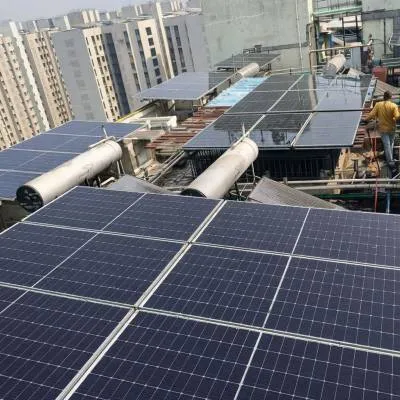
At least 60 per cent of irrigation pumps in India have been running on solar power over the past decade, according to Mayur Misra, Chief Executive Officer of Corrit Energy and Infra. Government data shows that 8,800,000 of the country’s 30 mn irrigation pumps still run on diesel, indicating a substantial shift towards solar-powered equipment.

Misra said the transition had accelerated as farmers assessed the potential savings and income opportunities associated with solar energy. Corrit, a Gurugram-based renewable energy company providing end-to-end engineering, procurement and construction solutions, has operations in Haryana, Uttar Pradesh, Punjab, Delhi, Bihar, Rajasthan, Madhya Pradesh, Chhattisgarh and Maharashtra. It has also completed projects in West Bengal, Karnataka and Gujarat.

The company is executing projects in Uttar Pradesh and Rajasthan under the PM-KUSUM scheme, or Pradhan Mantri Kisan Urja Suraksha evam Utthan Mahabhiyan. Launched by the Centre in March 2019, the scheme promotes solar energy in agriculture, provides daytime electricity for irrigation and enables farmers to earn income by supplying power to state governments. It also supports solar plants on land that is unsuitable for cultivation.

Corrit is currently executing about 100 MW of projects across Punjab, Rajasthan and Uttar Pradesh, with completion planned within the next 12 months. The company intends to increase its project portfolio to 500 MW within the following 18 months. Under the scheme, farmers can partner with companies or form joint ventures to develop plants, while the government-backed purchase of electricity can improve revenue visibility.

Misra said access to finance had initially been a major obstacle because many farmers lacked documented income and other security required by banks. Corrit addresses this issue by partnering with farmers and helping lenders assess the company’s execution capabilities. The company has completed 5.4 MW of a 13 MW rooftop project for Volkswagen and is working on a 65 MW project for an iron and steel company in Punjab.

Corrit is also targeting the textile and automobile sectors and plans to establish captive solar plants. Battery energy storage systems, or BES, are another focus area, with a government requirement that 10 per cent of grid-connected plant capacity be linked to storage. Misra said BES could become a major sector after 2030, although the company’s outlook includes some uncertainty.

At least 60 per cent of irrigation pumps in India have been running on solar power over the past decade, according to Mayur Misra, Chief Executive Officer of Corrit Energy and Infra. Government data shows that 8,800,000 of the country’s 30 mn irrigation pumps still run on diesel, indicating a substantial shift towards solar-powered equipment. Misra said the transition had accelerated as farmers assessed the potential savings and income opportunities associated with solar energy. Corrit, a Gurugram-based renewable energy company providing end-to-end engineering, procurement and construction solutions, has operations in Haryana, Uttar Pradesh, Punjab, Delhi, Bihar, Rajasthan, Madhya Pradesh, Chhattisgarh and Maharashtra. It has also completed projects in West Bengal, Karnataka and Gujarat. The company is executing projects in Uttar Pradesh and Rajasthan under the PM-KUSUM scheme, or Pradhan Mantri Kisan Urja Suraksha evam Utthan Mahabhiyan. Launched by the Centre in March 2019, the scheme promotes solar energy in agriculture, provides daytime electricity for irrigation and enables farmers to earn income by supplying power to state governments. It also supports solar plants on land that is unsuitable for cultivation. Corrit is currently executing about 100 MW of projects across Punjab, Rajasthan and Uttar Pradesh, with completion planned within the next 12 months. The company intends to increase its project portfolio to 500 MW within the following 18 months. Under the scheme, farmers can partner with companies or form joint ventures to develop plants, while the government-backed purchase of electricity can improve revenue visibility. Misra said access to finance had initially been a major obstacle because many farmers lacked documented income and other security required by banks. Corrit addresses this issue by partnering with farmers and helping lenders assess the company’s execution capabilities. The company has completed 5.4 MW of a 13 MW rooftop project for Volkswagen and is working on a 65 MW project for an iron and steel company in Punjab. Corrit is also targeting the textile and automobile sectors and plans to establish captive solar plants. Battery energy storage systems, or BES, are another focus area, with a government requirement that 10 per cent of grid-connected plant capacity be linked to storage. Misra said BES could become a major sector after 2030, although the company’s outlook includes some uncertainty.

Related Stories

Gold Stories

Next Story
Real Estate

Landmark Group plans Rs 150 billion NCR expansion

Landmark Group has announced expansion plans across two real estate projects in the National Capital Region (NCR), with a combined estimated sales potential of Rs 150 billion. The projects include Landmark One, a 2.1 million sq ft corporate office development on Golf Course Extension Road in Gurugram, and a proposed integrated hospitality, commercial and residential development on Dwarka Expressway.Landmark One has an estimated sales value of Rs 40 billion. The project involves an estimated construction investment of Rs 10 billion, apart from the underlying land, currently valued at around Rs ..
Next Story
Real Estate

RMZ entities secure 5-Star ratings in GRESB 2026

RMZ has been recognised as a Global and Regional Sector Leader in the 2026 Global Real Estate Sustainability Benchmark (GRESB) Real Estate Development Assessment, with three of its entities scoring 99.6 out of 100. RMZ Nexus LLP, Millenia Realtors Private Limited and Infralogix LLP secured 5-Star ratings in their respective categories across the Office and Industrial sectors.In the 2026 Development Benchmark, RMZ Nexus LLP and Millenia Realtors Private Limited were named Sector Leaders in the Office and Office Non-Listed categories in Asia. Infralogix LLP received the distinction in the Indust..

Next Story
Products

Schneider Electric deploys smart building systems at Jupiter Hospitals

Schneider Electric has partnered with Jupiter Hospitals to deploy connected building technologies aimed at improving energy efficiency, patient comfort and operational performance across its hospital campus. The deployment of its EcoStruxure Building Operation platform and SpaceLogic thermostats is helping the hospital achieve energy savings of up to 28 per cent, according to the company.With heating, ventilation and air-conditioning (HVAC) systems accounting for nearly 60 per cent of the hospital's total energy consumption, improving efficiency while maintaining the conditions required for pa..

Advertisement

Subscribe to Our Newsletter

Get daily newsletters around different themes from Construction world.

STAY CONNECTED

Advertisement

SPECIAL OFFER
QR Code