AGEL installs robots for maintenance of solar modules
POWER & RENEWABLE ENERGY

AGEL installs robots for maintenance of solar modules

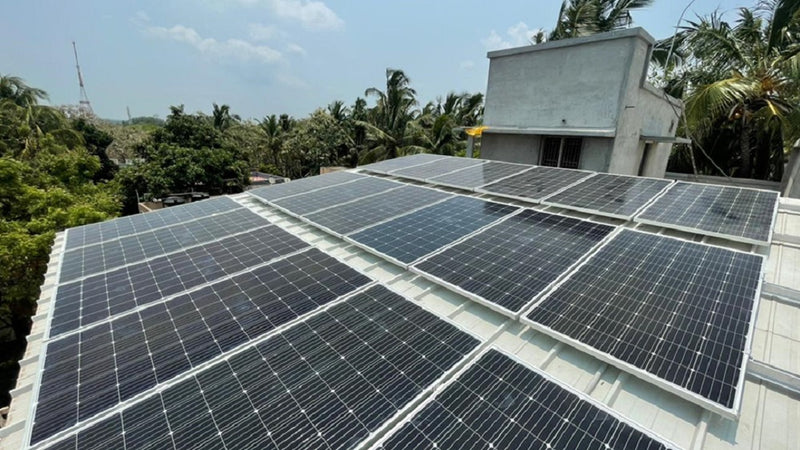
Adani Green Energy (AGEL) will install robotic cleaning technology for its 4,830 MW of operational solar capacity that will help save 595 million litres of water annually. At present, 2,070 MW, or 30 per cent, of its operational 7,043 MW solar and hybrid capacity is covered by robotic cleaning technology, which conserves 283 million litres of water annually, AGEL said in a statement.

Deploying robotics technology for the entire 7,043 MW operational capacity will help save around 880 million litres water annually. AGEL is deploying water-free robotic cleaning system to minimise water consumption for the maintenance of solar modules.

AGEL plans to implement this across its operational solar, hybrid sites (solar capacity of hybrid) and its future projects, especially in arid and dry regions like Rajasthan, and Kutch in Gujarat, where renewable water sources are scarce.

The company said, ?4,830 MW of AGEL?s solar portfolio will be covered by robotic cleaning cumulatively in the near term, which will save 595 million litres of water annually. This will reduce water usage for solar module maintenance to zero.?

?In line with India's decarbonisation goals, we remain committed to deliver in excess of 45 GW by 2030. Adani Green continues to have the largest operating renewable portfolio in India with 8.4 GW capacity,? Adani Green Energy CEO Amit Singh was quoted as saying in the statement.

Adani Green Energy (AGEL) will install robotic cleaning technology for its 4,830 MW of operational solar capacity that will help save 595 million litres of water annually. At present, 2,070 MW, or 30 per cent, of its operational 7,043 MW solar and hybrid capacity is covered by robotic cleaning technology, which conserves 283 million litres of water annually, AGEL said in a statement. Deploying robotics technology for the entire 7,043 MW operational capacity will help save around 880 million litres water annually. AGEL is deploying water-free robotic cleaning system to minimise water consumption for the maintenance of solar modules. AGEL plans to implement this across its operational solar, hybrid sites (solar capacity of hybrid) and its future projects, especially in arid and dry regions like Rajasthan, and Kutch in Gujarat, where renewable water sources are scarce. The company said, ?4,830 MW of AGEL?s solar portfolio will be covered by robotic cleaning cumulatively in the near term, which will save 595 million litres of water annually. This will reduce water usage for solar module maintenance to zero.? ?In line with India's decarbonisation goals, we remain committed to deliver in excess of 45 GW by 2030. Adani Green continues to have the largest operating renewable portfolio in India with 8.4 GW capacity,? Adani Green Energy CEO Amit Singh was quoted as saying in the statement.

Next Story
Infrastructure Urban

Implementation Status of Jal Jeevan Mission

Since August 2019 the Government has implemented Jal Jeevan Mission to provide assured potable water through household tap connections in rural India. At the start of the mission only 32.3 million (mn) rural households, representing 16.7 per cent, were reported to have tap water connections. States and union territories have reported that 125.8 mn additional rural households have since been provided with tap connections. As a result, of about 193.6 mn rural households roughly 158.2 mn, or 81.71 per cent, are reported to have tap water supply at home.\n\nThe State, district and village level st..

Next Story
Infrastructure Urban

Jal Jeevan Mission Reaches Eighty One Per Cent Rural Coverage

The Government reported substantial progress under the Jal Jeevan Mission, launched in August 2019 to provide tap water to every rural household. At launch only 32.3 million (mn) rural households had tap connections and states and Union territories reported provision of 125.8 mn additional households by March 2026. Consequently, out of about 193.6 mn rural households around 158.2 mn, or 81.71 per cent, are reported to have tap water at home. The Finance Minister announced extension of the mission until 2028 in the 2025-26 budget speech. The Swachh Bharat Mission Grameen, launched in October 20..

Next Story
Infrastructure Urban

Empowering Local Governance for Sustainable Rural Water Supply

The Ministry of Jal Shakti has aligned the Jal Jeevan Mission (JJM) with the 73rd Amendment to strengthen village level planning and community ownership of water supply. Gram Panchayats, village water and sanitation committees and Pani Samitis are to plan, implement, manage and maintain piped water systems, with gram sabha processes formalising handover and oversight. Implementation support agencies including non government organisations, community based organisations and self help groups have been empanelled to train local committees and promote women participation. Under JJM, the department ..

Advertisement

Subscribe to Our Newsletter

Get daily newsletters around different themes from Construction world.

STAY CONNECTED

Advertisement

Advertisement

Advertisement