Amazon Invests in Three Wind Energy Projects in India
POWER & RENEWABLE ENERGY

Amazon Invests in Three Wind Energy Projects in India

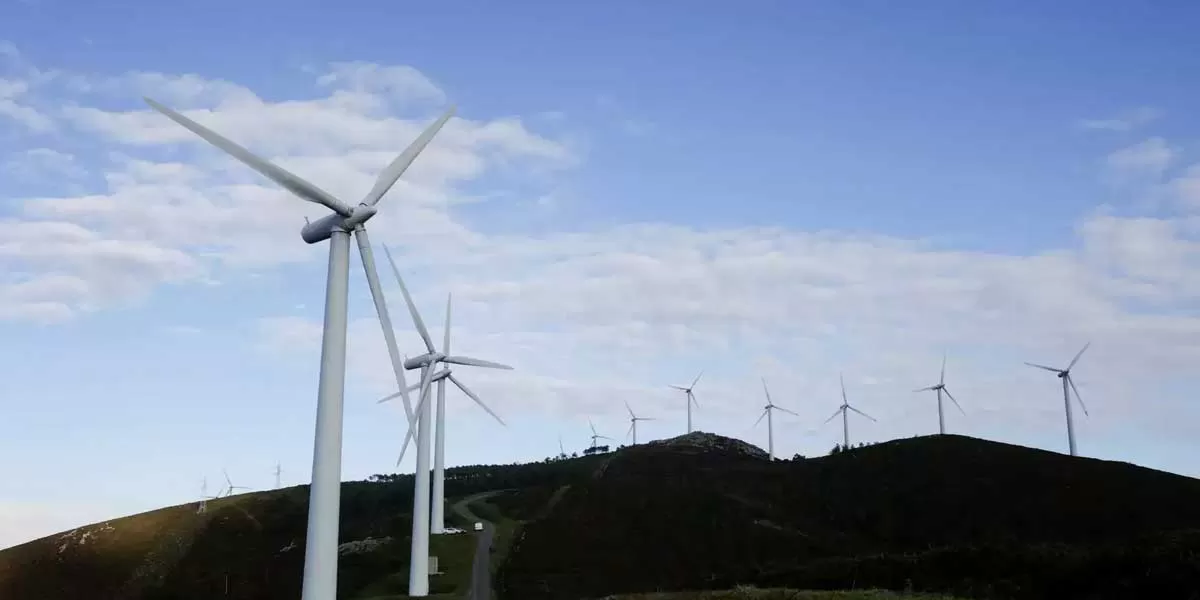
Amazon has announced significant investments in three wind energy projects across Karnataka, Maharashtra, and Tamil Nadu, which will generate over 379 MW of clean energy. This move underscores the company’s commitment to achieving 100% renewable energy operations.

The projects, which are part of Amazon’s broader sustainability strategy, include the CleanMax Koppal project (100 MW) in Karnataka, BluPine Solapur (99 MW) in Maharashtra, and JSW Energy Dharapuram (180 MW) in Tamil Nadu. These developments are expected to help India in meeting its ambitious target of generating 50% of its electricity from non-fossil fuel sources by 2030.

Union Minister for Communications, Electronics & Information Technology, Ashwini Vaishnaw, welcomed Amazon’s investment, emphasizing India’s growing role as a global clean energy leader. “Under PM Narendra Modi’s leadership, India is accelerating its clean energy transition. Investments from global giants like Amazon will play a crucial role in achieving our sustainability goals,” Vaishnaw said.

Minister of State for Power and Renewable Energy, Shripad Yesso Naik, also lauded Amazon’s initiative, calling it a significant milestone in the country’s renewable energy journey. “Wind and solar projects are key for energy security. These investments will reduce emissions, create jobs, and boost local economies,” he stated.

Amazon, which is one of the largest global purchasers of corporate solar and wind energy, has already invested in more than 600 renewable energy projects worldwide, including over 50 in India. The company’s Climate Pledge aims to reach net-zero carbon emissions across all operations by 2040.

With the latest addition of these wind projects, Amazon now has 53 renewable energy projects in India, delivering over 4 million megawatt-hours (MWh) of carbon-free energy—enough to power more than 1.3 million homes.

India’s renewable energy sector is witnessing rapid growth, and Amazon’s investments are playing a key role in accelerating the country’s green transition.

Amazon has announced significant investments in three wind energy projects across Karnataka, Maharashtra, and Tamil Nadu, which will generate over 379 MW of clean energy. This move underscores the company’s commitment to achieving 100% renewable energy operations.The projects, which are part of Amazon’s broader sustainability strategy, include the CleanMax Koppal project (100 MW) in Karnataka, BluPine Solapur (99 MW) in Maharashtra, and JSW Energy Dharapuram (180 MW) in Tamil Nadu. These developments are expected to help India in meeting its ambitious target of generating 50% of its electricity from non-fossil fuel sources by 2030.Union Minister for Communications, Electronics & Information Technology, Ashwini Vaishnaw, welcomed Amazon’s investment, emphasizing India’s growing role as a global clean energy leader. “Under PM Narendra Modi’s leadership, India is accelerating its clean energy transition. Investments from global giants like Amazon will play a crucial role in achieving our sustainability goals,” Vaishnaw said.Minister of State for Power and Renewable Energy, Shripad Yesso Naik, also lauded Amazon’s initiative, calling it a significant milestone in the country’s renewable energy journey. “Wind and solar projects are key for energy security. These investments will reduce emissions, create jobs, and boost local economies,” he stated.Amazon, which is one of the largest global purchasers of corporate solar and wind energy, has already invested in more than 600 renewable energy projects worldwide, including over 50 in India. The company’s Climate Pledge aims to reach net-zero carbon emissions across all operations by 2040.With the latest addition of these wind projects, Amazon now has 53 renewable energy projects in India, delivering over 4 million megawatt-hours (MWh) of carbon-free energy—enough to power more than 1.3 million homes.India’s renewable energy sector is witnessing rapid growth, and Amazon’s investments are playing a key role in accelerating the country’s green transition.

Next Story
Infrastructure Urban

Implementation Status of Jal Jeevan Mission

Since August 2019 the Government has implemented Jal Jeevan Mission to provide assured potable water through household tap connections in rural India. At the start of the mission only 32.3 million (mn) rural households, representing 16.7 per cent, were reported to have tap water connections. States and union territories have reported that 125.8 mn additional rural households have since been provided with tap connections. As a result, of about 193.6 mn rural households roughly 158.2 mn, or 81.71 per cent, are reported to have tap water supply at home.\n\nThe State, district and village level st..

Next Story
Infrastructure Urban

Jal Jeevan Mission Reaches Eighty One Per Cent Rural Coverage

The Government reported substantial progress under the Jal Jeevan Mission, launched in August 2019 to provide tap water to every rural household. At launch only 32.3 million (mn) rural households had tap connections and states and Union territories reported provision of 125.8 mn additional households by March 2026. Consequently, out of about 193.6 mn rural households around 158.2 mn, or 81.71 per cent, are reported to have tap water at home. The Finance Minister announced extension of the mission until 2028 in the 2025-26 budget speech. The Swachh Bharat Mission Grameen, launched in October 20..

Next Story
Infrastructure Urban

Empowering Local Governance for Sustainable Rural Water Supply

The Ministry of Jal Shakti has aligned the Jal Jeevan Mission (JJM) with the 73rd Amendment to strengthen village level planning and community ownership of water supply. Gram Panchayats, village water and sanitation committees and Pani Samitis are to plan, implement, manage and maintain piped water systems, with gram sabha processes formalising handover and oversight. Implementation support agencies including non government organisations, community based organisations and self help groups have been empanelled to train local committees and promote women participation. Under JJM, the department ..

Advertisement

Subscribe to Our Newsletter

Get daily newsletters around different themes from Construction world.

STAY CONNECTED

Advertisement

Advertisement

Advertisement