+
Andhra Pradesh Signs PPAs For Four Waste-To-Energy Plants
POWER & RENEWABLE ENERGY

Andhra Pradesh Signs PPAs For Four Waste-To-Energy Plants

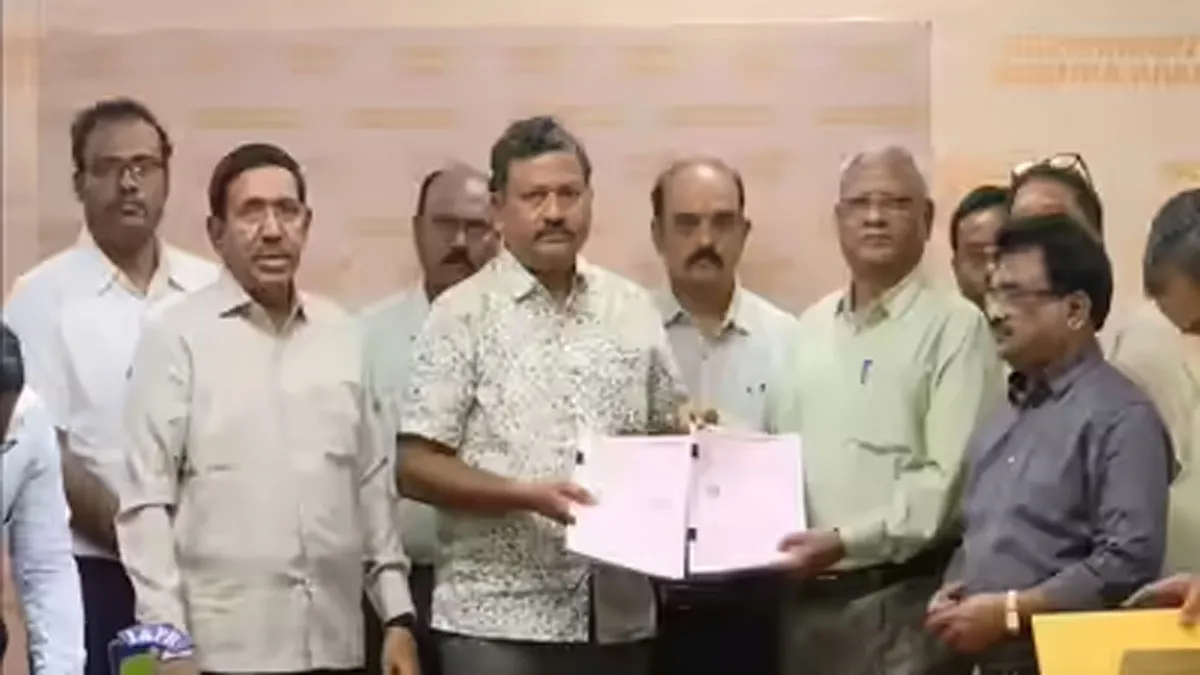
The Andhra Pradesh government on Tuesday signed power purchase agreements for four waste-to-energy plants proposed across key municipal regions, marking a major step towards scientific solid waste management and renewable energy generation.

The agreements were signed in the presence of Municipal Administration and Urban Development Minister Ponguru Narayana, who said the State is prioritising scientific processing of solid waste to protect the environment, improve urban sanitation and expand renewable energy capacity.

Under the PPAs, electricity generated from the waste-to-energy plants at Nellore, Kadapa and Kurnool will be procured by the Andhra Pradesh Southern Power Distribution Company Limited, while power from the Kakinada plant will be purchased by the Andhra Pradesh Eastern Power Distribution Company Limited. The process was coordinated by the Andhra Pradesh Power Coordination Committee on behalf of the DISCOMs, along with the Swachh Andhra Corporation representing the State government.

Narayana said the projects will be developed and operated by Jindal and Antony Lara. Jindal is setting up a 15 MW plant at Kakinada (Rameswaram), covering 21 municipalities with a waste-processing capacity of 957 tonnes per day, and a 12 MW plant at Nellore (Donthali), serving nine municipalities with a capacity of 604 tonnes per day.

Antony Lara is developing a 15 MW plant at Kadapa (Kolumulapalli), covering 18 municipalities with a processing capacity of 781 tonnes per day, and another 15 MW facility at Kurnool (Garveypuram), covering 13 municipalities with a capacity of 751 tonnes per day.

Together, the four plants will process about 3,093 tonnes of solid waste daily. At the tendering stage, additional waste-to-energy projects proposed at Vijayawada and Tirupati are expected to process another 1,600 tonnes per day.

The minister added that existing waste-to-energy plants at Guntur and Visakhapatnam are already operational, processing around 2,800 tonnes of waste per day and generating 35 MW of electricity. Once all eight plants across the State are operational, they will collectively process about 7,493 tonnes of waste daily and generate 119 MW of power.

Municipal Administration Principal Secretary S. Suresh Kumar said that, in line with the Chief Minister’s directions, the State has completely cleared 8.5 million tonnes of legacy waste by October 2 this year.

The Andhra Pradesh government on Tuesday signed power purchase agreements for four waste-to-energy plants proposed across key municipal regions, marking a major step towards scientific solid waste management and renewable energy generation. The agreements were signed in the presence of Municipal Administration and Urban Development Minister Ponguru Narayana, who said the State is prioritising scientific processing of solid waste to protect the environment, improve urban sanitation and expand renewable energy capacity. Under the PPAs, electricity generated from the waste-to-energy plants at Nellore, Kadapa and Kurnool will be procured by the Andhra Pradesh Southern Power Distribution Company Limited, while power from the Kakinada plant will be purchased by the Andhra Pradesh Eastern Power Distribution Company Limited. The process was coordinated by the Andhra Pradesh Power Coordination Committee on behalf of the DISCOMs, along with the Swachh Andhra Corporation representing the State government. Narayana said the projects will be developed and operated by Jindal and Antony Lara. Jindal is setting up a 15 MW plant at Kakinada (Rameswaram), covering 21 municipalities with a waste-processing capacity of 957 tonnes per day, and a 12 MW plant at Nellore (Donthali), serving nine municipalities with a capacity of 604 tonnes per day. Antony Lara is developing a 15 MW plant at Kadapa (Kolumulapalli), covering 18 municipalities with a processing capacity of 781 tonnes per day, and another 15 MW facility at Kurnool (Garveypuram), covering 13 municipalities with a capacity of 751 tonnes per day. Together, the four plants will process about 3,093 tonnes of solid waste daily. At the tendering stage, additional waste-to-energy projects proposed at Vijayawada and Tirupati are expected to process another 1,600 tonnes per day. The minister added that existing waste-to-energy plants at Guntur and Visakhapatnam are already operational, processing around 2,800 tonnes of waste per day and generating 35 MW of electricity. Once all eight plants across the State are operational, they will collectively process about 7,493 tonnes of waste daily and generate 119 MW of power. Municipal Administration Principal Secretary S. Suresh Kumar said that, in line with the Chief Minister’s directions, the State has completely cleared 8.5 million tonnes of legacy waste by October 2 this year.

Next Story
Infrastructure Transport

Second Mountain Tunnel Breakthrough in Palghar Advances High Speed Rail

The Mumbai-Ahmedabad high speed rail (MAHSR) project reached a milestone with the breakthrough of a mountain tunnel in Palghar, Maharashtra. Mountain tunnel MT-six measures 454 metres long and 14.4 metres wide and will accommodate up and down tracks. The breakthrough follows MT-five near Saphale on second January 2026 and the MT-six excavation was completed from both ends using the New Austrian Tunnelling Method. The ministry reported that the tunnelling was completed within 12 months. The New Austrian Tunnelling Method is favoured for its flexibility in complex geology and irregular tunnel s..

Next Story
Infrastructure Transport

Modi Government Pushes Atmanirbhar Container Drive With BCSL MoU

The Union Government advanced a plan to create an integrated, domestically anchored container ecosystem with the signing of a Memorandum of Understanding to establish the Bharat Container Shipping Line (BCSL). The MoU was signed by key agencies including the Shipping Corporation of India and Container Corporation of India alongside major port authorities and Sagarmala Finance Corporation Limited under the Ministry of Ports, Shipping and Waterways, in the presence of senior ministers. The initiative aligns with the Container Manufacturing Assistance Scheme announced in the Union Budget 2026–2..

Next Story
Infrastructure Urban

Ministry Reports Gains In Mobility For Marginalised Communities

The Ministry of Social Justice and Empowerment is implementing skill development, education and rehabilitation schemes to promote socio-economic mobility and sustainable livelihoods for marginalised and disadvantaged communities across the country. Programmes target Scheduled Castes, Other Backward Classes, Economically Weaker Sections, De-notified Tribes and Safai Karamcharis through specialised implementing corporations and empanelled training institutes. Pradhan Mantri Dakshata Aur Kushalta Sampann Hitgrahi Yojana, or PM-DAKSH, provided skill training and placement support through the Nati..

Advertisement

Subscribe to Our Newsletter

Get daily newsletters around different themes from Construction world.

STAY CONNECTED

Advertisement

Advertisement

Advertisement

Open In App