Aroma Solar Launches 1.2 GW AI Solar Module Facility
POWER & RENEWABLE ENERGY

Aroma Solar Launches 1.2 GW AI Solar Module Facility

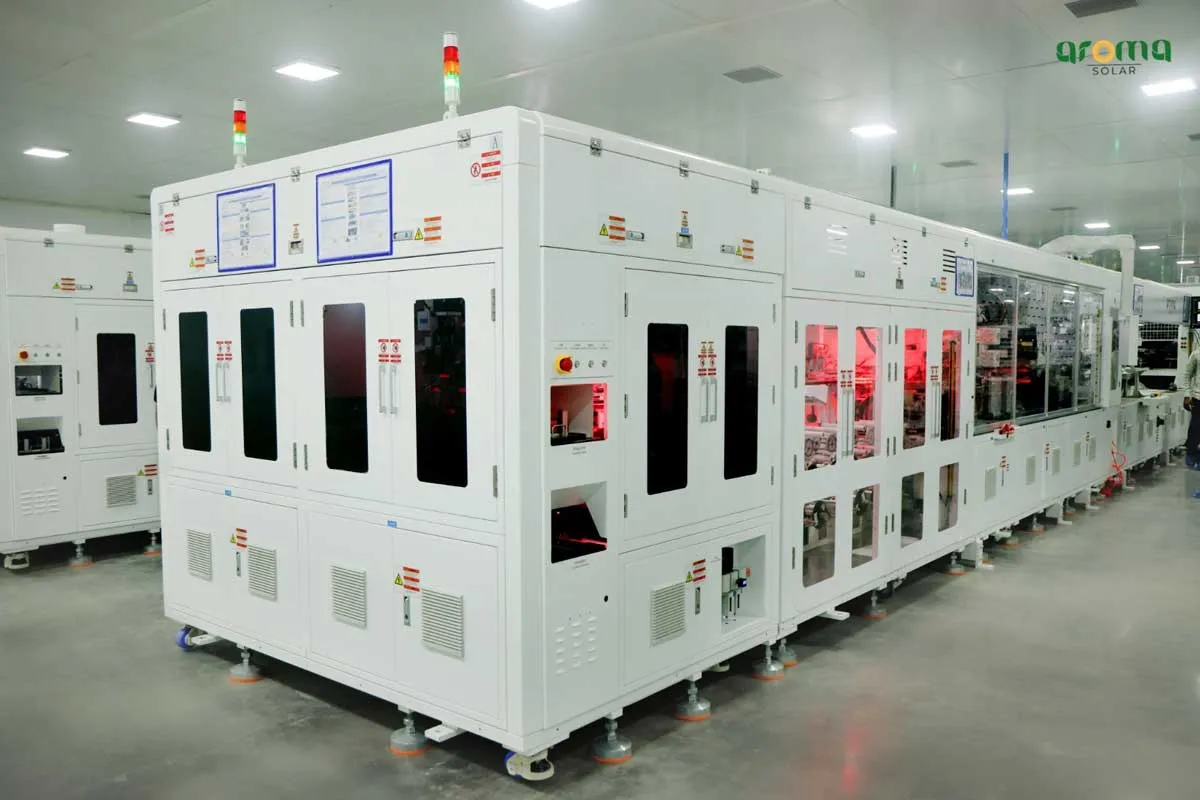
Aroma Solar has commenced operations at its 1.2 GW solar module manufacturing facility in Karnal, marking North India’s first fully automated, AI-driven production line based on TOPCon technology. The plant strengthens domestic manufacturing capabilities while aligning with India’s renewable energy ambitions.
The facility has started producing TOPCon modules rated between 620 W and 635 W, with an efficiency of 23.51 per cent. Designed with a focus on process precision and module consistency, the plant integrates 100 per cent robotic automation with AI-based quality verification. This ensures uniformity in critical stages such as cell placement and lamination, reducing long-term defects and improving field performance.
Mayank Garg, CEO, Aroma Solar, said, “India’s solar sector is entering a phase where quality is the core. To deliver that quality, we have installed North India’s first fully automated line from a Chinese equipment supplier and are sourcing exclusively Tier-1 raw materials. By combining artificial intelligence with human oversight, we ensure consistency in every module.”
The Tier-1 grade modules are designed to support large-scale solar projects across India, offering reliability and bankability for developers.
Following the commissioning of the 1.2 GW facility, the company is planning further capacity expansion with a focus on precision manufacturing. It is also evaluating entry into solar cell and wafer production to enhance vertical integration and strengthen supply chain control. This strategy aligns with India’s broader goal of achieving self-sufficiency in renewable energy manufacturing.

Aroma Solar has commenced operations at its 1.2 GW solar module manufacturing facility in Karnal, marking North India’s first fully automated, AI-driven production line based on TOPCon technology. The plant strengthens domestic manufacturing capabilities while aligning with India’s renewable energy ambitions.The facility has started producing TOPCon modules rated between 620 W and 635 W, with an efficiency of 23.51 per cent. Designed with a focus on process precision and module consistency, the plant integrates 100 per cent robotic automation with AI-based quality verification. This ensures uniformity in critical stages such as cell placement and lamination, reducing long-term defects and improving field performance.Mayank Garg, CEO, Aroma Solar, said, “India’s solar sector is entering a phase where quality is the core. To deliver that quality, we have installed North India’s first fully automated line from a Chinese equipment supplier and are sourcing exclusively Tier-1 raw materials. By combining artificial intelligence with human oversight, we ensure consistency in every module.”The Tier-1 grade modules are designed to support large-scale solar projects across India, offering reliability and bankability for developers.Following the commissioning of the 1.2 GW facility, the company is planning further capacity expansion with a focus on precision manufacturing. It is also evaluating entry into solar cell and wafer production to enhance vertical integration and strengthen supply chain control. This strategy aligns with India’s broader goal of achieving self-sufficiency in renewable energy manufacturing.

Next Story
Infrastructure Urban

UniAcoustic, Vicoustic Form UniVicoustic Alliance

UniAcoustic, part of United Group, has acquired a strategic stake in Portugal-based Vicoustic, forming a new alliance branded as UniVicoustic. The agreement, signed in Mumbai, marks a significant cross-border partnership aligned with evolving India–EU trade dynamics.The collaboration brings together Vicoustic’s global expertise in architectural acoustic products with UniAcoustic’s manufacturing scale and distribution capabilities. The combined platform aims to expand market reach, integrate technology and optimise supply chains across key regions.The development comes amid progress in th..

Next Story
Infrastructure Urban

Dalmia Bharat, Delhi PWD Revamp Under-Flyover Spaces

Dalmia Bharat has partnered with the Public Works Department (PWD), Government of Delhi, to redevelop select under-flyover spaces and a road stretch into sustainable urban hubs. The agreement covers key locations including Lodhi Flyover, Oberoi Flyover, Mangi Bridge and Hanuman Setu.Under the initiative, the company will undertake design, landscaping, plantation and long-term maintenance of the sites, with a defined upkeep period of three years after completion. The project aims to improve urban aesthetics while promoting environmental sustainability and biodiversity restoration in high-densit..

Next Story
Infrastructure Urban

Versigent Debuts as Independent NYSE-Listed Company

Versigent has launched as an independent publicly traded company following its separation from Aptiv, with shares commencing trading on the New York Stock Exchange under the ticker “VGNT”. The move marks a significant milestone in the company’s transition into a standalone global player in power distribution systems.The company specialises in the design, manufacturing and delivery of low- and high-voltage electrical architectures, supported by engineering centres across four continents and manufacturing operations in over 25 countries.Versigent reported revenues of $8.8 billion, net inco..

Advertisement

Subscribe to Our Newsletter

Get daily newsletters around different themes from Construction world.

STAY CONNECTED

Advertisement

Advertisement

Advertisement