China’s Proposed Solar Export Curbs Raise India Concerns
POWER & RENEWABLE ENERGY

China’s Proposed Solar Export Curbs Raise India Concerns

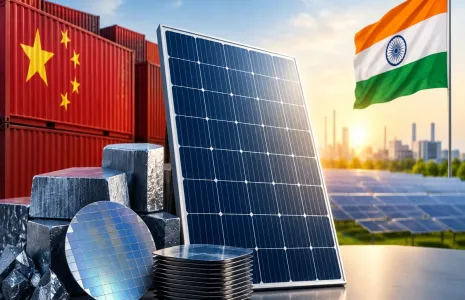
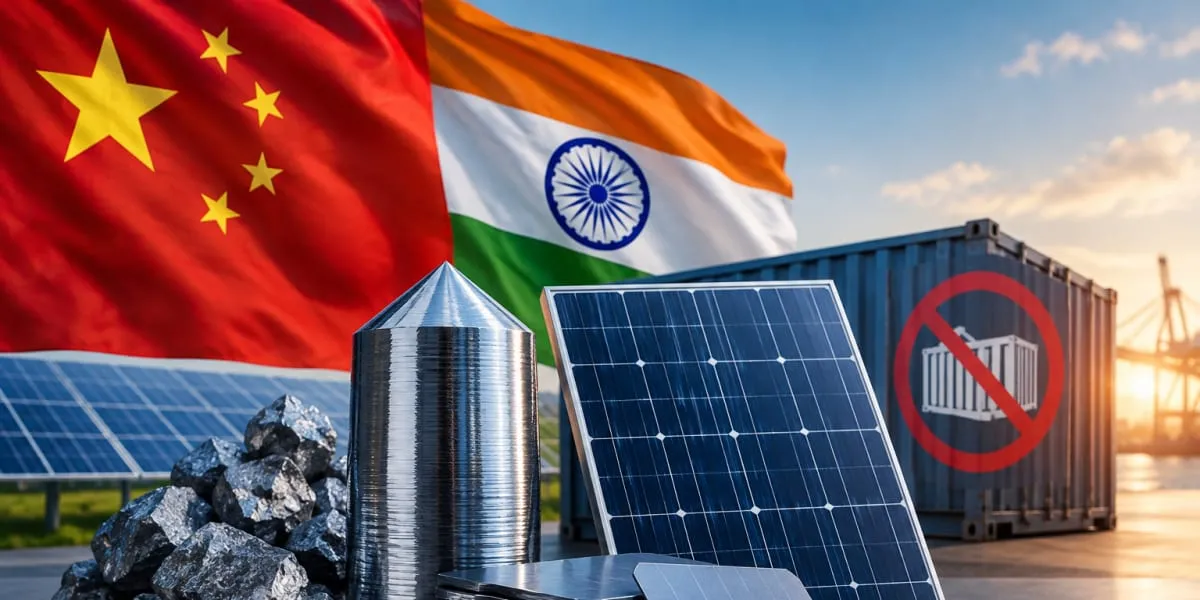
China has proposed export restrictions on 12 technologies linked to solar energy manufacturing, citing national security and strategic interests. The proposal from China’s commerce and science ministries is part of a wider plan to tighten controls on 40 advanced technologies, including those used in artificial intelligence and biomedicine.

The proposed measures cover engineering technologies used across the solar photovoltaic supply chain, particularly polysilicon production. Polysilicon is a key raw material for solar cells and modules, while China has developed a dominant position in several stages of global solar manufacturing. This has left many countries dependent on Chinese technology, machinery and equipment.

The restrictions could create challenges for India’s efforts to build domestic solar manufacturing capacity. Indian manufacturers rely significantly on Chinese suppliers for machinery, production equipment and essential components needed to establish and expand large-scale facilities. If implemented, the controls could make advanced manufacturing technologies harder to obtain and delay the development and commissioning of planned projects.

Earlier this year, the Indian government eased some rules governing Chinese investment to support cooperation between companies in strategic manufacturing segments. The initiative was intended to encourage joint ventures and technology partnerships covering polysilicon and silicon wafer production. Such arrangements were expected to help India develop a more integrated manufacturing ecosystem and reduce reliance on imported materials and equipment.

China’s proposal could introduce uncertainty into these planned collaborations by limiting technology transfers and access to specialised production expertise. It could also affect India’s progress in next-generation solar technologies. Indian manufacturers are expanding established technologies such as tunnel oxide passivated contact and passivated emitter and rear cell solar cells, while perovskite and tandem cells are receiving global attention for their potential to improve conversion efficiency.

Restrictions affecting advanced solar technologies could make it harder for Indian companies to adopt newer production methods and widen the technology gap with Chinese manufacturers. The development highlights the importance of domestic research, alternative technology partnerships and investment in advanced manufacturing capabilities as India seeks a more self-reliant solar industry.

China has proposed export restrictions on 12 technologies linked to solar energy manufacturing, citing national security and strategic interests. The proposal from China’s commerce and science ministries is part of a wider plan to tighten controls on 40 advanced technologies, including those used in artificial intelligence and biomedicine. The proposed measures cover engineering technologies used across the solar photovoltaic supply chain, particularly polysilicon production. Polysilicon is a key raw material for solar cells and modules, while China has developed a dominant position in several stages of global solar manufacturing. This has left many countries dependent on Chinese technology, machinery and equipment. The restrictions could create challenges for India’s efforts to build domestic solar manufacturing capacity. Indian manufacturers rely significantly on Chinese suppliers for machinery, production equipment and essential components needed to establish and expand large-scale facilities. If implemented, the controls could make advanced manufacturing technologies harder to obtain and delay the development and commissioning of planned projects. Earlier this year, the Indian government eased some rules governing Chinese investment to support cooperation between companies in strategic manufacturing segments. The initiative was intended to encourage joint ventures and technology partnerships covering polysilicon and silicon wafer production. Such arrangements were expected to help India develop a more integrated manufacturing ecosystem and reduce reliance on imported materials and equipment. China’s proposal could introduce uncertainty into these planned collaborations by limiting technology transfers and access to specialised production expertise. It could also affect India’s progress in next-generation solar technologies. Indian manufacturers are expanding established technologies such as tunnel oxide passivated contact and passivated emitter and rear cell solar cells, while perovskite and tandem cells are receiving global attention for their potential to improve conversion efficiency. Restrictions affecting advanced solar technologies could make it harder for Indian companies to adopt newer production methods and widen the technology gap with Chinese manufacturers. The development highlights the importance of domestic research, alternative technology partnerships and investment in advanced manufacturing capabilities as India seeks a more self-reliant solar industry.

Related Stories

Gold Stories

Next Story
Real Estate

Danube's Gauri Khan-designed penthouses sell out at launch

Danube Properties has announced the sell-out of all Gauri Khan-designed penthouses at Shahrukhz Residences, its fully furnished waterfront residential development in Dubai Maritime City. Each penthouse was priced at Rs 500 million (INR 50 crore). The project was unveiled at a launch event at Coca-Cola Arena, Dubai, on 11 November, attended by Danube Group Founder and Chairman Rizwan Sajan, Shah Rukh Khan and Gauri Khan.The event, hosted by filmmaker Karan Johar, marked the second collaboration between Sajan and Shah Rukh Khan. The residential development follows the launch of the Shahrukhz com..

Next Story
Real Estate

Danube's Gauri Khan-designed penthouses sell out at launch

Danube Properties has announced the sell-out of all Gauri Khan-designed penthouses at Shahrukhz Residences, its fully furnished waterfront residential development in Dubai Maritime City. Each penthouse was priced at Rs 500 million (INR 50 crore). The project was unveiled at a launch event at Coca-Cola Arena, Dubai, on 11 November, attended by Danube Group Founder and Chairman Rizwan Sajan, Shah Rukh Khan and Gauri Khan.The event, hosted by filmmaker Karan Johar, marked the second collaboration between Sajan and Shah Rukh Khan. The residential development follows the launch of the Shahrukhz com..

Next Story
Building Material

Big 5 Global to showcase Indian manufacturing capabilities

Big 5 Global 2026 will bring together international construction suppliers and buyers at the Dubai World Trade Centre from 23 to 26 November, providing Indian manufacturers an opportunity to expand their presence in the Middle East, Africa and South Asia (MEASA) markets. The event will host more than 1,800 exhibitors from over 60 countries, showcasing 55,000 products, services and solutions. International companies will account for 70 per cent of the exhibitor base.With India's construction market projected to reach USD 1.1 trillion by 2031, growing demand for infrastructure, housing and susta..

Advertisement

Subscribe to Our Newsletter

Get daily newsletters around different themes from Construction world.

STAY CONNECTED

Advertisement

SPECIAL OFFER
QR Code