India Needs Solar Manufacturing Incentives amid China Export Curbs
POWER & RENEWABLE ENERGY

India Needs Solar Manufacturing Incentives amid China Export Curbs

India needs stronger incentives for domestic solar equipment manufacturing as China considers restricting exports of 12 technologies used in photovoltaic module production, according to Chetan Shah, Chairman and Managing Director of Solex Energy. The proposed restrictions are linked to technologies also used in aerospace, defence and other sensitive sectors.

Shah said China controls an estimated 75 to 90 per cent of the global solar supply chain. He cautioned that delays in establishing domestic cell capacity could create a supply crunch for modules, delay renewable energy projects and increase pressure on tariffs.

India had about 262 GW of module manufacturing capacity and approximately 37 GW of cell manufacturing capacity as of June 2026, Shah said. In contrast, the country’s ingot-wafer capacity was estimated at 2 GW, while it had no polysilicon manufacturing capacity. He also noted that much of the installed module capacity uses older mono PERC technology and that several facilities are not operational.

Shah called for the government to extend the timeline of the Approved List of Models and Manufacturers-II, or ALMM-II, by at least 12 months and apply it to all types of solar projects. The framework requires developers to source domestically produced cells from manufacturers on an approved list. An extension, he said, would give local companies time to fulfil existing orders while setting up additional cell capacity.

He also recommended a dedicated mission for solar equipment manufacturing, supported by a production-linked incentive (PLI) programme or capital subsidy for critical photovoltaic equipment, spares and consumables. Partnerships with Indian capital-goods companies, CSIR laboratories and IITs could support this effort. Shah further urged the government to work with the US, European Union, Japan, South Korea and Taiwan to secure alternative equipment and process technologies, while engaging China to protect contracted orders already under execution.

India needs stronger incentives for domestic solar equipment manufacturing as China considers restricting exports of 12 technologies used in photovoltaic module production, according to Chetan Shah, Chairman and Managing Director of Solex Energy. The proposed restrictions are linked to technologies also used in aerospace, defence and other sensitive sectors. Shah said China controls an estimated 75 to 90 per cent of the global solar supply chain. He cautioned that delays in establishing domestic cell capacity could create a supply crunch for modules, delay renewable energy projects and increase pressure on tariffs. India had about 262 GW of module manufacturing capacity and approximately 37 GW of cell manufacturing capacity as of June 2026, Shah said. In contrast, the country’s ingot-wafer capacity was estimated at 2 GW, while it had no polysilicon manufacturing capacity. He also noted that much of the installed module capacity uses older mono PERC technology and that several facilities are not operational. Shah called for the government to extend the timeline of the Approved List of Models and Manufacturers-II, or ALMM-II, by at least 12 months and apply it to all types of solar projects. The framework requires developers to source domestically produced cells from manufacturers on an approved list. An extension, he said, would give local companies time to fulfil existing orders while setting up additional cell capacity. He also recommended a dedicated mission for solar equipment manufacturing, supported by a production-linked incentive (PLI) programme or capital subsidy for critical photovoltaic equipment, spares and consumables. Partnerships with Indian capital-goods companies, CSIR laboratories and IITs could support this effort. Shah further urged the government to work with the US, European Union, Japan, South Korea and Taiwan to secure alternative equipment and process technologies, while engaging China to protect contracted orders already under execution.

Related Stories

Gold Stories

Next Story
Real Estate

Sumadhura leases 20,000 sq ft to Iron Hill Brewery in Bengaluru

Sumadhura Group has leased 20,000 sq ft of retail space to Iron Hill Brewery at Sumadhura Capitol Towers, its Grade A+ commercial development in Whitefield, East Bengaluru. The brewery is expected to commence operations at the property before the end of 2026.The development has also leased 3,700 sq ft to Yummy Bee, a café chain offering gluten-free and sugar-free products. The two additions will expand the food and beverage (F&B) offering at Capitol Towers, which combines office spaces with retail, dining and lifestyle facilities.Expanding the retail and F&B mixThe existing retail and..

Next Story
Real Estate

Peninsula Land enters Mumbai suburbs with Versova redevelopment

Peninsula Land, part of the Ashok Piramal Group, has signed a development agreement for the redevelopment of two adjoining residential societies in Versova, Andheri West, marking its entry into Mumbai’s western suburbs. Spread across approximately 1.5 acres, the project has an estimated gross development value (GDV) of Rs 7.5-7.75 billion.The consolidated land parcel is larger than the sub-one-acre developments typically seen in the Versova micro-market. According to the company, the larger site will allow it to develop a gated community with open spaces and integrated amenities.Commenting o..
Next Story
Technology

Goyal & Co. invests Rs 8.2 billion in Bengaluru tech park

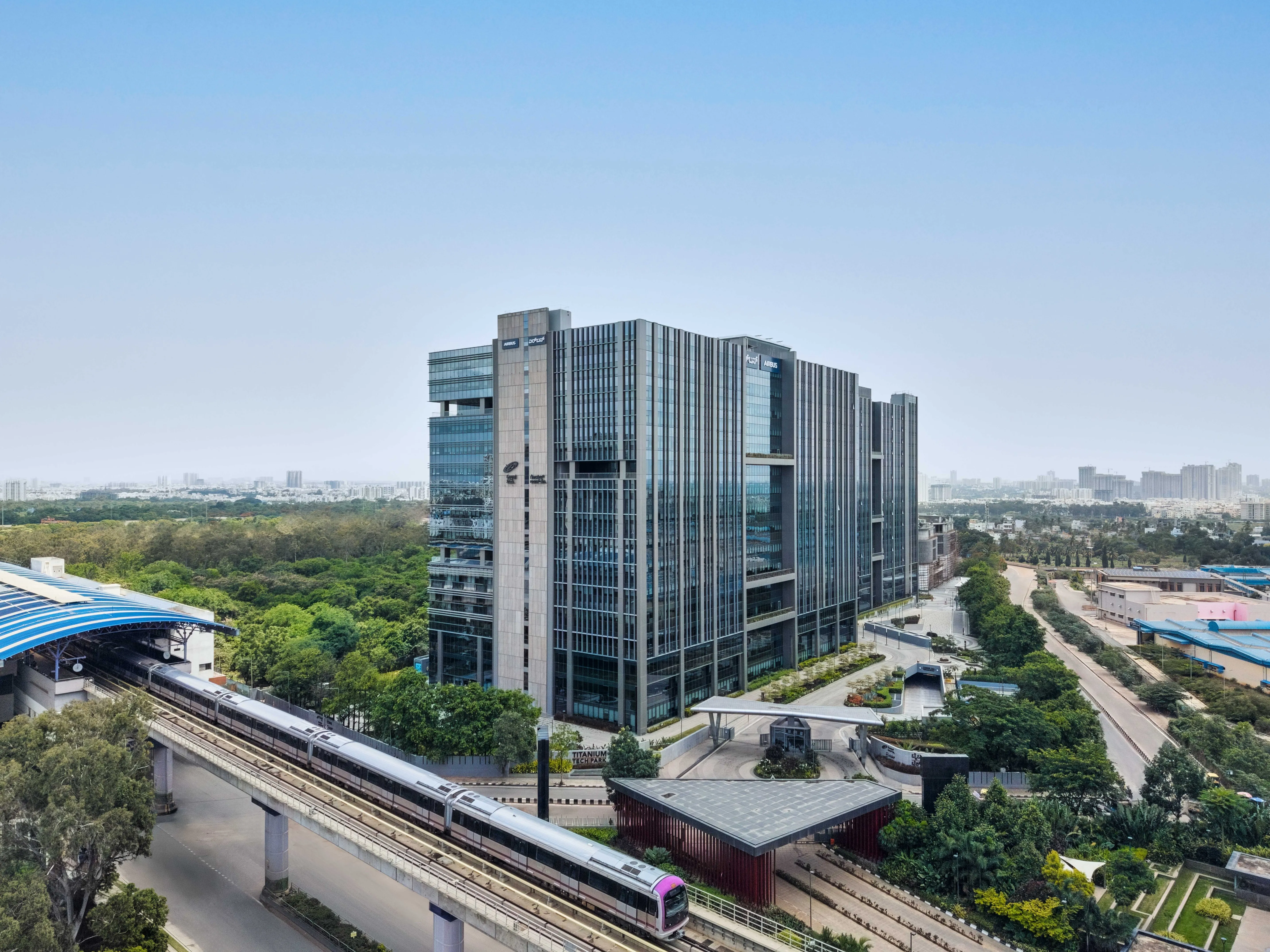
Goyal & Co. is developing Titanium Tech Park, a 5 million sq ft commercial project in Whitefield’s technology corridor in Bengaluru, with an investment of approximately Rs 8.2 billion. Spread across 25 acres, the development has secured leasing commitments from global engineering companies Airbus and Caterpillar, which have taken up 880,000 sq ft and 300,000 sq ft, respectively. The combined annual rental value is estimated at Rs 1 billion.The project is being developed in multiple phases. Phase I comprises two operational office blocks of G+15 floors, offering 880,000 sq ft and 622,000 ..

Advertisement

Subscribe to Our Newsletter

Get daily newsletters around different themes from Construction world.

STAY CONNECTED

Advertisement

SPECIAL OFFER
QR Code