



+
C&I Renewables To Reach 57 GW By FY28
POWER & RENEWABLE ENERGY

C&I Renewables To Reach 57 GW By FY28

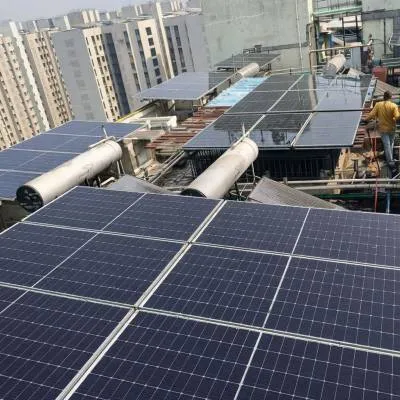
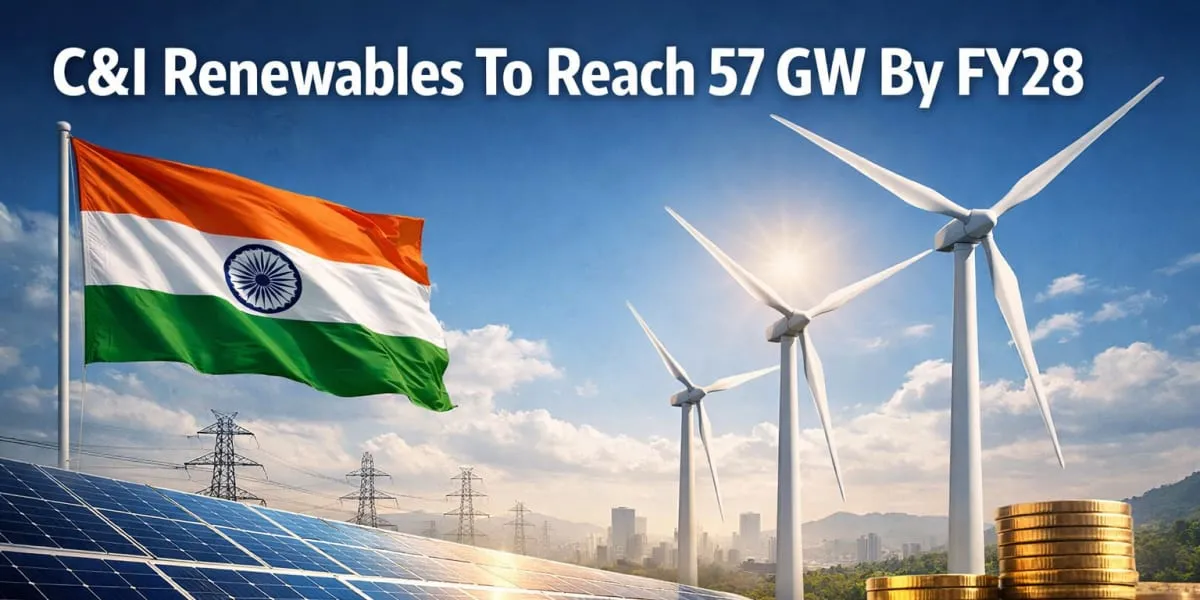
India's commercial and industrial (C&I) renewable energy capacity is expected to reach 57 GW by FY28, from about 40 GW by FY26, a 17 GW increase in two years as corporate decarbonisation and tariff arbitrage boost demand. Crisil Ratings said growth will be supported by favourable long-term power purchase agreement (PPA) tariffs relative to grid tariffs, corporate net-zero commitments, renewable purchase obligations (RPOs) and attractive developer returns. The change reflects rising direct procurement by industry.

The Green Energy Open Access (GEOA) Rules, 2022 have enabled industrial and commercial entities to source renewable power directly over existing transmission and distribution infrastructure, accelerating adoption. Crisil Ratings noted that major industrial states have announced open access policies and are offering rebates on cross-subsidy, wheeling and state transmission utility charges for intra-state supply, lowering the landed cost of power by 25 to 30 per cent versus on-grid tariff. These measures have supported rapid capacity addition.

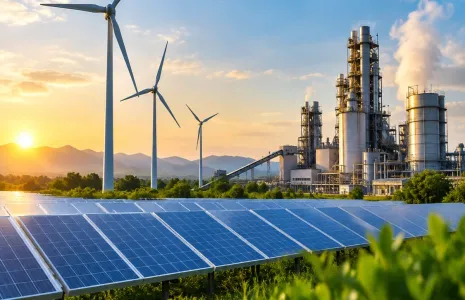
Energy-intensive sectors such as steel, cement and data centres are leading the shift to meet internal net-zero targets and RPO obligations. Private equity-backed developers are expected to account for much of the incremental capacity because C&I projects offer higher return on equity than utility-scale projects. Crisil Ratings reported that rated C&I portfolios typically have an average PPA tenure of around 15 years providing revenue visibility.

About 65 per cent of rated capacity is tied to counterparties with High Safety credit profiles and the weighted average debt service coverage ratio stands at 1.4 times over the next two fiscals. Infrastructure constraints such as limited intra-state transmission capacity and right-of-way issues remain bottlenecks that can delay project timelines. States also face a trade-off as open access incentives may reduce distribution utilities' revenues from high-paying C&I users.

Any recalibration of incentives could push up landed power costs, though tariffs are likely to remain competitive against grid supply. With India targeting 500 GW of non-fossil capacity by 2030 the C&I segment is positioned as a central pillar for clean energy goals and offers stable returns and cost savings to corporates.

India's commercial and industrial (C&I) renewable energy capacity is expected to reach 57 GW by FY28, from about 40 GW by FY26, a 17 GW increase in two years as corporate decarbonisation and tariff arbitrage boost demand. Crisil Ratings said growth will be supported by favourable long-term power purchase agreement (PPA) tariffs relative to grid tariffs, corporate net-zero commitments, renewable purchase obligations (RPOs) and attractive developer returns. The change reflects rising direct procurement by industry. The Green Energy Open Access (GEOA) Rules, 2022 have enabled industrial and commercial entities to source renewable power directly over existing transmission and distribution infrastructure, accelerating adoption. Crisil Ratings noted that major industrial states have announced open access policies and are offering rebates on cross-subsidy, wheeling and state transmission utility charges for intra-state supply, lowering the landed cost of power by 25 to 30 per cent versus on-grid tariff. These measures have supported rapid capacity addition. Energy-intensive sectors such as steel, cement and data centres are leading the shift to meet internal net-zero targets and RPO obligations. Private equity-backed developers are expected to account for much of the incremental capacity because C&I projects offer higher return on equity than utility-scale projects. Crisil Ratings reported that rated C&I portfolios typically have an average PPA tenure of around 15 years providing revenue visibility. About 65 per cent of rated capacity is tied to counterparties with High Safety credit profiles and the weighted average debt service coverage ratio stands at 1.4 times over the next two fiscals. Infrastructure constraints such as limited intra-state transmission capacity and right-of-way issues remain bottlenecks that can delay project timelines. States also face a trade-off as open access incentives may reduce distribution utilities' revenues from high-paying C&I users. Any recalibration of incentives could push up landed power costs, though tariffs are likely to remain competitive against grid supply. With India targeting 500 GW of non-fossil capacity by 2030 the C&I segment is positioned as a central pillar for clean energy goals and offers stable returns and cost savings to corporates.

Next Story
Building Material

Walplast’s GypEx Range Secures GreenPro Certification

Walplast Products has received GreenPro Ecolabel certification from the CII-Green Products and Services Council for six products under its HomeSure GypEx gypsum plaster portfolio. The certification, valid until December 2027, recognises the products as Green Products in line with established sustainability standards.The certified products include HomeSure GypEx Machine Spray Plaster, HomeSure GypEx Silver Plus Plaster, HomeSure GypEx Silver Plaster, HomeSure GypEx Platinum Plaster, Nova 125 Premium Gypsum Plaster and HomeSure GypEx Kwik Set (Jointing Compound). All are manufactured at the comp..

Next Story
Real Estate

Southco Launches N5 Lift-and-Turn Latch

Southco has introduced the N5 Lift-and-Turn Compression Latch, featuring a folding T-handle and integrated sealing performance within a compact hardware design.The N5 latch is engineered for ergonomic operation in demanding environments. Its folding T-handle allows for easy grip and actuation, including with gloved hands, and folds into the housing when not in use to maintain a low-profile appearance and reduce catch points. The overall design minimises panel footprint and enclosure intrusion, enabling efficient use of internal and surface space.Despite its compact configuration, the latch is ..

Next Story
Building Material

Adani Cement, NAREDCO Form Strategic Alliance

Adani Cement has entered into a strategic partnership with the National Real Estate Development Council (NAREDCO) to support India’s expanding housing and infrastructure requirements aligned with the vision of Viksit Bharat 2047.The collaboration brings together Adani Cement’s building materials portfolio, research capabilities and technical expertise with NAREDCO’s network of over 15,000 member organisations. The partnership will focus on skill development, knowledge exchange, technology adoption and sustainable construction practices across the real estate ecosystem.Joint initiatives w..

Advertisement

Subscribe to Our Newsletter

Get daily newsletters around different themes from Construction world.

STAY CONNECTED

Advertisement

Advertisement

Advertisement

Open In App