Draft norms issued for finance mechanism under PM Surya Ghar scheme
POWER & RENEWABLE ENERGY

Draft norms issued for finance mechanism under PM Surya Ghar scheme

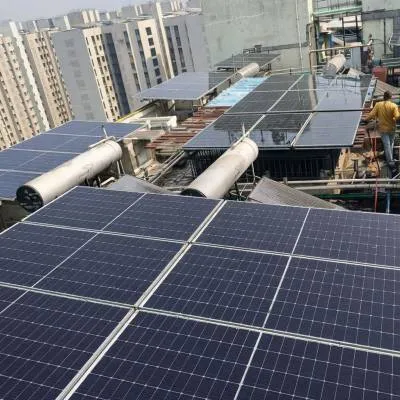
The Ministry of New and Renewable Energy had issued draft norms for central financial assistance and a payment security mechanism under the Renewable Energy Services Company (RESCO) model and utility-led demand aggregation model of the new rooftop solar scheme.

Under the RESCO model, it was outlined that a renewable energy company would procure, install, and maintain a rooftop solar system for a consumer for at least five years, without requiring an upfront payment from the consumer. The renewable energy company would provide the upfront financing.

The PM Surya Ghar Muft Bijli Yojana, with an outlay of Rs 750 billion, was to be implemented until FY27. The scheme had previously issued guidelines for the release of funds to residential consumers for installations through registered vendors but did not include the RESCO or utility-led aggregation models for rooftop solar installations.

According to the proposed draft norms, consumers would only pay for the electricity generated through a tariff to the RESCO operator. Once the operator’s investment had been repaid, the system would be transferred to the consumer, and the tariff would be saved, effectively making the electricity generated nearly free.

The Ministry of New and Renewable Energy had issued draft norms for central financial assistance and a payment security mechanism under the Renewable Energy Services Company (RESCO) model and utility-led demand aggregation model of the new rooftop solar scheme. Under the RESCO model, it was outlined that a renewable energy company would procure, install, and maintain a rooftop solar system for a consumer for at least five years, without requiring an upfront payment from the consumer. The renewable energy company would provide the upfront financing. The PM Surya Ghar Muft Bijli Yojana, with an outlay of Rs 750 billion, was to be implemented until FY27. The scheme had previously issued guidelines for the release of funds to residential consumers for installations through registered vendors but did not include the RESCO or utility-led aggregation models for rooftop solar installations. According to the proposed draft norms, consumers would only pay for the electricity generated through a tariff to the RESCO operator. Once the operator’s investment had been repaid, the system would be transferred to the consumer, and the tariff would be saved, effectively making the electricity generated nearly free.

Next Story
Infrastructure Urban

Implementation Status of Jal Jeevan Mission

Since August 2019 the Government has implemented Jal Jeevan Mission to provide assured potable water through household tap connections in rural India. At the start of the mission only 32.3 million (mn) rural households, representing 16.7 per cent, were reported to have tap water connections. States and union territories have reported that 125.8 mn additional rural households have since been provided with tap connections. As a result, of about 193.6 mn rural households roughly 158.2 mn, or 81.71 per cent, are reported to have tap water supply at home.\n\nThe State, district and village level st..

Next Story
Infrastructure Urban

Jal Jeevan Mission Reaches Eighty One Per Cent Rural Coverage

The Government reported substantial progress under the Jal Jeevan Mission, launched in August 2019 to provide tap water to every rural household. At launch only 32.3 million (mn) rural households had tap connections and states and Union territories reported provision of 125.8 mn additional households by March 2026. Consequently, out of about 193.6 mn rural households around 158.2 mn, or 81.71 per cent, are reported to have tap water at home. The Finance Minister announced extension of the mission until 2028 in the 2025-26 budget speech. The Swachh Bharat Mission Grameen, launched in October 20..

Next Story
Infrastructure Urban

Empowering Local Governance for Sustainable Rural Water Supply

The Ministry of Jal Shakti has aligned the Jal Jeevan Mission (JJM) with the 73rd Amendment to strengthen village level planning and community ownership of water supply. Gram Panchayats, village water and sanitation committees and Pani Samitis are to plan, implement, manage and maintain piped water systems, with gram sabha processes formalising handover and oversight. Implementation support agencies including non government organisations, community based organisations and self help groups have been empanelled to train local committees and promote women participation. Under JJM, the department ..

Advertisement

Subscribe to Our Newsletter

Get daily newsletters around different themes from Construction world.

STAY CONNECTED

Advertisement

Advertisement

Advertisement