Ghaziabad Mandates Rooftop Solar And Rainwater Harvesting
POWER & RENEWABLE ENERGY

Ghaziabad Mandates Rooftop Solar And Rainwater Harvesting

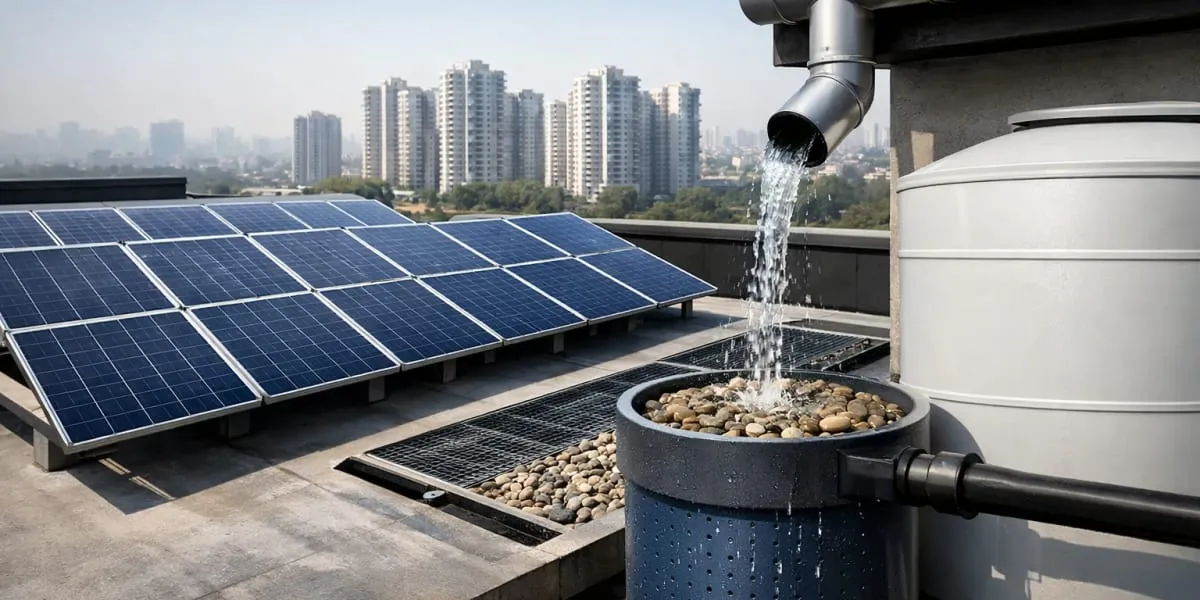
The Ghaziabad Development Authority has mandated rooftop solar power systems and rainwater harvesting structures in all new residential building plans, making these provisions a compulsory part of submissions. The regulation is presented as a municipal response to the twin pressures of growing electricity demand and stressed water resources in this rapidly expanding city in the National Capital Region. By embedding the requirements into approval processes the authority aims to ensure that sustainability measures are considered at the earliest stages of design.

Making rooftop solar compulsory aims to encourage decentralised clean energy generation at household level and to reduce reliance on centralised power supplies, supporting grid stability and lowering peak load pressures. The directive emphasises that integrating photovoltaic systems during construction is generally more efficient and cost effective than retrofitting after completion and that households and developers can capture long term financial benefits through reduced electricity bills. The policy is expected to prompt builders to plan for system layouts and to work with suppliers earlier in the development cycle.

The mandate for rainwater harvesting seeks to improve on site water management while contributing to groundwater recharge through rooftop capture, storage and managed infiltration. The requirement envisages storage tanks and underground recharge pits or similar arrangements to channel runoff into aquifers and to reduce surface accumulation that can cause waterlogging in monsoon rains. Municipal planners consider such decentralised interventions to be useful complements to larger infrastructure investments given persistent stress on groundwater resources.

For developers, architects and prospective homeowners the rule will require adjustments to design priorities, cost estimates and construction sequencing to accommodate energy and water conservation infrastructure. The measure aligns with a wider trend among urban bodies to integrate sustainability into building bylaws and to promote more self sufficient and resilient housing stock rather than treating green features as optional extras. The authority foresees that the combined measures will enhance environmental resilience, deliver operational savings and offer a replicable model for other cities pursuing sustainable growth.

The Ghaziabad Development Authority has mandated rooftop solar power systems and rainwater harvesting structures in all new residential building plans, making these provisions a compulsory part of submissions. The regulation is presented as a municipal response to the twin pressures of growing electricity demand and stressed water resources in this rapidly expanding city in the National Capital Region. By embedding the requirements into approval processes the authority aims to ensure that sustainability measures are considered at the earliest stages of design. Making rooftop solar compulsory aims to encourage decentralised clean energy generation at household level and to reduce reliance on centralised power supplies, supporting grid stability and lowering peak load pressures. The directive emphasises that integrating photovoltaic systems during construction is generally more efficient and cost effective than retrofitting after completion and that households and developers can capture long term financial benefits through reduced electricity bills. The policy is expected to prompt builders to plan for system layouts and to work with suppliers earlier in the development cycle. The mandate for rainwater harvesting seeks to improve on site water management while contributing to groundwater recharge through rooftop capture, storage and managed infiltration. The requirement envisages storage tanks and underground recharge pits or similar arrangements to channel runoff into aquifers and to reduce surface accumulation that can cause waterlogging in monsoon rains. Municipal planners consider such decentralised interventions to be useful complements to larger infrastructure investments given persistent stress on groundwater resources. For developers, architects and prospective homeowners the rule will require adjustments to design priorities, cost estimates and construction sequencing to accommodate energy and water conservation infrastructure. The measure aligns with a wider trend among urban bodies to integrate sustainability into building bylaws and to promote more self sufficient and resilient housing stock rather than treating green features as optional extras. The authority foresees that the combined measures will enhance environmental resilience, deliver operational savings and offer a replicable model for other cities pursuing sustainable growth.

Next Story
Infrastructure Urban

Flender Unveils N-ZAPEX Gear Couplings for Cost-Effective Operation

Flender has unveiled its new N-ZAPEX gear couplings, setting a new industry standard for drive applications in harsh conditions, such as those found in steel, cement, mining, and oil & gas industries. Designed to deliver economic benefits over the entire lifecycle, the N-ZAPEX series offers the highest torque density and misalignment capacities on the market.The N-ZAPEX is available in two versions, XN and XW, each tailored to meet different customer requirements. The XN variant focuses on standardisation, reduced complexity, and cost-effectiveness for smaller sizes, featuring reusable com..

Next Story
Infrastructure Urban

Anil Agarwal Calls for Entrepreneurial Role in Natural Resource PSUs

Anil Agarwal, Chairman of Vedanta, has highlighted the transformative potential of greater entrepreneurial involvement in India's public sector companies within the natural resources space. In a LinkedIn post, he emphasised the importance of empowering India’s pool of entrepreneurs alongside skilled public-sector talent to strengthen domestic production and reduce the country’s reliance on imports.Agarwal drew comparisons with India’s agricultural success, where self-sufficiency and surplus production were achieved. He suggested that a similar approach could unlock substantial value in p..

Next Story
Technology

Advaiya Launches Change Log Archival App for Microsoft Dynamics 365

Advaiya has launched its Change Log Archival app for Microsoft Dynamics 365 Business Central on the Microsoft Marketplace. The app enables organisations to securely archive large volumes of change log data outside the core ERP system while ensuring auditability, compliance, and traceability.As organisations face growing change log records that increase database size and impact system performance, the Change Log Archival app addresses these challenges by archiving historical logs to Azure Blob Storage. This solution optimises storage, maintains data integrity, and ensures accessibility, allowin..

Advertisement

Subscribe to Our Newsletter

Get daily newsletters around different themes from Construction world.

STAY CONNECTED

Advertisement

Advertisement

Advertisement