
Gujarat Power Demand Hits Record 29,822 MW
POWER & RENEWABLE ENERGY

Gujarat Power Demand Hits Record 29,822 MW

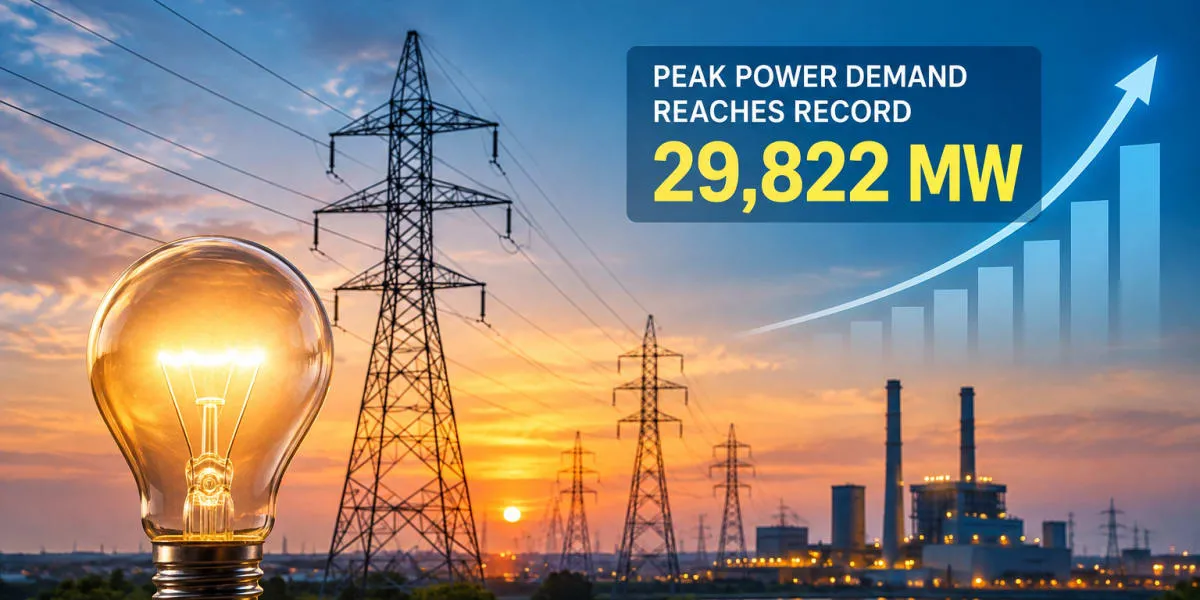
Gujarat’s peak electricity demand reached a record 29,822 MW on October 16, placing pressure on the state’s energy infrastructure and prompting the government to accelerate short-term supply arrangements and long-term capacity expansion. Chief Minister Bhupendra Patel reviewed the demand-supply position at a high-level meeting and directed the Energy Department to ensure uninterrupted power for farmers, industries and households.

Peak demand was 36.6 per cent higher than the 21,822 MW recorded in October last year. Daily consumption rose to 574 mn units from 457 mn units, an increase of nearly 27 per cent. Demand during September and October has also increased by around 4,000 MW, or 12 per cent, compared with previous years.

Weak monsoon conditions, the impact of El Niño and elevated temperatures have raised cooling demand. The government’s effort to provide irrigation power for standing crops has pushed agricultural demand to a daily peak of 12,000 MW, while industrial consumption has strengthened ahead of Diwali. Evening supply remains particularly challenging as solar generation falls to zero after sunset and wind output fluctuates.

Coal- and gas-based plants are being used to meet the evening requirement, while the State Load Dispatch Centre and distribution companies are working to maintain grid stability. Lower hydropower generation, caused by deficient rainfall in Gujarat and neighbouring states, and declining wind generation have further tightened availability.

The Union Coal Ministry has assured Gujarat of 10 to 11 railway rakes of coal daily until November, rising to 13 to 14 rakes thereafter. The state has secured 329 MW from NTPC’s Farakka plant for November, 551 MW from Assam’s central power quota on a long-term basis and an extension of its 716 MW supply arrangement from NTPC’s Barh-I and Dadri-I plants until March 2028. It has also sought 500 MW from the Centre’s unallocated quota.

Battery Energy Storage System (BESS) capacity is being expanded to ease evening shortages. Against 192 MW currently operational, agreements cover 2,742 MW and 5,517 MWh. Long-term plans include additional thermal and hydropower capacity from 2028-29, along with projects under the SHAKTI scheme, a proposed nuclear project and an 800 MW Ukai thermal unit.

Gujarat’s peak electricity demand reached a record 29,822 MW on October 16, placing pressure on the state’s energy infrastructure and prompting the government to accelerate short-term supply arrangements and long-term capacity expansion. Chief Minister Bhupendra Patel reviewed the demand-supply position at a high-level meeting and directed the Energy Department to ensure uninterrupted power for farmers, industries and households. Peak demand was 36.6 per cent higher than the 21,822 MW recorded in October last year. Daily consumption rose to 574 mn units from 457 mn units, an increase of nearly 27 per cent. Demand during September and October has also increased by around 4,000 MW, or 12 per cent, compared with previous years. Weak monsoon conditions, the impact of El Niño and elevated temperatures have raised cooling demand. The government’s effort to provide irrigation power for standing crops has pushed agricultural demand to a daily peak of 12,000 MW, while industrial consumption has strengthened ahead of Diwali. Evening supply remains particularly challenging as solar generation falls to zero after sunset and wind output fluctuates. Coal- and gas-based plants are being used to meet the evening requirement, while the State Load Dispatch Centre and distribution companies are working to maintain grid stability. Lower hydropower generation, caused by deficient rainfall in Gujarat and neighbouring states, and declining wind generation have further tightened availability. The Union Coal Ministry has assured Gujarat of 10 to 11 railway rakes of coal daily until November, rising to 13 to 14 rakes thereafter. The state has secured 329 MW from NTPC’s Farakka plant for November, 551 MW from Assam’s central power quota on a long-term basis and an extension of its 716 MW supply arrangement from NTPC’s Barh-I and Dadri-I plants until March 2028. It has also sought 500 MW from the Centre’s unallocated quota. Battery Energy Storage System (BESS) capacity is being expanded to ease evening shortages. Against 192 MW currently operational, agreements cover 2,742 MW and 5,517 MWh. Long-term plans include additional thermal and hydropower capacity from 2028-29, along with projects under the SHAKTI scheme, a proposed nuclear project and an 800 MW Ukai thermal unit.

Related Stories

Gold Stories

Next Story
Infrastructure Transport

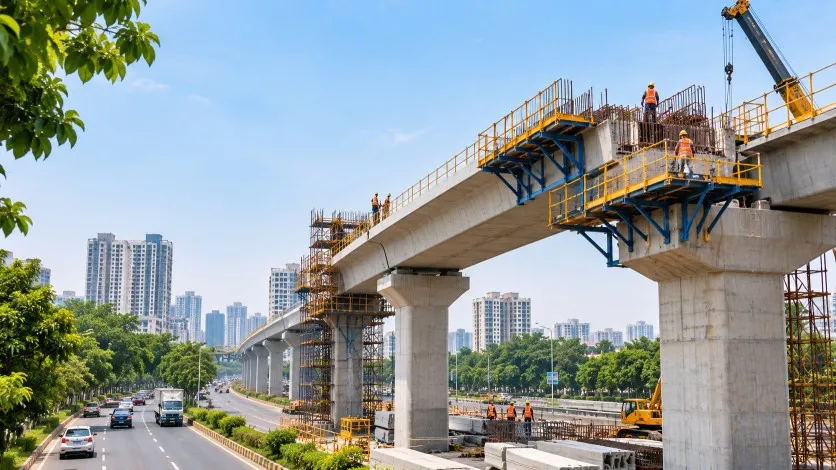
Supreme Infrastructure posts first post-scheme quarterly profit

Supreme Infrastructure India reported its first profitable quarter following the completion of its Composite Scheme, with a sharp increase in revenue and a significant reduction in finance costs driving its financial turnaround in Q2 FY27.Revenue from operations rose 114.8 per cent year-on-year to Rs 290.04 million in Q2 FY27, compared with Rs 135.02 million in the corresponding quarter last year. Total income increased 130.3 per cent to Rs 335.63 million from Rs 135.56 million.The company reported a profit after tax (PAT) of Rs 36.78 million in Q2 FY27, against a loss of Rs 591.43 million in ..
Next Story
Infrastructure Transport

J. Kumar Infraprojects Q2 profit rises 25 per cent to Rs 1.13 billion

J. Kumar Infraprojects reported a 25 per cent year-on-year increase in net profit to Rs 1.13 billion in Q2 FY27, while revenue from operations grew 15 per cent to Rs 15.39 billion.Profitability improved faster than revenue, with EBITDA rising 18 per cent to Rs 2.29 billion. The EBITDA margin expanded to 14.9 per cent, supported by cost control and steady project execution. Net profit margin increased to 7.4 per cent from 6.7 per cent in the corresponding quarter last year.The company's order book stood at Rs 227.11 billion, equivalent to nearly four times its annual revenue. It secured fresh o..
Next Story
Equipment

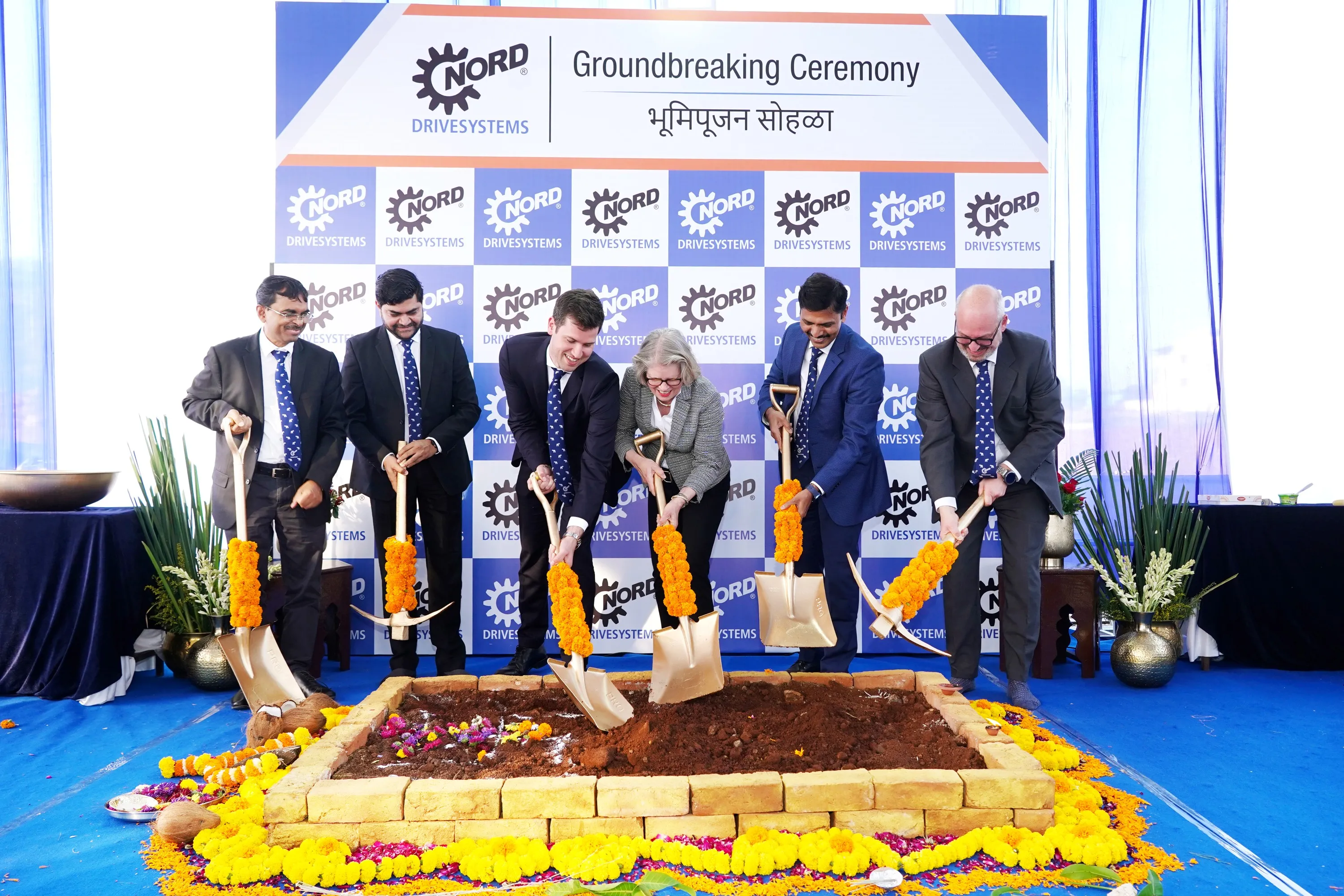
NORD India to invest Rs 4 billion in new Pune manufacturing facility

NORD Drivesystems India (NDPL) has commenced construction of a new manufacturing facility at RMK Industrial Park 3, near MIDC Talegaon Phase V, Pune, with a planned investment of Rs 4 billion. The expansion will double the company's gearbox and geared motor production capacity and introduce gear-component manufacturing.The facility will cater to domestic demand and exports to other NORD subsidiaries, including its headquarters in Germany. The company also plans to manufacture gears and related components at the new plant, supporting both the Indian market and global operations.Dhanraj Kalbhor,..

Advertisement

Subscribe to Our Newsletter

Get daily newsletters around different themes from Construction world.

STAY CONNECTED

Advertisement

SPECIAL OFFER
QR Code