Gujarat Targets 65 MW Rooftop Solar Expansion in 2026-27
POWER & RENEWABLE ENERGY

Gujarat Targets 65 MW Rooftop Solar Expansion in 2026-27

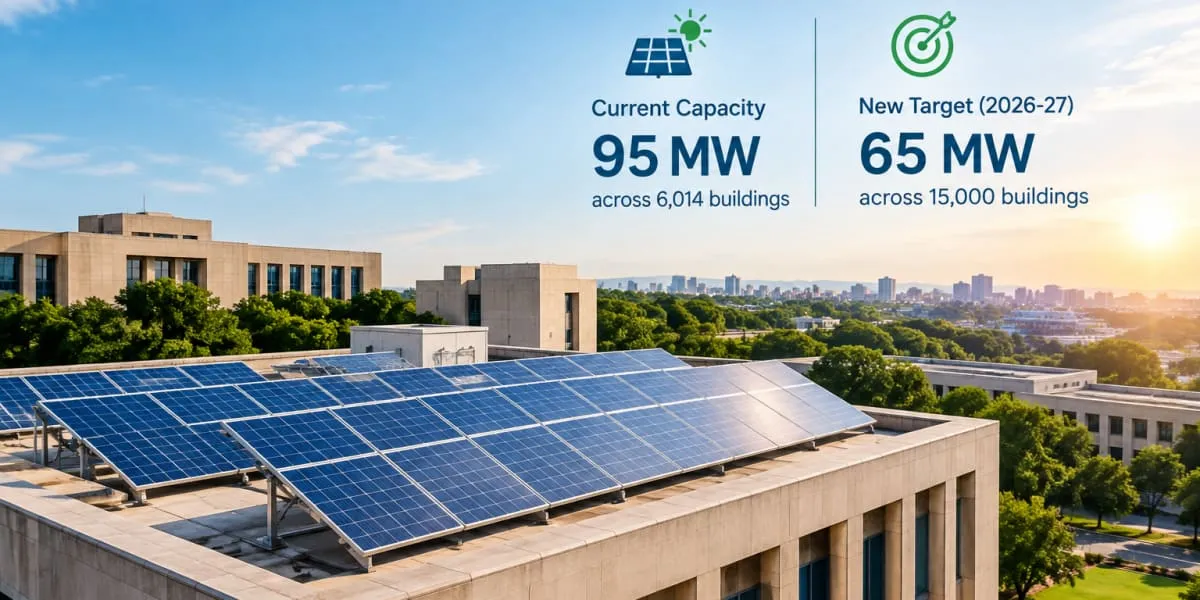
Gujarat is expanding its rooftop solar programme by using government buildings as decentralised power-generation assets. Solar systems installed across 6,014 buildings have taken cumulative capacity to 95 MW, while the state has set a target of adding 65 MW across 15,000 more buildings in 2026-27.

The programme has been implemented by the Gujarat Energy Development Agency (GEDA) under the Climate Change Department since 2011-12. During 2025-26, installations were completed on 1,377 government buildings, adding 17.1 MW of renewable-energy capacity and taking the cumulative coverage to 6,014 buildings by March 2026.

The state has allocated Rs. 3.14 bn for the expansion in 2026-27. Of this, Rs. 2.78 bn is assigned to general government buildings, while Rs. 30 mn is earmarked for buildings managed by the Social Justice and Empowerment Department and Rs. 330 mn for those under the Tribal Development Department. The Climate Change Department will provide 100 per cent capital-cost support for installations on buildings under the state government.

Officials said the programme is intended to reduce conventional electricity consumption, lower power bills and curb pollution associated with conventional generation. The expansion will also increase decentralised renewable-energy generation by making use of otherwise idle government rooftops.

Gujarat has also introduced an Industrial Internet of Things (IIoT)-based Renewable Energy Monitoring System. It connects smart meters, sensors and communication gateways through GPRS, 4G and Ethernet, records performance data at 15-minute intervals and generates up to 96 readings a day. The platform provides automated alerts and allows authorities to identify operational issues remotely. It currently covers 142.5 MW of solar and 68.3 MW of wind generation. Data cited from the Union Ministry of New and Renewable Energy places Gujarat's installed renewable-energy capacity at 47,178 MW, the highest among Indian states.

Gujarat is expanding its rooftop solar programme by using government buildings as decentralised power-generation assets. Solar systems installed across 6,014 buildings have taken cumulative capacity to 95 MW, while the state has set a target of adding 65 MW across 15,000 more buildings in 2026-27. The programme has been implemented by the Gujarat Energy Development Agency (GEDA) under the Climate Change Department since 2011-12. During 2025-26, installations were completed on 1,377 government buildings, adding 17.1 MW of renewable-energy capacity and taking the cumulative coverage to 6,014 buildings by March 2026. The state has allocated Rs. 3.14 bn for the expansion in 2026-27. Of this, Rs. 2.78 bn is assigned to general government buildings, while Rs. 30 mn is earmarked for buildings managed by the Social Justice and Empowerment Department and Rs. 330 mn for those under the Tribal Development Department. The Climate Change Department will provide 100 per cent capital-cost support for installations on buildings under the state government. Officials said the programme is intended to reduce conventional electricity consumption, lower power bills and curb pollution associated with conventional generation. The expansion will also increase decentralised renewable-energy generation by making use of otherwise idle government rooftops. Gujarat has also introduced an Industrial Internet of Things (IIoT)-based Renewable Energy Monitoring System. It connects smart meters, sensors and communication gateways through GPRS, 4G and Ethernet, records performance data at 15-minute intervals and generates up to 96 readings a day. The platform provides automated alerts and allows authorities to identify operational issues remotely. It currently covers 142.5 MW of solar and 68.3 MW of wind generation. Data cited from the Union Ministry of New and Renewable Energy places Gujarat's installed renewable-energy capacity at 47,178 MW, the highest among Indian states.

Related Stories

Gold Stories
Next Story
Technology

Where Infrastructure Meets Intelligence: Inside Bentley's Year inc

Oct 28, 2026  @Tanveer PadodeA first-hand account of Bentley’s 2026 awards, where AI, digital twins and engineering innovation are reshaping infrastructure delivery.- By Tanveer Padode, CEO, IMPACCT: A first-hand account of Bentley’s 2026 awards, where AI, digital twins and engineering innovation are reshaping infrastructure delivery.Two days in SingaporeConstruction is won or lost in two places: how a project is designed and how it is delivered. Technology has promised to improve both for years, and the question I carried into Bentley's Year in Infrastructure, held at the Fairmont Si..

Next Story
Infrastructure Transport

Vaishnaw Inaugurates Two Rail Sections in Madhya Pradesh

Railway Minister Ashwini Vaishnaw on October 24 inaugurated the Satna-Devendranagar and Rewa-Churhat rail sections under the Lalitpur-Singrauli Railway Project in Madhya Pradesh. He also flagged off the new Devendranagar-Churhat passenger train service through video conferencing. Chief Minister Dr Mohan Yadav attended the event. The new Rewa-Churhat railway line, which extends approximately 65 km, was built at a cost of over Rs. 10 bn. The 53 km Satna-Devendranagar line was constructed at a cost of over Rs. 8 bn. The passenger service is expected to provide improved rail access to residents in..
Next Story
Infrastructure Transport

Railways Minister to Inaugurate New Rail Sections Covering 118 km

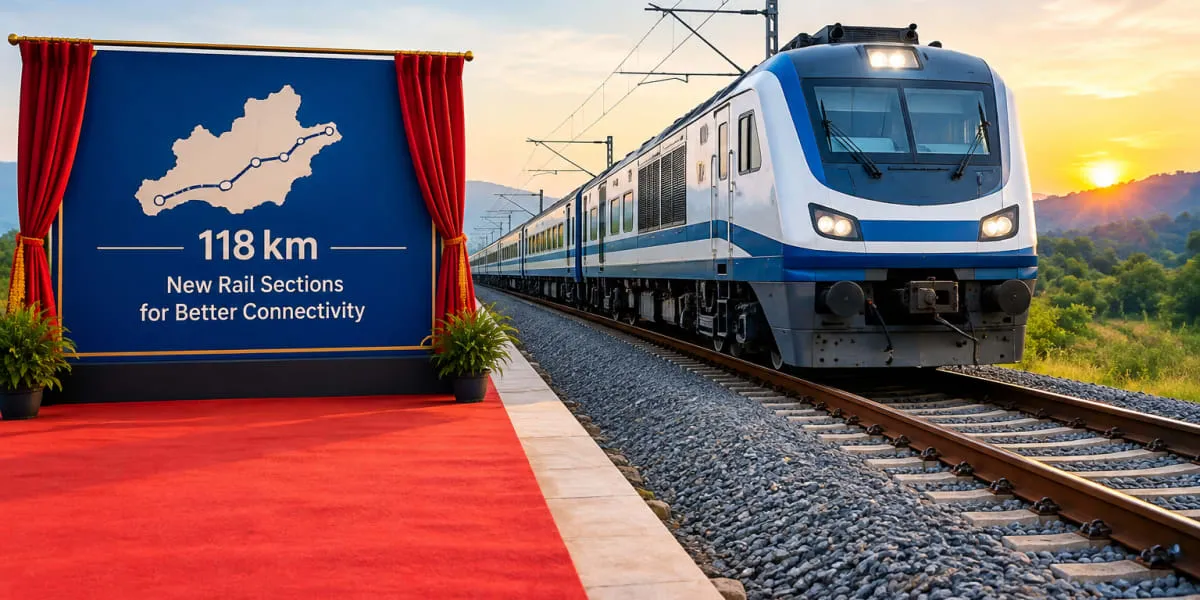
Railways Minister Ashwini Vaishnaw will inaugurate the Satna-Devendra Nagar and Rewa-Churhat rail sections in Madhya Pradesh on October 24. The two sections have a combined length of 118 km and are intended to improve passenger and freight connectivity across the region. Vaishnaw will also flag off a new train service between Devendra Nagar and Churhat. Madhya Pradesh Chief Minister Mohan Yadav will attend the inauguration programme, according to information released by the Ministry of Railways. The 53-km Satna-Devendra Nagar section is expected to improve rail access to Satna, Nagod, Devendra..

Advertisement

Subscribe to Our Newsletter

Get daily newsletters around different themes from Construction world.

STAY CONNECTED

Advertisement

SPECIAL OFFER
QR Code