GUVNL Invites Bids for 500 MW/1000 MWh BESS Projects in Gujarat
POWER & RENEWABLE ENERGY

GUVNL Invites Bids for 500 MW/1000 MWh BESS Projects in Gujarat

Gujarat Urja Vikas Nigam (GUVNL) has issued an invitation for bids to set up 500 MW/1000 MWh standalone battery energy storage systems (BESS) under tariff-based competitive bidding (Phase VI). The deadline for bid submissions is February 24, 2025, with bids to be opened on February 28.
 
Bidders are required to submit a document fee of Rs 29,500 and a document processing fee of Rs 1.5 million plus 18% GST. An earnest money deposit of Rs 500,000 and a performance bank guarantee of Rs 1.25 million per MW are also required. 

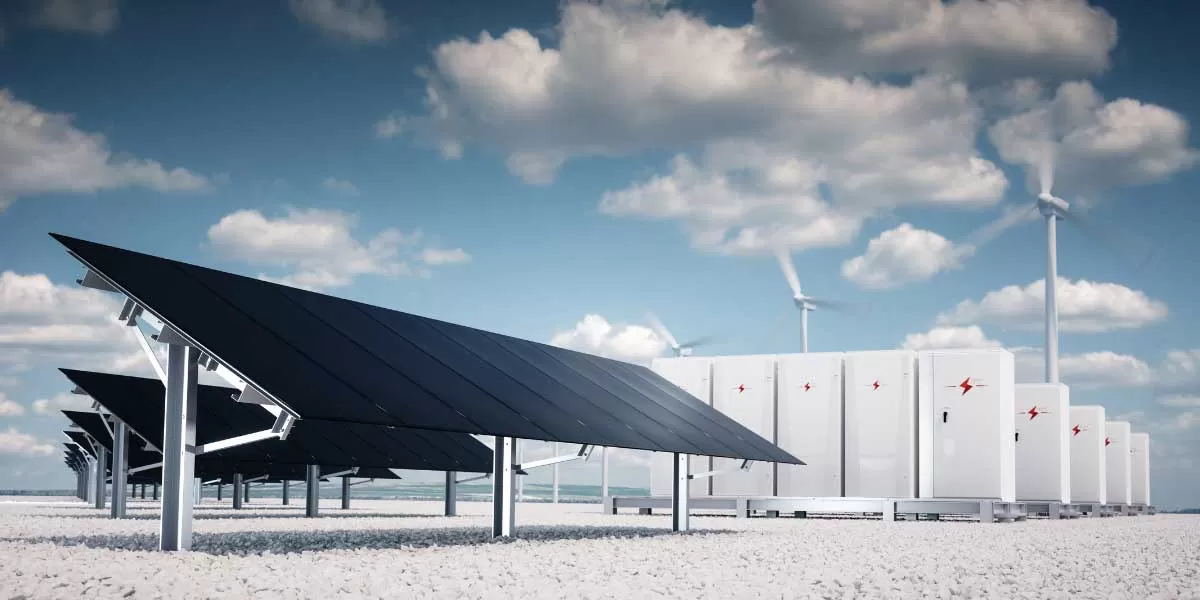
The scope includes setting up BESS that will be available to GUVNL for charging and discharging on-demand. Developers must interconnect the storage system with the state transmission network. The minimum bid size is 100 MWh (50 MW x 2 hours), with additional bid sizes in multiples of 50 MW/100 MWh. 

The BESS must be able to charge and discharge at a C rate of 0.5 and operate in groups ranging from 50 MW/100 MWh to 100 MW/200 MWh up to the total rated capacity. It will draw power from Gujarat Energy Transmission Corporation (GETCO) for charging and inject power back based on dispatch instructions from the State Load Dispatch Centre (SLDC) in coordination with GUVNL. 

Developers are expected to ensure two operational cycles per day and guarantee a minimum system availability of 95% annually. Additionally, they must ensure AC to AC roundtrip efficiency of 85% on a monthly basis.
 
Bidders must have operational technologies that minimize risk and ensure timely project commissioning. Their net worth should be at least Rs 7.4 million per MW of the quoted capacity as of the last date of the previous financial year or at least seven days before the bid submission deadline. 

In December 2024, Kintech Synergy, H.G Infra Engineering, Bhilwara Energy (LNJ Bhilwara Group), and Advait Infratech won GUVNL’s 500 MW/1000 MWh Phase IV standalone BESS auction. GUVNL also issued the Phase V tender in October 2024 for 200 MW/1600 MWh standalone BESS projects in Gujarat. 

(Mercom)      

Gujarat Urja Vikas Nigam (GUVNL) has issued an invitation for bids to set up 500 MW/1000 MWh standalone battery energy storage systems (BESS) under tariff-based competitive bidding (Phase VI). The deadline for bid submissions is February 24, 2025, with bids to be opened on February 28. Bidders are required to submit a document fee of Rs 29,500 and a document processing fee of Rs 1.5 million plus 18% GST. An earnest money deposit of Rs 500,000 and a performance bank guarantee of Rs 1.25 million per MW are also required. The scope includes setting up BESS that will be available to GUVNL for charging and discharging on-demand. Developers must interconnect the storage system with the state transmission network. The minimum bid size is 100 MWh (50 MW x 2 hours), with additional bid sizes in multiples of 50 MW/100 MWh. The BESS must be able to charge and discharge at a C rate of 0.5 and operate in groups ranging from 50 MW/100 MWh to 100 MW/200 MWh up to the total rated capacity. It will draw power from Gujarat Energy Transmission Corporation (GETCO) for charging and inject power back based on dispatch instructions from the State Load Dispatch Centre (SLDC) in coordination with GUVNL. Developers are expected to ensure two operational cycles per day and guarantee a minimum system availability of 95% annually. Additionally, they must ensure AC to AC roundtrip efficiency of 85% on a monthly basis. Bidders must have operational technologies that minimize risk and ensure timely project commissioning. Their net worth should be at least Rs 7.4 million per MW of the quoted capacity as of the last date of the previous financial year or at least seven days before the bid submission deadline. In December 2024, Kintech Synergy, H.G Infra Engineering, Bhilwara Energy (LNJ Bhilwara Group), and Advait Infratech won GUVNL’s 500 MW/1000 MWh Phase IV standalone BESS auction. GUVNL also issued the Phase V tender in October 2024 for 200 MW/1600 MWh standalone BESS projects in Gujarat. (Mercom)      

Next Story
Infrastructure Urban

Implementation Status of Jal Jeevan Mission

Since August 2019 the Government has implemented Jal Jeevan Mission to provide assured potable water through household tap connections in rural India. At the start of the mission only 32.3 million (mn) rural households, representing 16.7 per cent, were reported to have tap water connections. States and union territories have reported that 125.8 mn additional rural households have since been provided with tap connections. As a result, of about 193.6 mn rural households roughly 158.2 mn, or 81.71 per cent, are reported to have tap water supply at home.\n\nThe State, district and village level st..

Next Story
Infrastructure Urban

Jal Jeevan Mission Reaches Eighty One Per Cent Rural Coverage

The Government reported substantial progress under the Jal Jeevan Mission, launched in August 2019 to provide tap water to every rural household. At launch only 32.3 million (mn) rural households had tap connections and states and Union territories reported provision of 125.8 mn additional households by March 2026. Consequently, out of about 193.6 mn rural households around 158.2 mn, or 81.71 per cent, are reported to have tap water at home. The Finance Minister announced extension of the mission until 2028 in the 2025-26 budget speech. The Swachh Bharat Mission Grameen, launched in October 20..

Next Story
Infrastructure Urban

Empowering Local Governance for Sustainable Rural Water Supply

The Ministry of Jal Shakti has aligned the Jal Jeevan Mission (JJM) with the 73rd Amendment to strengthen village level planning and community ownership of water supply. Gram Panchayats, village water and sanitation committees and Pani Samitis are to plan, implement, manage and maintain piped water systems, with gram sabha processes formalising handover and oversight. Implementation support agencies including non government organisations, community based organisations and self help groups have been empanelled to train local committees and promote women participation. Under JJM, the department ..

Advertisement

Subscribe to Our Newsletter

Get daily newsletters around different themes from Construction world.

STAY CONNECTED

Advertisement

Advertisement

Advertisement