+
Haryana to get 150 MW of renewable power supply from SECI
POWER & RENEWABLE ENERGY

Haryana to get 150 MW of renewable power supply from SECI

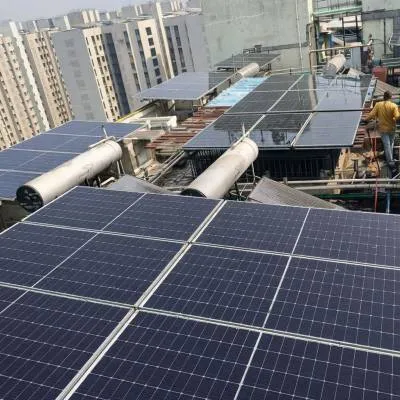
The Haryana Electricity Regulatory Commission (HERC) has permitted Haryana Power Purchase Center (HPPC) to procure 150 MW of renewable energy with a guaranteed peak electricity power supply from the Solar Energy Corporation of India (SECI).

It said that in the absence of the draft power purchase agreement (PPA) between the parties, for any non-supply or curtailment of power during the agreed-upon peak hours, the penalty payable to the Haryana Power Purchase Center should be 100% of the tariff agreed upon by the parties.

The Commission added that the liquidated damages clause for non-supply, curtailed supply during peak hours, or non-commissioning of the project within the stipulated 18 months, will also be enforceable under the power sale agreement (PSA).

HPPC had filed a petition seeking approval for the procurement of 150 MW of renewable power from SECI for 25 years at a levelized tariff of Rs 3.96/kWh with an off-peak tariff of Rs 2.88/kWh and a peak tariff of Rs 6.85/kWh, plus a trading margin of Rs 0.07/kWh.

HPPC pointed out that the tariff offered by SECI was lower than the variable cost of the power sourced from thermal stations and lower than the short-term power procured from other sources.

See also:
Govt’s $10-bn plan to curb emissions
Assam to be wholly free of fossil fuels by 2031, says CM


The Haryana Electricity Regulatory Commission (HERC) has permitted Haryana Power Purchase Center (HPPC) to procure 150 MW of renewable energy with a guaranteed peak electricity power supply from the Solar Energy Corporation of India (SECI). It said that in the absence of the draft power purchase agreement (PPA) between the parties, for any non-supply or curtailment of power during the agreed-upon peak hours, the penalty payable to the Haryana Power Purchase Center should be 100% of the tariff agreed upon by the parties. The Commission added that the liquidated damages clause for non-supply, curtailed supply during peak hours, or non-commissioning of the project within the stipulated 18 months, will also be enforceable under the power sale agreement (PSA). HPPC had filed a petition seeking approval for the procurement of 150 MW of renewable power from SECI for 25 years at a levelized tariff of Rs 3.96/kWh with an off-peak tariff of Rs 2.88/kWh and a peak tariff of Rs 6.85/kWh, plus a trading margin of Rs 0.07/kWh. HPPC pointed out that the tariff offered by SECI was lower than the variable cost of the power sourced from thermal stations and lower than the short-term power procured from other sources.See also: Govt’s $10-bn plan to curb emissionsAssam to be wholly free of fossil fuels by 2031, says CM

Related Stories

Gold Stories

Next Story
Infrastructure Urban

Infrastructure Opportunity Outlook by IMPACCT.Info

India’s infrastructure pipeline is witnessing dynamic activity across stages — from immediate bidding to future planning. IMPACCT segments these into three categories: Immediate, 3–6 Month, and Future Opportunities, enabling businesses to identify, prepare, and participate in high-value tenders and projects across sectors.To read full article Click Here ..

Next Story
Real Estate

Glass, Reframed!

Glass façades, quintessential aesthetic building envelopes globally, have been widely adopted in India as well. But when the focus is high-performance building systems that deliver energy efficiency, comfort and architectural identity, glass isn’t the only preference. Combination solutions, involving glass and some other material, improve façade outcomes. Some combinations come at comparable prices, some at a higher price. Here is a selection of performance-oriented solutions...To read the full story Click Here ..

Next Story
Infrastructure Urban

Beyond Building Faster

India’s cities are expanding at an unprecedented pace, bringing new infrastructure and development opportunities while also intensifying challenges around mobility, public spaces, liveability and supporting infrastructure. The question, therefore, is not simply whether India can build faster, but whether it can build cities that work better.At a CW webinar, Are We Designing Better Cities – or Just Building Faster?, moderator Ar. Samir Shaikh, Founding Principal, AR&UD Studio, brought together perspectives from design, development, master planning and technology...To read the full artic..

Advertisement

Subscribe to Our Newsletter

Get daily newsletters around different themes from Construction world.

STAY CONNECTED

Advertisement

SPECIAL OFFER
QR Code