Hindustan Zinc And JNCASR Advance Zinc?Ion Battery Prototypes
POWER & RENEWABLE ENERGY

Hindustan Zinc And JNCASR Advance Zinc?Ion Battery Prototypes

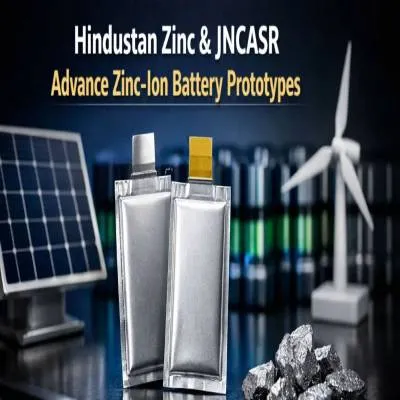
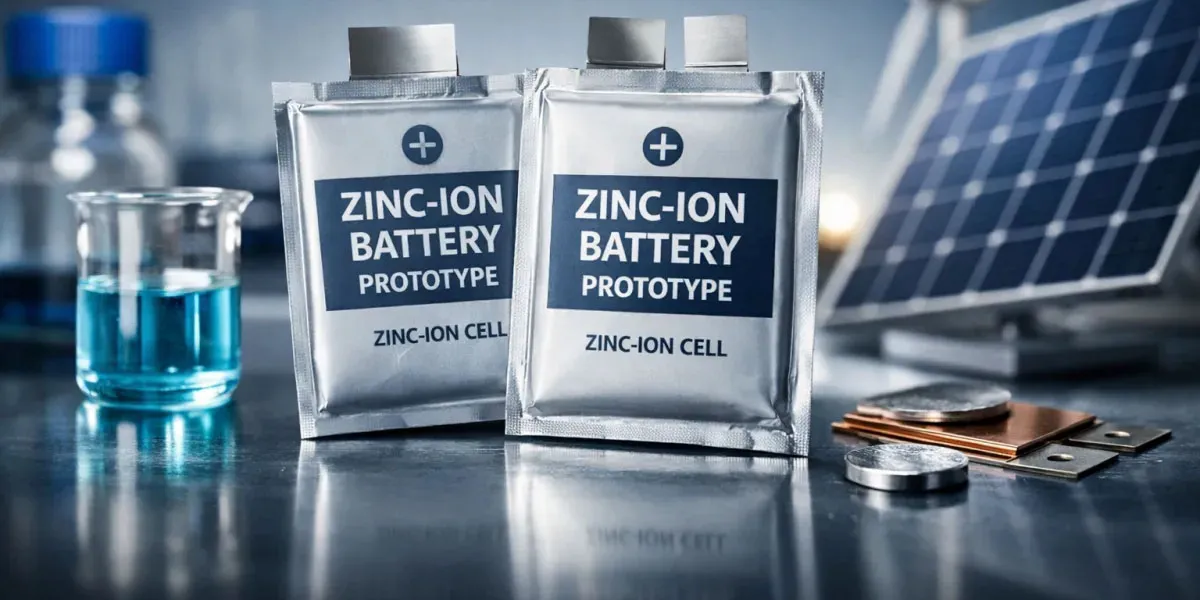
Hindustan Zinc Limited, in collaboration with the Jawaharlal Nehru Centre for Advanced Scientific Research, has developed stable and reliable zinc?ion battery pouch cell prototypes aimed at large?scale renewable energy storage. The prototypes were formulated with low?cost electrolytes that improve stability and enable longer cycle life, and they were evaluated under realistic solar capture and release profiles to assess suitability for stationary deployment. The development marks a milestone in indigenous research on energy storage technologies and reflects a strategic effort to leverage domestic zinc resources for the energy transition.

Zinc?ion batteries offer advantages for stationary applications because zinc is abundant and relatively low cost, and aqueous electrolytes reduce flammability risks compared with many lithium?ion chemistries. While current zinc?ion systems exhibit lower energy density than lithium?ion alternatives, the collaboration is addressing key material and electrolyte challenges to improve cycle life and performance for long?duration storage. The team is progressing work to enhance energy storage capacity and extend operational duration without compromising safety and scalability.

Hindustan Zinc supported researchers at the centre to develop the electrolyte formulations and assemble pouch cell prototypes, demonstrating applicability to renewable energy capture and release patterns typical of solar generation. The prototypes were tested under realistic conditions and showed promising stability and reliability for large?scale applications, indicating potential for further optimisation and commercialisation pathways. The collaboration emphasises industry–academia partnership as a means to strengthen indigenous capabilities and develop India?centric solutions for the clean energy transition.

Hindustan Zinc reiterated its intent to accelerate the shift towards sustainable energy solutions by developing next?generation zinc materials and storage technologies while continuing its core operations in metal production and supply. The company highlighted its market position and sustainability commitments as enabling factors for scaling such technologies and supporting wider renewable integration. Continued research and development is expected to refine performance metrics and prepare the technology for broader deployment.

Hindustan Zinc Limited, in collaboration with the Jawaharlal Nehru Centre for Advanced Scientific Research, has developed stable and reliable zinc?ion battery pouch cell prototypes aimed at large?scale renewable energy storage. The prototypes were formulated with low?cost electrolytes that improve stability and enable longer cycle life, and they were evaluated under realistic solar capture and release profiles to assess suitability for stationary deployment. The development marks a milestone in indigenous research on energy storage technologies and reflects a strategic effort to leverage domestic zinc resources for the energy transition. Zinc?ion batteries offer advantages for stationary applications because zinc is abundant and relatively low cost, and aqueous electrolytes reduce flammability risks compared with many lithium?ion chemistries. While current zinc?ion systems exhibit lower energy density than lithium?ion alternatives, the collaboration is addressing key material and electrolyte challenges to improve cycle life and performance for long?duration storage. The team is progressing work to enhance energy storage capacity and extend operational duration without compromising safety and scalability. Hindustan Zinc supported researchers at the centre to develop the electrolyte formulations and assemble pouch cell prototypes, demonstrating applicability to renewable energy capture and release patterns typical of solar generation. The prototypes were tested under realistic conditions and showed promising stability and reliability for large?scale applications, indicating potential for further optimisation and commercialisation pathways. The collaboration emphasises industry–academia partnership as a means to strengthen indigenous capabilities and develop India?centric solutions for the clean energy transition. Hindustan Zinc reiterated its intent to accelerate the shift towards sustainable energy solutions by developing next?generation zinc materials and storage technologies while continuing its core operations in metal production and supply. The company highlighted its market position and sustainability commitments as enabling factors for scaling such technologies and supporting wider renewable integration. Continued research and development is expected to refine performance metrics and prepare the technology for broader deployment.

Next Story
Real Estate

Housing Sales Dip 7 per cent QoQ Across Top Cities

India’s housing market saw a 7 per cent quarter-on-quarter decline in sales across the top seven cities in Q1 2026, with approximately 1,01,675 units sold compared to 1,08,970 units in Q4 2025, according to ANAROCK Group. However, on a yearly basis, sales rose 9 per cent, indicating continued underlying demand.The total sales value stood at around Rs 1.51 trillion, reflecting a 5 per cent quarterly drop but a 6 per cent annual increase. Mumbai Metropolitan Region and Bengaluru together accounted for nearly 48 per cent of total sales, while Chennai recorded the highest quarterly decline at 18..

Next Story
Real Estate

Birla Estates Enters Mumbai Redevelopment

Birla Estates has announced its entry into Mumbai’s redevelopment segment with a luxury residential project in Khar West, developed in partnership with Parinee Real Estate Builders. The project will redevelop Anmol Co-operative Housing Society and Bhartiya Bhavan Co-operative Housing Society, marking the company’s first redevelopment initiative in the Mumbai Metropolitan Region.Spread across 1.3 acres, the development will offer a saleable area of 2.9 lakh sq ft with an estimated revenue potential of Rs 17 billion. Positioned in one of Mumbai’s prime residential micro-markets, the projec..

Next Story
Infrastructure Urban

Hitachi, MUFG Expand EV Financing Model

Hitachi and MUFG Bank have expanded their NextGen business co-creation model to accelerate decarbonised mobility by financing electric vehicles and charging infrastructure. The renewed collaboration aims to address key barriers to electrification, including limited access to capital and the need for integrated energy solutions.Building on earlier partnerships, the expanded model extends beyond battery-focused solutions to include electric mobility assets, charging systems and energy management infrastructure across global markets. The initiative will leverage structured financing through speci..

Advertisement

Subscribe to Our Newsletter

Get daily newsletters around different themes from Construction world.

STAY CONNECTED

Advertisement

Advertisement

Advertisement