+
IEX Energy Trade Volume Up 19 Per Cent in January
POWER & RENEWABLE ENERGY

IEX Energy Trade Volume Up 19 Per Cent in January

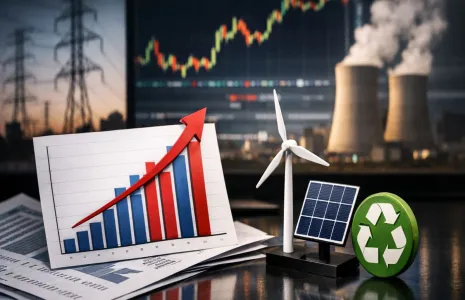
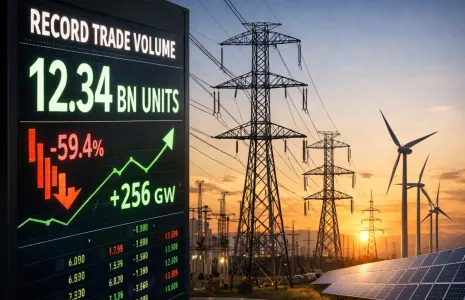
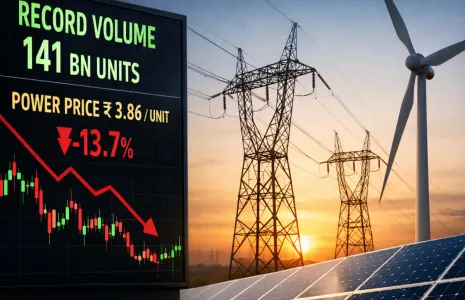
Indian Energy Exchange (IEX) reported that energy trade volume rose by 19 per cent in January, signalling stronger activity on the national power market. The exchange noted higher participation from trading participants and a steady flow of supply across multiple segments. The rise in traded volumes was presented as a marker of growing market liquidity and improved engagement among generators and buyers. Analysts noted that exchange metrics were being watched closely by industry participants.\n\nThe increase in volumes was concentrated in spot and term markets and reflected a combination of demand uptick and operational readiness among market players. Market observers suggested that enhanced price discovery mechanisms and greater transparency continued to draw liquidity to the platform. IEX performance in the month highlighted the ongoing role of organised exchanges in matching variable supply and demand. The trend also suggested incremental entry of new participants and widening of trading corridors.\n\nGreater trade activity supported more efficient scheduling and contributed to operational flexibility for system operators, according to industry commentary. Increased volumes were also associated with improved integration of variable renewable generation and a broader mix of supply resources. The shift in trade patterns underscored the market adjustment to evolving generation profiles and the need for adaptable procurement strategies. Operational adjustments were reportedly prioritised to accommodate changing supply patterns and scheduling needs.\n\nLooking ahead, participants were expected to monitor volume trends and market depth as factors that could influence price signals and contracting behaviour. Continued focus on market reforms and technological upgrades was likely to shape participation and liquidity over coming months. The exchange performance in January was therefore seen as a barometer for near term market resilience during the energy transition. Stakeholders were urged to remain vigilant on policy shifts and grid management practices.     

Indian Energy Exchange (IEX) reported that energy trade volume rose by 19 per cent in January, signalling stronger activity on the national power market. The exchange noted higher participation from trading participants and a steady flow of supply across multiple segments. The rise in traded volumes was presented as a marker of growing market liquidity and improved engagement among generators and buyers. Analysts noted that exchange metrics were being watched closely by industry participants.\n\nThe increase in volumes was concentrated in spot and term markets and reflected a combination of demand uptick and operational readiness among market players. Market observers suggested that enhanced price discovery mechanisms and greater transparency continued to draw liquidity to the platform. IEX performance in the month highlighted the ongoing role of organised exchanges in matching variable supply and demand. The trend also suggested incremental entry of new participants and widening of trading corridors.\n\nGreater trade activity supported more efficient scheduling and contributed to operational flexibility for system operators, according to industry commentary. Increased volumes were also associated with improved integration of variable renewable generation and a broader mix of supply resources. The shift in trade patterns underscored the market adjustment to evolving generation profiles and the need for adaptable procurement strategies. Operational adjustments were reportedly prioritised to accommodate changing supply patterns and scheduling needs.\n\nLooking ahead, participants were expected to monitor volume trends and market depth as factors that could influence price signals and contracting behaviour. Continued focus on market reforms and technological upgrades was likely to shape participation and liquidity over coming months. The exchange performance in January was therefore seen as a barometer for near term market resilience during the energy transition. Stakeholders were urged to remain vigilant on policy shifts and grid management practices.     

Next Story
Infrastructure Transport

Second Mountain Tunnel Breakthrough in Palghar Advances High Speed Rail

The Mumbai-Ahmedabad high speed rail (MAHSR) project reached a milestone with the breakthrough of a mountain tunnel in Palghar, Maharashtra. Mountain tunnel MT-six measures 454 metres long and 14.4 metres wide and will accommodate up and down tracks. The breakthrough follows MT-five near Saphale on second January 2026 and the MT-six excavation was completed from both ends using the New Austrian Tunnelling Method. The ministry reported that the tunnelling was completed within 12 months. The New Austrian Tunnelling Method is favoured for its flexibility in complex geology and irregular tunnel s..

Next Story
Infrastructure Transport

Modi Government Pushes Atmanirbhar Container Drive With BCSL MoU

The Union Government advanced a plan to create an integrated, domestically anchored container ecosystem with the signing of a Memorandum of Understanding to establish the Bharat Container Shipping Line (BCSL). The MoU was signed by key agencies including the Shipping Corporation of India and Container Corporation of India alongside major port authorities and Sagarmala Finance Corporation Limited under the Ministry of Ports, Shipping and Waterways, in the presence of senior ministers. The initiative aligns with the Container Manufacturing Assistance Scheme announced in the Union Budget 2026–2..

Next Story
Infrastructure Urban

Ministry Reports Gains In Mobility For Marginalised Communities

The Ministry of Social Justice and Empowerment is implementing skill development, education and rehabilitation schemes to promote socio-economic mobility and sustainable livelihoods for marginalised and disadvantaged communities across the country. Programmes target Scheduled Castes, Other Backward Classes, Economically Weaker Sections, De-notified Tribes and Safai Karamcharis through specialised implementing corporations and empanelled training institutes. Pradhan Mantri Dakshata Aur Kushalta Sampann Hitgrahi Yojana, or PM-DAKSH, provided skill training and placement support through the Nati..

Advertisement

Subscribe to Our Newsletter

Get daily newsletters around different themes from Construction world.

STAY CONNECTED

Advertisement

Advertisement

Advertisement

Open In App