India Advances Green Ammonia Allocation Under NGHM
POWER & RENEWABLE ENERGY

India Advances Green Ammonia Allocation Under NGHM

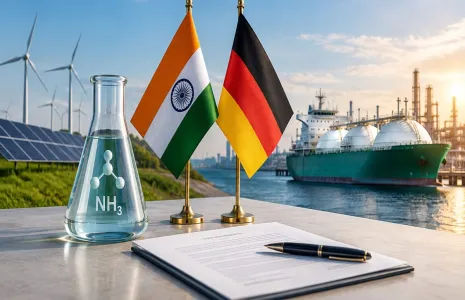
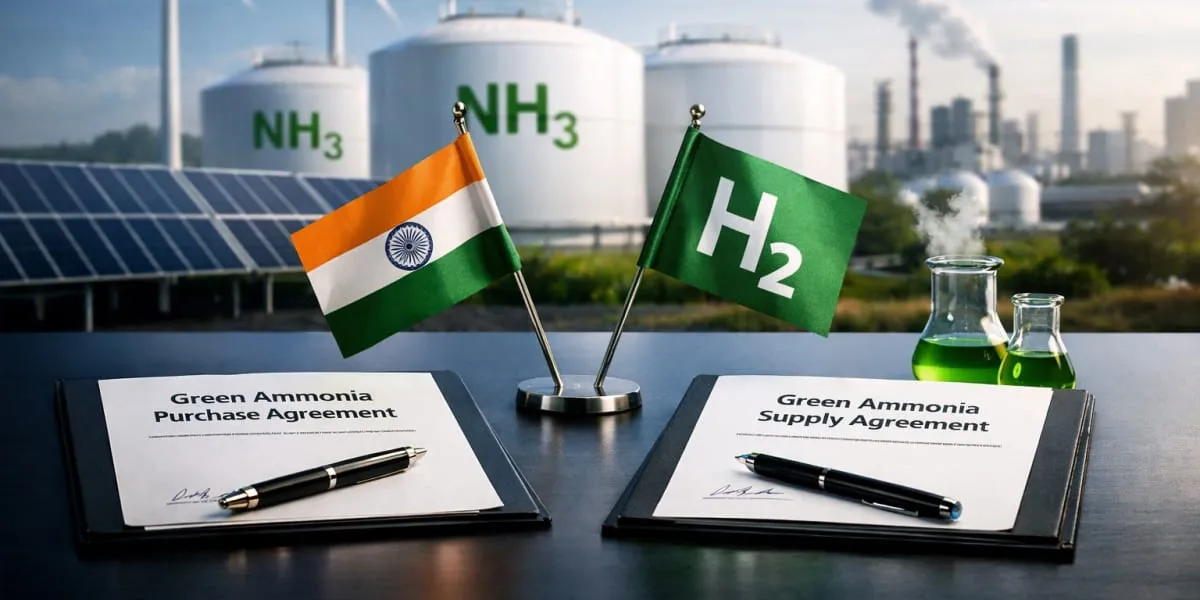
Union ministers and senior officials gathered in Delhi for the exchange of Green Ammonia Purchase Agreements and Green Ammonia Supply Agreements under the National Green Hydrogen Mission, an event presented as a key step in strengthening India’s energy security amid global uncertainty. The ceremony was described as advancing the operationalisation of a domestic green ammonia ecosystem that will support fertiliser production and contribute to a more resilient industrial base. Ministers set the process in the context of India’s broader renewable energy expansion and the government’s aim to align economic growth with climate action.

The agreements, arranged through the Solar Energy Corporation of India and industry participants, have ten year tenures intended to provide long term demand certainty and enable financial closure for large scale projects. The long term contracts are expected to underpin substantial capital investment and accelerate the transition from grey to green ammonia in non urea fertiliser units. Officials indicated that the measure will reduce import dependence in a critical sector and strengthen supply chains for fertiliser manufacture.

Government sources estimated foreign exchange savings of about $2.5 billion (about $2.5 bn) over a period of ten years through substitution of imported grey ammonia, while also highlighting potential employment and investment gains from a new industrial ecosystem. The initiative is aligned with policy plans to focus on hard to abate sectors including fertilisers, refineries, steel and transport, in which green hydrogen and its derivatives will play a strategic role. Green ammonia was presented as both a clean feedstock and a means to catalyse further domestic capability.

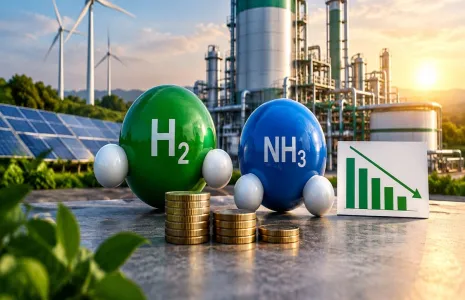
Competitive bidding conducted by SECI yielded allocation of about 724,000 tonnes per annum, equivalent to about 0.724 million tonnes (0.724 mn t), linked to supply for thirteen fertiliser units across the country. The discovered price range in the domestic bids was reported at Rs 49.75 to Rs 64.74 per kg, with the lowest price at Rs 49.75 per kg; international benchmarks were cited at about Euro 1,000 per tonne, roughly Rs 110 per kg, indicating competitive domestic pricing. The bidding process was stated to provide transparency, efficient price discovery and long term demand assurance.

The National Green Hydrogen Mission was noted to carry an outlay of Rs 197,440 million (Rs 197,440 mn) and to target production of at least five million metric tonnes of green hydrogen per annum by 2030, with associated incentives under the Strategic Interventions for Green Hydrogen Transition programme to promote cost competitiveness and attract investment.

Union ministers and senior officials gathered in Delhi for the exchange of Green Ammonia Purchase Agreements and Green Ammonia Supply Agreements under the National Green Hydrogen Mission, an event presented as a key step in strengthening India’s energy security amid global uncertainty. The ceremony was described as advancing the operationalisation of a domestic green ammonia ecosystem that will support fertiliser production and contribute to a more resilient industrial base. Ministers set the process in the context of India’s broader renewable energy expansion and the government’s aim to align economic growth with climate action. The agreements, arranged through the Solar Energy Corporation of India and industry participants, have ten year tenures intended to provide long term demand certainty and enable financial closure for large scale projects. The long term contracts are expected to underpin substantial capital investment and accelerate the transition from grey to green ammonia in non urea fertiliser units. Officials indicated that the measure will reduce import dependence in a critical sector and strengthen supply chains for fertiliser manufacture. Government sources estimated foreign exchange savings of about $2.5 billion (about $2.5 bn) over a period of ten years through substitution of imported grey ammonia, while also highlighting potential employment and investment gains from a new industrial ecosystem. The initiative is aligned with policy plans to focus on hard to abate sectors including fertilisers, refineries, steel and transport, in which green hydrogen and its derivatives will play a strategic role. Green ammonia was presented as both a clean feedstock and a means to catalyse further domestic capability. Competitive bidding conducted by SECI yielded allocation of about 724,000 tonnes per annum, equivalent to about 0.724 million tonnes (0.724 mn t), linked to supply for thirteen fertiliser units across the country. The discovered price range in the domestic bids was reported at Rs 49.75 to Rs 64.74 per kg, with the lowest price at Rs 49.75 per kg; international benchmarks were cited at about Euro 1,000 per tonne, roughly Rs 110 per kg, indicating competitive domestic pricing. The bidding process was stated to provide transparency, efficient price discovery and long term demand assurance. The National Green Hydrogen Mission was noted to carry an outlay of Rs 197,440 million (Rs 197,440 mn) and to target production of at least five million metric tonnes of green hydrogen per annum by 2030, with associated incentives under the Strategic Interventions for Green Hydrogen Transition programme to promote cost competitiveness and attract investment.

Next Story
Real Estate

Indian real estate attracts USD 1.4 bn institutional investments in Q1 2026: Vestian

Institutional investments in India’s real estate sector touched USD 1.4 billion in Q1 2026, marking the highest first-quarter inflow since 2022, according to Vestian. While investments fell 62 per cent quarter-on-quarter due to an exceptionally high base in the previous quarter, they rose 74 per cent compared to the same period last year, reflecting sustained investor confidence despite rising geopolitical and macroeconomic challenges.Commercial real estate remained the key driver of investment activity during the quarter, accounting for 80 per cent of total inflows, sharply higher than 38 p..

Next Story
Infrastructure Transport

VECV crosses 1 lakh annual vehicle sales milestone in FY26

VE Commercial Vehicles (VECV), a joint venture between Volvo Group and Eicher Motors, has surpassed the 1 lakh annual sales mark in FY 2025–26, recording its highest-ever commercial vehicle sales performance. The company said it sold more than 100,000 vehicles during the year, marking a major milestone aligned with the original vision of the Volvo–Eicher joint venture.The strong performance was supported by demand across categories. Light and Medium Duty (LMD) trucks contributed 47,789 units, accounting for 46.1 per cent of total sales. Heavy Duty (HD) trucks recorded 26,867 units (25.9 pe..

Next Story
Technology

Rodic Digital & Advisory partners SatSure to deploy EO intelligence in public sector

Rodic Digital & Advisory (RDA), the strategic advisory and digital transformation arm of Rodic Consultants, has signed a strategic cooperation Memorandum of Understanding (MoU) with SatSure to jointly pursue opportunities in India’s public sector. The collaboration aims to integrate high-resolution Earth Observation (EO) data and geospatial AI into government workflows to strengthen monitoring, compliance, and operational decision-making across key sectors.The partnership combines SatSure’s Earth intelligence capabilities with RDA’s expertise in government digital transformation and ..

Advertisement

Subscribe to Our Newsletter

Get daily newsletters around different themes from Construction world.

STAY CONNECTED

Advertisement

Advertisement

Advertisement