+
Indian Railways Electrification Boosts Energy Security
POWER & RENEWABLE ENERGY

Indian Railways Electrification Boosts Energy Security

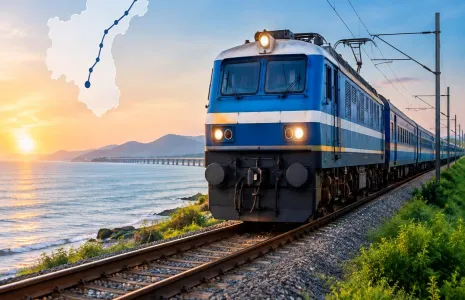
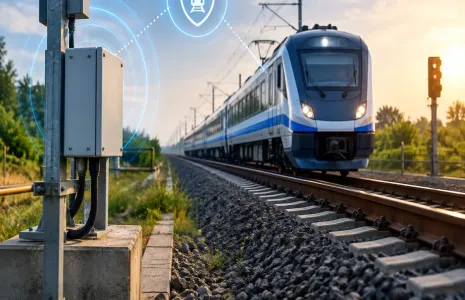
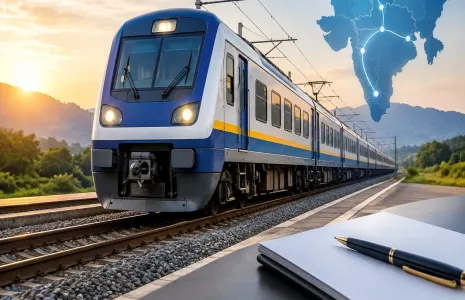
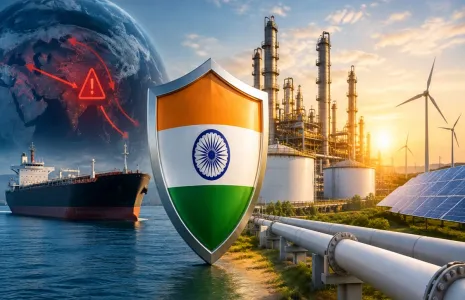
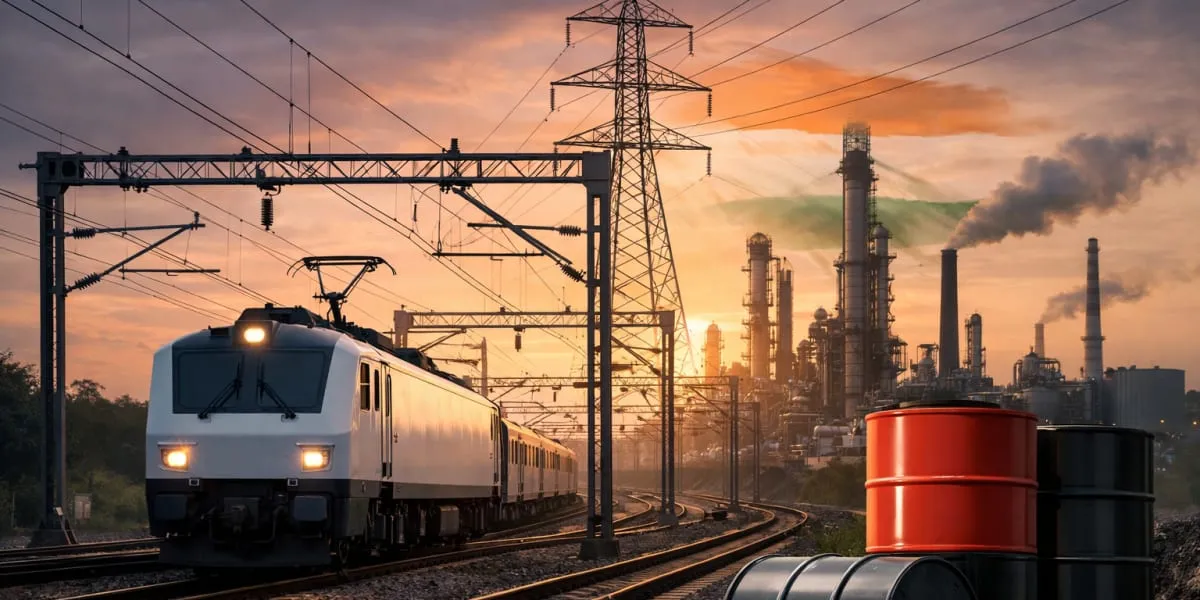
The Indian Railways has completed a near complete electrification of its Broad Gauge (BG) network, with approximately 99.4 per cent of BG lines now electrified, marking one of the largest infrastructure transitions globally. The shift enables trains to run predominantly on electricity rather than diesel and strengthens national energy security by reducing exposure to international crude oil supply disruptions. The move forms part of a broader strategy to lessen reliance on imported fuel amid ongoing geopolitical tensions in West Asia.

Electrification has cut diesel consumption significantly, with the railways saving 1,780 million (mn) litres of diesel in fiscal year 2024–25 compared with base year 2016–17, an overall reduction of 62 per cent since the adoption of electric traction. The electricity supply for the network is drawn from a mix of coal fired generation, hydroelectric power, solar energy and other renewable sources, which spreads operational risk. This diversified sourcing helps stabilise costs and reduces vulnerability to sudden crude oil price fluctuations.

Financially, the transition has shifted a large share of traction spending towards electricity; during fiscal year 2024–25 the railways spent Rs 323.78 billion (bn) on traction energy, with the majority allocated to electricity rather than diesel. Electric traction therefore supports more predictable budgeting and operational planning and can improve resilience during periods of global market instability. The environmental benefits are also material as electric trains produce lower emissions than diesel locomotives, aiding efforts to reduce the railways' carbon footprint.

Overall, electrification has enhanced the railway network's operational reliability and contributed to national energy independence by lowering consumption of imported diesel and increasing use of domestic electricity. Continued focus on renewable generation and grid stability is expected to further strengthen energy security while supporting sustainable transport goals. The railways' redesign positions the network to maintain services during external shocks and to manage future energy costs more productively.

The Indian Railways has completed a near complete electrification of its Broad Gauge (BG) network, with approximately 99.4 per cent of BG lines now electrified, marking one of the largest infrastructure transitions globally. The shift enables trains to run predominantly on electricity rather than diesel and strengthens national energy security by reducing exposure to international crude oil supply disruptions. The move forms part of a broader strategy to lessen reliance on imported fuel amid ongoing geopolitical tensions in West Asia. Electrification has cut diesel consumption significantly, with the railways saving 1,780 million (mn) litres of diesel in fiscal year 2024–25 compared with base year 2016–17, an overall reduction of 62 per cent since the adoption of electric traction. The electricity supply for the network is drawn from a mix of coal fired generation, hydroelectric power, solar energy and other renewable sources, which spreads operational risk. This diversified sourcing helps stabilise costs and reduces vulnerability to sudden crude oil price fluctuations. Financially, the transition has shifted a large share of traction spending towards electricity; during fiscal year 2024–25 the railways spent Rs 323.78 billion (bn) on traction energy, with the majority allocated to electricity rather than diesel. Electric traction therefore supports more predictable budgeting and operational planning and can improve resilience during periods of global market instability. The environmental benefits are also material as electric trains produce lower emissions than diesel locomotives, aiding efforts to reduce the railways' carbon footprint. Overall, electrification has enhanced the railway network's operational reliability and contributed to national energy independence by lowering consumption of imported diesel and increasing use of domestic electricity. Continued focus on renewable generation and grid stability is expected to further strengthen energy security while supporting sustainable transport goals. The railways' redesign positions the network to maintain services during external shocks and to manage future energy costs more productively.

Next Story
Infrastructure Urban

Implementation Status of Jal Jeevan Mission

Since August 2019 the Government has implemented Jal Jeevan Mission to provide assured potable water through household tap connections in rural India. At the start of the mission only 32.3 million (mn) rural households, representing 16.7 per cent, were reported to have tap water connections. States and union territories have reported that 125.8 mn additional rural households have since been provided with tap connections. As a result, of about 193.6 mn rural households roughly 158.2 mn, or 81.71 per cent, are reported to have tap water supply at home.\n\nThe State, district and village level st..

Next Story
Infrastructure Urban

Jal Jeevan Mission Reaches Eighty One Per Cent Rural Coverage

The Government reported substantial progress under the Jal Jeevan Mission, launched in August 2019 to provide tap water to every rural household. At launch only 32.3 million (mn) rural households had tap connections and states and Union territories reported provision of 125.8 mn additional households by March 2026. Consequently, out of about 193.6 mn rural households around 158.2 mn, or 81.71 per cent, are reported to have tap water at home. The Finance Minister announced extension of the mission until 2028 in the 2025-26 budget speech. The Swachh Bharat Mission Grameen, launched in October 20..

Next Story
Infrastructure Urban

Empowering Local Governance for Sustainable Rural Water Supply

The Ministry of Jal Shakti has aligned the Jal Jeevan Mission (JJM) with the 73rd Amendment to strengthen village level planning and community ownership of water supply. Gram Panchayats, village water and sanitation committees and Pani Samitis are to plan, implement, manage and maintain piped water systems, with gram sabha processes formalising handover and oversight. Implementation support agencies including non government organisations, community based organisations and self help groups have been empanelled to train local committees and promote women participation. Under JJM, the department ..

Advertisement

Subscribe to Our Newsletter

Get daily newsletters around different themes from Construction world.

STAY CONNECTED

Advertisement

Advertisement

Advertisement