India's Power Demand Soars 8.3% in H1 2024, Coal Remains Dominant
POWER & RENEWABLE ENERGY

India's Power Demand Soars 8.3% in H1 2024, Coal Remains Dominant

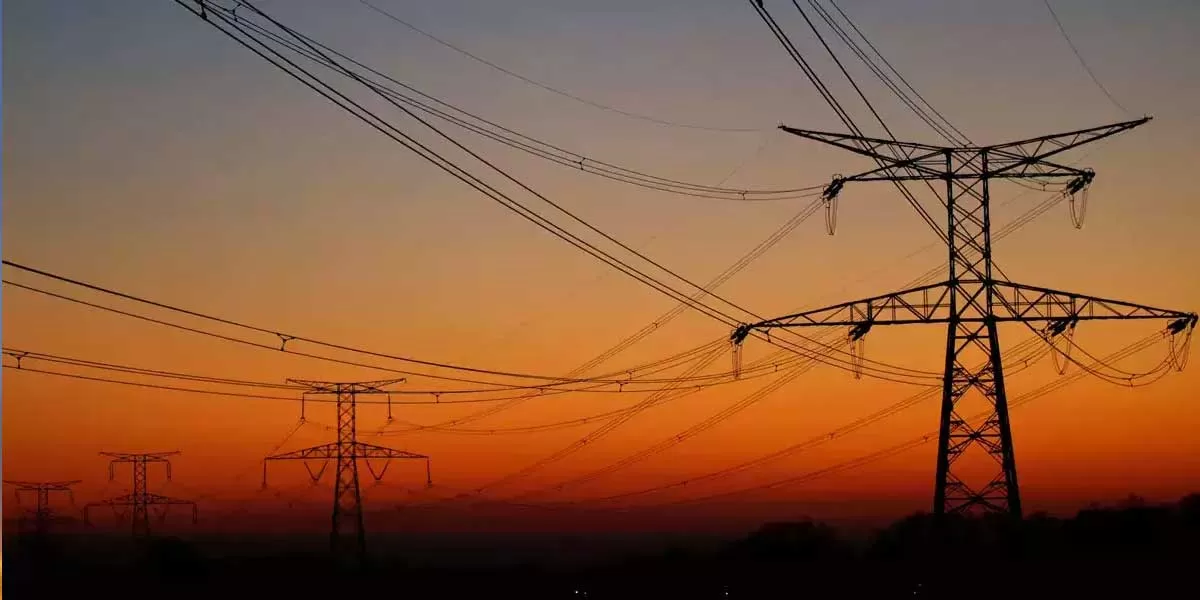
In the first half of 2024, power demand in India experienced an 8.3 per cent increase, driven largely by strong economic growth, according to Andre Lambine, Senior Analyst at S&P Global Commodity Insights Asia Power. He noted that coal remains the dominant source in the power generation mix, accounting for 78 per cent of the annual rise in supply.

Lambine emphasized that coal is crucial in addressing India's increasing power needs, and he projected that the higher demand would continue to be primarily met by coal. On the other hand, China is shifting towards non-thermal fuels, with renewables and hydro power growing at a faster rate compared to thermal fuels, which contributed only 25 per cent to the annual increase in power demand.

The overall power demand in the Asia-Pacific region aligns with economic growth, with S&P Global forecasting a 4.2 per cent GDP growth for the region in 2024. This is significantly higher than the anticipated growth rates of 2.3 per cent in North America and 0.8 per cent in the Eurozone.

The increase in electricity demand across major Asian economies, including India and China, is further driven by factors such as severe heatwaves and the global shift towards electrification. The International Energy Agency has also observed that the world's electricity demand is projected to grow at the fastest rate since the post-COVID rebound during 2024-2025.

In the first half of 2024, power demand in India experienced an 8.3 per cent increase, driven largely by strong economic growth, according to Andre Lambine, Senior Analyst at S&P Global Commodity Insights Asia Power. He noted that coal remains the dominant source in the power generation mix, accounting for 78 per cent of the annual rise in supply. Lambine emphasized that coal is crucial in addressing India's increasing power needs, and he projected that the higher demand would continue to be primarily met by coal. On the other hand, China is shifting towards non-thermal fuels, with renewables and hydro power growing at a faster rate compared to thermal fuels, which contributed only 25 per cent to the annual increase in power demand. The overall power demand in the Asia-Pacific region aligns with economic growth, with S&P Global forecasting a 4.2 per cent GDP growth for the region in 2024. This is significantly higher than the anticipated growth rates of 2.3 per cent in North America and 0.8 per cent in the Eurozone. The increase in electricity demand across major Asian economies, including India and China, is further driven by factors such as severe heatwaves and the global shift towards electrification. The International Energy Agency has also observed that the world's electricity demand is projected to grow at the fastest rate since the post-COVID rebound during 2024-2025.

Next Story
Infrastructure Urban

UniAcoustic, Vicoustic Form UniVicoustic Alliance

UniAcoustic, part of United Group, has acquired a strategic stake in Portugal-based Vicoustic, forming a new alliance branded as UniVicoustic. The agreement, signed in Mumbai, marks a significant cross-border partnership aligned with evolving India–EU trade dynamics.The collaboration brings together Vicoustic’s global expertise in architectural acoustic products with UniAcoustic’s manufacturing scale and distribution capabilities. The combined platform aims to expand market reach, integrate technology and optimise supply chains across key regions.The development comes amid progress in th..

Next Story
Infrastructure Urban

Dalmia Bharat, Delhi PWD Revamp Under-Flyover Spaces

Dalmia Bharat has partnered with the Public Works Department (PWD), Government of Delhi, to redevelop select under-flyover spaces and a road stretch into sustainable urban hubs. The agreement covers key locations including Lodhi Flyover, Oberoi Flyover, Mangi Bridge and Hanuman Setu.Under the initiative, the company will undertake design, landscaping, plantation and long-term maintenance of the sites, with a defined upkeep period of three years after completion. The project aims to improve urban aesthetics while promoting environmental sustainability and biodiversity restoration in high-densit..

Next Story
Infrastructure Urban

Versigent Debuts as Independent NYSE-Listed Company

Versigent has launched as an independent publicly traded company following its separation from Aptiv, with shares commencing trading on the New York Stock Exchange under the ticker “VGNT”. The move marks a significant milestone in the company’s transition into a standalone global player in power distribution systems.The company specialises in the design, manufacturing and delivery of low- and high-voltage electrical architectures, supported by engineering centres across four continents and manufacturing operations in over 25 countries.Versigent reported revenues of $8.8 billion, net inco..

Advertisement

Subscribe to Our Newsletter

Get daily newsletters around different themes from Construction world.

STAY CONNECTED

Advertisement

Advertisement

Advertisement