Jammu Division to Expand Solar Capacity to 2.55 MW
POWER & RENEWABLE ENERGY

Jammu Division to Expand Solar Capacity to 2.55 MW

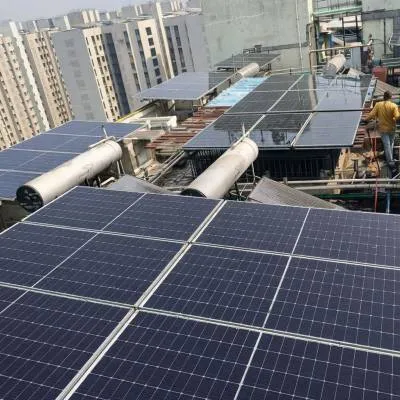
Jammu division of Northern Railway is expanding its solar power infrastructure, taking its installed and planned capacity to 2.55 megawatts (MW) as part of an effort to promote clean energy and reduce dependence on conventional electricity, officials said on Monday. The programme covers major railway stations, depots and other premises across the division.

Solar plants with a combined capacity of 1,745 kilowatt-peak (kWp), equivalent to 1.745 MW, are already operational at five locations. These include Jammu Railway Station and Shri Mata Vaishno Devi Katra Station, where a 1 MW solar plant has been installed.

The division is accelerating work on 18 additional solar plants with a combined capacity of 808 kWp. Once these facilities are commissioned, total solar generation capacity will reach 2,553 kWp, or about 2.55 MW. The expansion is intended to increase the share of renewable electricity used in railway operations.

Work on a new 450 kWp solar plant at Shri Mata Vaishno Devi Katra Station began on September 12 and is scheduled for completion by December 2026, according to Senior Divisional Electrical Engineer Vishal Rathi. Another 13 plants, with a combined capacity of 358 kWp, are also planned at Shaheed Captain Tushar Mahajan Udhampur Station, with work expected to begin shortly.

The initiative is expected to reduce carbon emissions and lower annual electricity expenditure while easing the division’s reliance on the conventional power grid. Divisional Railway Manager Vivek Kumar said the programme formed part of an effort to make railway operations cleaner and more sustainable, with solar energy planned for stations across Jammu division. Officials said savings on electricity could also support improvements in passenger amenities and contribute to environmental protection.

Jammu division of Northern Railway is expanding its solar power infrastructure, taking its installed and planned capacity to 2.55 megawatts (MW) as part of an effort to promote clean energy and reduce dependence on conventional electricity, officials said on Monday. The programme covers major railway stations, depots and other premises across the division. Solar plants with a combined capacity of 1,745 kilowatt-peak (kWp), equivalent to 1.745 MW, are already operational at five locations. These include Jammu Railway Station and Shri Mata Vaishno Devi Katra Station, where a 1 MW solar plant has been installed. The division is accelerating work on 18 additional solar plants with a combined capacity of 808 kWp. Once these facilities are commissioned, total solar generation capacity will reach 2,553 kWp, or about 2.55 MW. The expansion is intended to increase the share of renewable electricity used in railway operations. Work on a new 450 kWp solar plant at Shri Mata Vaishno Devi Katra Station began on September 12 and is scheduled for completion by December 2026, according to Senior Divisional Electrical Engineer Vishal Rathi. Another 13 plants, with a combined capacity of 358 kWp, are also planned at Shaheed Captain Tushar Mahajan Udhampur Station, with work expected to begin shortly. The initiative is expected to reduce carbon emissions and lower annual electricity expenditure while easing the division’s reliance on the conventional power grid. Divisional Railway Manager Vivek Kumar said the programme formed part of an effort to make railway operations cleaner and more sustainable, with solar energy planned for stations across Jammu division. Officials said savings on electricity could also support improvements in passenger amenities and contribute to environmental protection.

Related Stories

Gold Stories

Next Story
Building Material

PureSil Paints Develops Mineral Coatings from Industrial Waste

PureSil Paints, a brand of Relic Coatings LLP, has developed an indigenous mineral-based coating technology aimed at reducing dependence on petrochemical-derived raw materials in the paints and coatings industry. Its proprietary Silicification Technology uses agricultural and industrial by-products to manufacture architectural coatings as an alternative to conventional acrylic paints.Developed in-house by Dr Nikhil Dhote, Founder and Chief Technologist, Relic Coatings LLP, the technology uses silicate binders derived from upcycled rice husk ash and industrial coal fly ash. The formulation is d..

Next Story
Infrastructure Energy

Vedanta Eyes AI to Accelerate Mineral Exploration

Vedanta Group is exploring the use of artificial intelligence (AI) to significantly improve efficiency in mineral exploration, geological analysis and resource modelling. The company aims to reduce exploration processes that traditionally take three to four months to just six to seven days through AI-driven technologies.The proposed approach involves AI-led geological analysis and mineral block modelling to accelerate mineral resource assessment and support faster, more cost-efficient development of domestic mineral reserves. The initiative aligns with India's growing focus on critical mineral..

Next Story
Technology

NXP Launches Unified Robotics Platform for Physical AI

NXP Semiconductors has launched a unified robotics platform designed to accelerate the development and deployment of trusted physical artificial intelligence (AI) systems. Built on the company's neural axis architecture, the platform integrates AI processing, connectivity, motor control, security and energy management within a common hardware and software ecosystem.The platform combines an open-source, modular software development kit (SDK) with pre-validated reference designs, enabling developers to build robotic systems more efficiently. It supports development ranging from individual subsys..

Advertisement

Subscribe to Our Newsletter

Get daily newsletters around different themes from Construction world.

STAY CONNECTED

Advertisement

SPECIAL OFFER
QR Code