Jupiter Commissions One GW Solar Plant in Himachal Pradesh
POWER & RENEWABLE ENERGY

Jupiter Commissions One GW Solar Plant in Himachal Pradesh

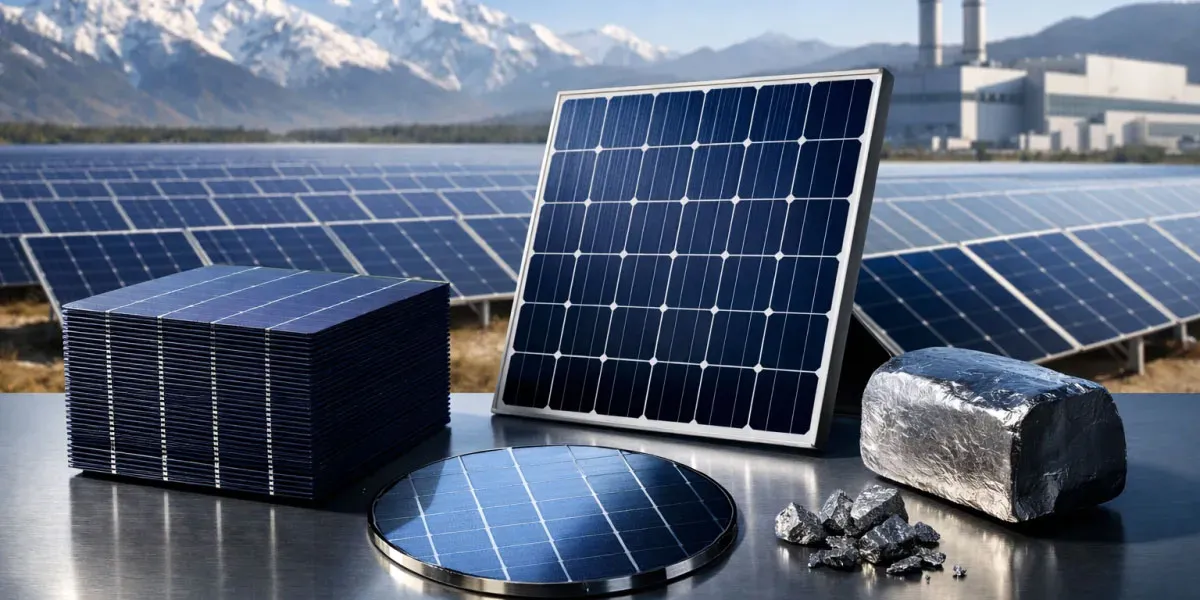
Jupiter International has commissioned a one gigawatt (GW) solar cell manufacturing unit in Himachal Pradesh, marking a significant expansion of domestic cell production capacity. The facility is intended to supply silicon solar cells for module assembly within India and to strengthen local manufacturing value chains while reducing logistical lead times for project developers. The company said the unit will enhance the reliability of domestic supply for developers and manufacturers and support a more predictable procurement landscape.

The plant incorporates automated production lines and contemporary manufacturing processes designed to improve yield and efficiency while meeting industry quality standards and certifications. Its commissioning is expected to support ancillary industries and create employment opportunities for skilled and semi skilled workers in the region, including roles in operations, maintenance and quality assurance. Local procurement and collaboration with regional suppliers are planned to integrate the facility into existing industrial ecosystems and to bolster supplier capabilities.

The move is aligned with national efforts to scale renewable energy deployment and reduce dependence on imported cells, and it is presented as a contribution to energy security and climate goals at the regional and national levels. Industry observers noted that adding one GW of cell capacity can ease module supply constraints and help stabilise project timelines across the sector while providing manufacturers with greater production flexibility. The company indicated that the unit will work alongside other domestic initiatives to bolster the manufacturing footprint and foster greater supply chain resilience.

Operational ramp up will proceed in phases as quality validation and market integration are completed, and the firm expects to align production with demand from utility and distributed generation projects across multiple states. Future expansion options remain under consideration to respond to evolving demand patterns and technology developments and to accommodate potential increases in order volumes. Jupiter International said it will continue engagement with state authorities and industry partners to maximise the facility's impact and to facilitate smooth market entry for domestically produced cells.

Jupiter International has commissioned a one gigawatt (GW) solar cell manufacturing unit in Himachal Pradesh, marking a significant expansion of domestic cell production capacity. The facility is intended to supply silicon solar cells for module assembly within India and to strengthen local manufacturing value chains while reducing logistical lead times for project developers. The company said the unit will enhance the reliability of domestic supply for developers and manufacturers and support a more predictable procurement landscape. The plant incorporates automated production lines and contemporary manufacturing processes designed to improve yield and efficiency while meeting industry quality standards and certifications. Its commissioning is expected to support ancillary industries and create employment opportunities for skilled and semi skilled workers in the region, including roles in operations, maintenance and quality assurance. Local procurement and collaboration with regional suppliers are planned to integrate the facility into existing industrial ecosystems and to bolster supplier capabilities. The move is aligned with national efforts to scale renewable energy deployment and reduce dependence on imported cells, and it is presented as a contribution to energy security and climate goals at the regional and national levels. Industry observers noted that adding one GW of cell capacity can ease module supply constraints and help stabilise project timelines across the sector while providing manufacturers with greater production flexibility. The company indicated that the unit will work alongside other domestic initiatives to bolster the manufacturing footprint and foster greater supply chain resilience. Operational ramp up will proceed in phases as quality validation and market integration are completed, and the firm expects to align production with demand from utility and distributed generation projects across multiple states. Future expansion options remain under consideration to respond to evolving demand patterns and technology developments and to accommodate potential increases in order volumes. Jupiter International said it will continue engagement with state authorities and industry partners to maximise the facility's impact and to facilitate smooth market entry for domestically produced cells.

Next Story
Infrastructure Transport

Tunnelling Begins for Thane, Borivali twin tunnel project

Tunnelling work has commenced for the 11.84-km Thane–Borivali Twin Tunnel, set to be India’s longest urban road tunnel, marking a key milestone in Mumbai’s infrastructure development.As per a post shared by Mumbai Metropolitan Region Development Authority on social media platform X, the tunnel boring machine (TBM) ‘Nayak’—the country’s largest single-shield hard rock TBM for an urban tunnel—was launched by Devendra Fadnavis on Tuesday. The event was attended by Eknath Shinde and Sunetra Pawar, among other dignitaries. A second TBM, ‘Arjuna’, is expected to be launched so..

Next Story
Infrastructure Transport

Large Format Store Planned At M G Road Metro Station

M G Road station in Bengaluru is set to host the city’s first large-format commercial and experience space, with planning led by Bangalore Metro Rail Corporation Limited. BMRCL has invited proposals to develop and operate a central business district destination at the Purple?Pink Line interchange. The plan positions the station as a commercial hub designed to serve a broad commuter base across the city. The proposal is part of a broader effort to activate transit nodes commercially. Tender documents set a minimum monthly rental of Rs 0.944 million (mn), inclusive of GST, for the large-format..

Next Story
Infrastructure Energy

Government Cancels Auction Of Eleven Critical Mineral Blocks

The government has cancelled the auction of 11 critical and strategic mineral blocks after receiving a poor investor response and failing to attract a sufficient number of qualified bidders. The decision represents a setback to plans to ramp up domestic exploration and production of critical minerals amid global supply chain disruptions and rising demand for materials used in clean energy and advanced technologies. The mines ministry issued an annulment notice setting out the reasons for the cancellations. The annulment notice indicated that the auction process for five mineral blocks was canc..

Advertisement

Subscribe to Our Newsletter

Get daily newsletters around different themes from Construction world.

STAY CONNECTED

Advertisement

Advertisement

Advertisement