Karnataka Plans More Substations To Boost Power Distribution
POWER & RENEWABLE ENERGY

Karnataka Plans More Substations To Boost Power Distribution

The Karnataka government has announced a major initiative to strengthen its electricity distribution network through the commissioning of additional power substations across the state.

According to Energy Minister K. J. George, while Karnataka currently has adequate generation capacity, the key challenge lies in ensuring reliable and efficient power delivery to end users.

The plan builds on the ongoing construction of 100 substations, with the government prepared to launch more as land becomes available. The Minister noted that land acquisition remains the primary obstacle to scaling up the substation network.

Alongside expanding distribution infrastructure, the government is also implementing reform-driven schemes focused on rural and agricultural power supply.

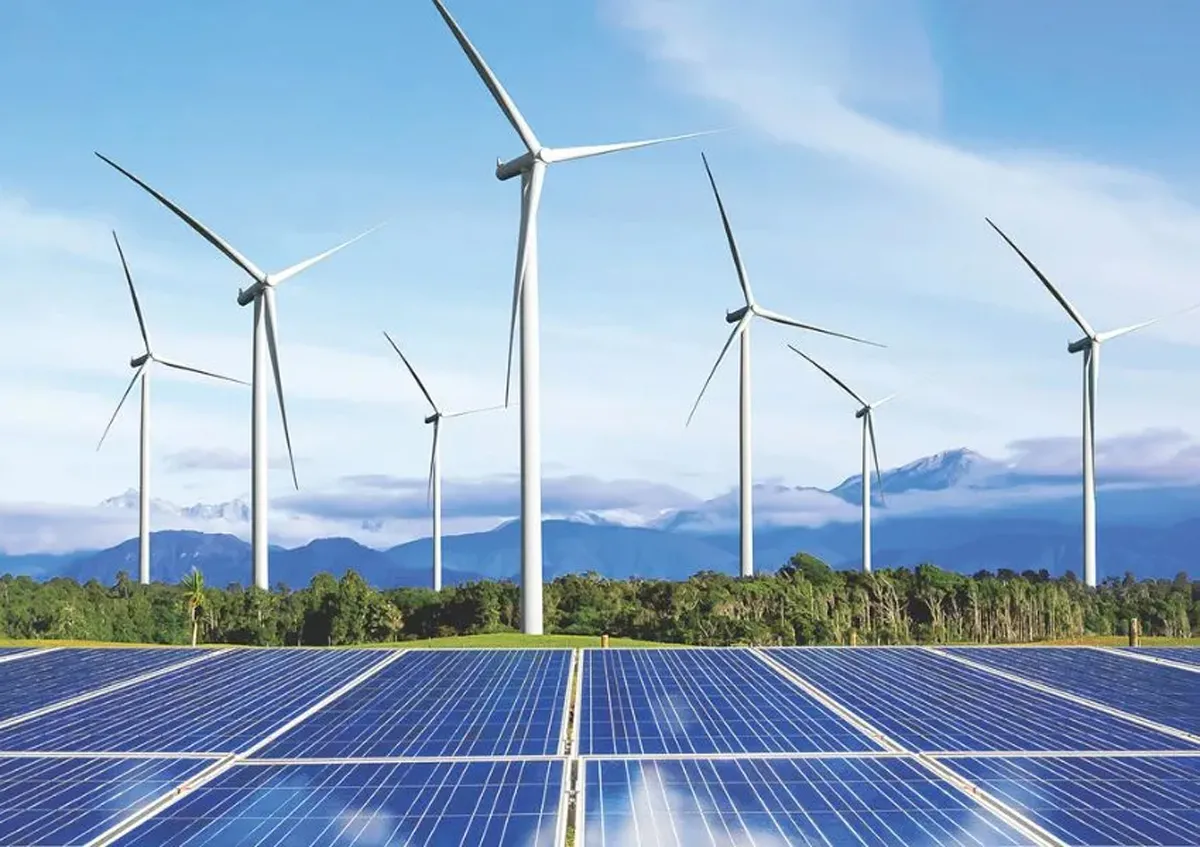
One such initiative, KUSUM-C, aims to solarise agricultural feeders and generate around 2,400 MW of clean energy through private investments worth Rs 100 billion (Rs 10,000 crore). The scheme promises uninterrupted daytime power for irrigation pump sets, improving service reliability for farmers.

For households, the Niranthara Jyothi scheme ensures continuous single-phase power supply, with the Energy Department directing utilities to immediately address any disruptions.

Another complementary measure, the Akrama-Sakrama scheme, targets the regularisation of unauthorised agricultural power connections, particularly those linked to pump sets, promoting transparency and legal compliance within the sector.

Karnataka’s overall strategy combines the deployment of new substations with renewable energy integration and distribution reforms, enhancing supply reliability for both domestic and agricultural consumers.

The government’s success will depend on land acquisition for new substations, swift implementation of solarised feeders, and effective coordination among state utilities and stakeholders.

The Karnataka government has announced a major initiative to strengthen its electricity distribution network through the commissioning of additional power substations across the state. According to Energy Minister K. J. George, while Karnataka currently has adequate generation capacity, the key challenge lies in ensuring reliable and efficient power delivery to end users. The plan builds on the ongoing construction of 100 substations, with the government prepared to launch more as land becomes available. The Minister noted that land acquisition remains the primary obstacle to scaling up the substation network. Alongside expanding distribution infrastructure, the government is also implementing reform-driven schemes focused on rural and agricultural power supply. One such initiative, KUSUM-C, aims to solarise agricultural feeders and generate around 2,400 MW of clean energy through private investments worth Rs 100 billion (Rs 10,000 crore). The scheme promises uninterrupted daytime power for irrigation pump sets, improving service reliability for farmers. For households, the Niranthara Jyothi scheme ensures continuous single-phase power supply, with the Energy Department directing utilities to immediately address any disruptions. Another complementary measure, the Akrama-Sakrama scheme, targets the regularisation of unauthorised agricultural power connections, particularly those linked to pump sets, promoting transparency and legal compliance within the sector. Karnataka’s overall strategy combines the deployment of new substations with renewable energy integration and distribution reforms, enhancing supply reliability for both domestic and agricultural consumers. The government’s success will depend on land acquisition for new substations, swift implementation of solarised feeders, and effective coordination among state utilities and stakeholders.

Next Story
Infrastructure Urban

Jyoti Structures FY26 profit rises 56.5%

Jyoti Structures (JSL) recently reported strong financial results for the quarter and year ended 31 March 2026, driven by disciplined execution, cost management and steady progress across its order book.For Q4 FY2025-26, total income rose 44.2 per cent to Rs 2.41 billion from Rs 1.67 billion in Q4 FY2024-25. EBITDA increased 58.6 per cent to Rs 237 million, while EBITDA margin improved by 89 basis points to 9.84 per cent. Profit before tax grew 53.3 per cent to Rs 188.5 million, and net profit rose 51.9 per cent to Rs 181.4 million.For FY2025-26, total income grew 53.1 per cent to Rs 7.72 bill..

Next Story
Infrastructure Energy

Cat BEPU to Power Doppstadt Separator at IFAT 2026

Caterpillar’s Cat Battery Electric Power Unit (BEPU) has been selected by Doppstadt to power its SWS 6 Spiral Shaft Separator, which will be showcased for the first time at IFAT 2026 in Munich, Germany, from 4–7 May.The compact plug-and-play BEPU is designed to replace a diesel engine within the same space, using the same mounting locations and relative machine position. It integrates the battery, motor, inverter, onboard charging, cooling and controls, enabling OEMs to electrify existing chassis platforms without extensive redesign.Caterpillar and Cat dealer Zeppelin Power Systems have be..

Next Story
Infrastructure Urban

VECV sales rise 6.9% in April 2026

VE Commercial Vehicles, a joint venture between Volvo Group and Eicher Motors, recorded sales of 7,318 units in April 2026, compared to 6,846 units in April 2025, registering 6.9 per cent growth. The total included 7,159 units under the Eicher brand and 159 units under the Volvo brand.Eicher branded trucks and buses reported sales of 7,159 units during the month, up 6.6 per cent from 6,717 units in April 2025. In the domestic commercial vehicle market, Eicher sales rose 8.6 per cent to 6,797 units from 6,257 units a year earlier.Exports declined 21.3 per cent, with VECV recording 362 units in ..

Advertisement

Subscribe to Our Newsletter

Get daily newsletters around different themes from Construction world.

STAY CONNECTED

Advertisement

Advertisement

Advertisement