+
MeitY Launches Indigenous 30 kW Drive System To Boost EV Adoption
POWER & RENEWABLE ENERGY

MeitY Launches Indigenous 30 kW Drive System To Boost EV Adoption

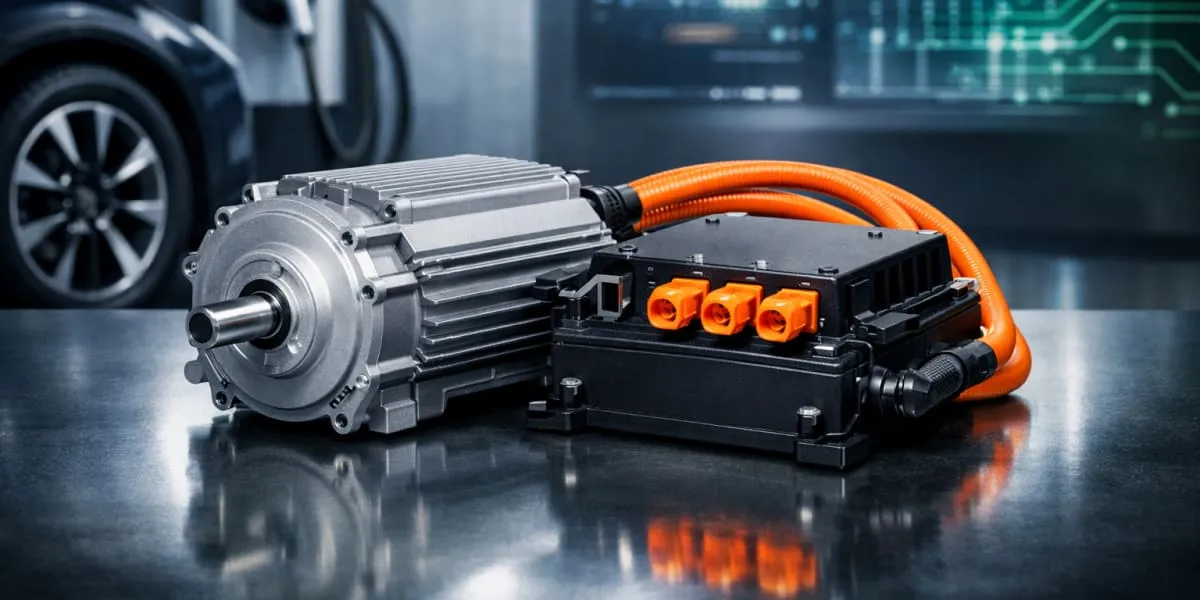
The Ministry of Electronics and Information Technology (MeitY) has launched an indigenous integrated drive system rated at 30 kilowatt (kW) to support the adoption of electric vehicles. The system is designed for use in a range of light electric vehicle platforms and has been developed with a focus on domestic power electronics capability. The launch is intended to bolster local manufacturing and provide a homegrown alternative to imported drive components.

The drive employs wide bandgap (WBG) semiconductors and modern control algorithms to improve efficiency and thermal performance. The design integrates power converters and motor control functions into a compact architecture that aims to reduce weight and system complexity. Developers noted that the integrated approach can simplify vehicle integration and maintenance for manufacturers.

Officials said the indigenous system could reduce reliance on imported components and help lower the overall cost of electric vehicle powertrains. Industry stakeholders anticipate that building capability in power electronics will support supply chain resilience and stimulate local value addition. The move is expected to align with national goals to accelerate electrification and encourage investment in domestic technology.

Manufacturers will be able to evaluate the system for integration across various models and vehicle classes, which may shorten development cycles. Support for domestic suppliers and the potential for specialised production could create opportunities for export and partnerships. The Ministry of Electronics and Information Technology indicated that the development represents a step towards strengthening the domestic ecosystem for electric mobility.

Deployment of indigenous drive systems may also encourage investment in complementary technologies, including battery management and charging infrastructure, fostering an ecosystem of interoperable solutions. The availability of a standardised domestic module could reduce barriers for small and medium enterprises to enter the electric vehicle supply chain and innovate on system-level integration. Observers expect that skills development and industry-academia collaboration will be important to maximise the benefits of the new capability.

The Ministry of Electronics and Information Technology (MeitY) has launched an indigenous integrated drive system rated at 30 kilowatt (kW) to support the adoption of electric vehicles. The system is designed for use in a range of light electric vehicle platforms and has been developed with a focus on domestic power electronics capability. The launch is intended to bolster local manufacturing and provide a homegrown alternative to imported drive components. The drive employs wide bandgap (WBG) semiconductors and modern control algorithms to improve efficiency and thermal performance. The design integrates power converters and motor control functions into a compact architecture that aims to reduce weight and system complexity. Developers noted that the integrated approach can simplify vehicle integration and maintenance for manufacturers. Officials said the indigenous system could reduce reliance on imported components and help lower the overall cost of electric vehicle powertrains. Industry stakeholders anticipate that building capability in power electronics will support supply chain resilience and stimulate local value addition. The move is expected to align with national goals to accelerate electrification and encourage investment in domestic technology. Manufacturers will be able to evaluate the system for integration across various models and vehicle classes, which may shorten development cycles. Support for domestic suppliers and the potential for specialised production could create opportunities for export and partnerships. The Ministry of Electronics and Information Technology indicated that the development represents a step towards strengthening the domestic ecosystem for electric mobility. Deployment of indigenous drive systems may also encourage investment in complementary technologies, including battery management and charging infrastructure, fostering an ecosystem of interoperable solutions. The availability of a standardised domestic module could reduce barriers for small and medium enterprises to enter the electric vehicle supply chain and innovate on system-level integration. Observers expect that skills development and industry-academia collaboration will be important to maximise the benefits of the new capability.

Next Story
Building Material

Operational Excellence Redefined!

Operational excellence in cement has moved far beyond the old pursuit of ‘more tonne’. The new benchmark is smarter, cleaner, more reliable production—delivered with discipline across process, people and data. In an industry where energy can account for nearly 30 per cent of manufacturing cost, even marginal gains translate into meaningful value. As Dr SB Hegde, Professor, Jain College of Engineering & Technology, Hubli and Visiting Professor, Pennsylvania State University, USA, puts it, “Operational excellence… is no longer about producing more. It is about producing smarter, cleane..

Next Story
Infrastructure Urban

CMC Reviews State Progress on Polluted Rivers and Sewage Management

The 21st meeting of the Central Monitoring Committee (CMC) on river rejuvenation was held under the chairpersonship of Shri V. L. Kantha Rao, Secretary of the Department of Water Resources, River Development and Ganga Rejuvenation in the Ministry of Jal Shakti. The meeting was attended by senior officials including the Director General of the National Mission for Clean Ganga (NMCG) and representatives of state governments and state pollution control boards. The committee reviewed the latest status of polluted river stretches based on the Central Pollution Control Board (CPCB) 2025 report and e..

Next Story
Infrastructure Urban

India Proposes Biomanufacturing Working Group With Delaware

Union Minister for Science and Technology Dr Jitendra Singh proposed a small India–Delaware biomanufacturing working group to convert discussions into collaborations in research, manufacturing and startup ecosystems. The proposal was made during his meeting with a visiting US delegation led by Delaware Governor Matt Meyer at Seva Teerth. Both sides focused on bilateral collaboration in pharma, biotechnology, clean energy and innovation-led industrial growth. The minister said science, technology and biotechnology are a key pillar of the India–US strategic partnership and that India seeks d..

Advertisement

Subscribe to Our Newsletter

Get daily newsletters around different themes from Construction world.

STAY CONNECTED

Advertisement

Advertisement

Advertisement

Open In App