+
Organic Waste Converted into Fuel, Power and Manure Under SBM
POWER & RENEWABLE ENERGY

Organic Waste Converted into Fuel, Power and Manure Under SBM

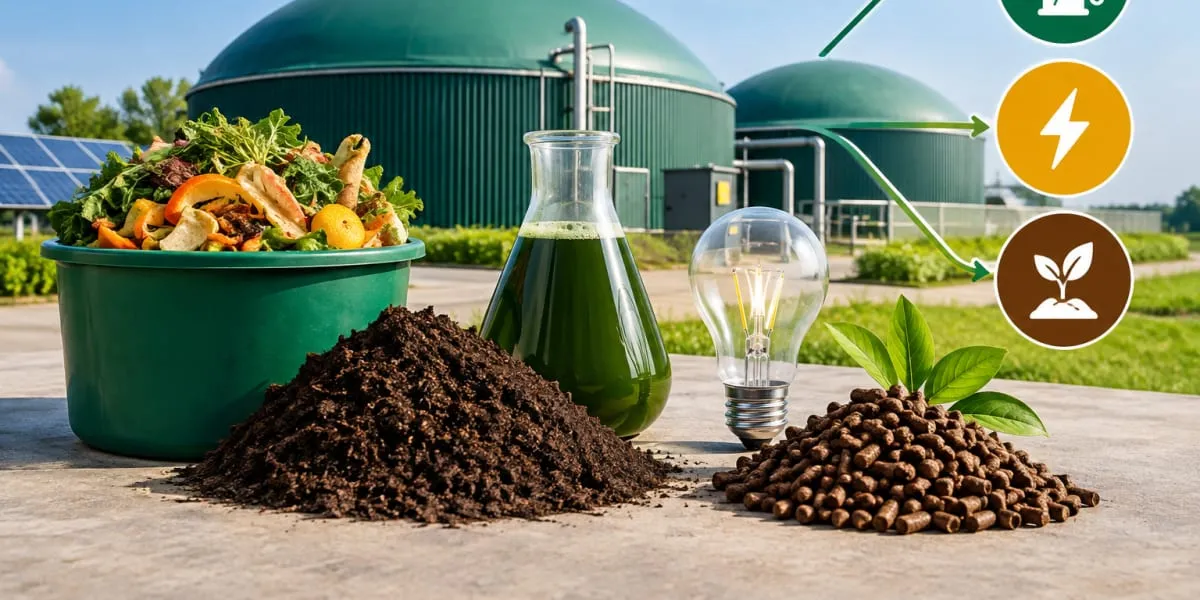
Organic waste is being converted into clean fuel, electricity and organic manure in several parts of India as waste-to-energy initiatives expand under the Swachh Bharat Mission. Launched in October 2014, the mission has promoted scientific municipal solid-waste management, while its Urban 2.0 programme supports solutions based on local waste streams and community needs.

At the Shrimati Manekba Vinay Vihar Educational Complex near Adalaj in Gandhinagar, Gujarat, two biogas plants with a combined capacity of 90 cubic metres per day meet the cooking-fuel needs of a campus serving more than 500 people daily. The facilities use dung from 222 cows, kitchen waste and agricultural residue, replacing around 30 LPG cylinders each month. The project has received support through the Gujarat government’s Institutional Biogas Plant Scheme and the Gujarat Energy Development Agency.

A facility in Prayagraj processes wet waste, paddy straw, cattle dung and poultry litter. It can handle 343 t of organic waste daily and produce around 21 t of compressed biogas (CBG), which is used in city transport. Wet-waste collection has risen from 7 to 8 t initially to nearly 125 t daily, while the plant also produces around 28 t of compost each day for farmers. The facility is expected to eventually provide piped gas to around 45,000 households and cut annual carbon emissions by approximately 57,000 t.

At Adarsh Gaushala in Gwalior, a 100 t-per-day CBG plant processes cattle dung into 2 t of compressed biogas and 10 to 15 t of dry bio-manure daily. Inaugurated in October 2024 and developed with Indian Oil Corporation at a cost of Rs. 310 mn, it occupies 5 acres and can also process vegetable and fruit waste.

Hyderabad’s Bowenpally Vegetable Market processes around 10 t of discarded produce daily, generating 400 to 500 units of electricity and 30 kg of biofuel. The output powers market facilities and a commercial kitchen, while residual slurry is used as liquid bio-manure. The plant has halved the monthly electricity bill from about Rs. 0.3 mn and supported five additional plants, alongside employment and skills opportunities for women. Together, the projects demonstrate a shift from waste disposal towards resource recovery and local energy generation.

Organic waste is being converted into clean fuel, electricity and organic manure in several parts of India as waste-to-energy initiatives expand under the Swachh Bharat Mission. Launched in October 2014, the mission has promoted scientific municipal solid-waste management, while its Urban 2.0 programme supports solutions based on local waste streams and community needs. At the Shrimati Manekba Vinay Vihar Educational Complex near Adalaj in Gandhinagar, Gujarat, two biogas plants with a combined capacity of 90 cubic metres per day meet the cooking-fuel needs of a campus serving more than 500 people daily. The facilities use dung from 222 cows, kitchen waste and agricultural residue, replacing around 30 LPG cylinders each month. The project has received support through the Gujarat government’s Institutional Biogas Plant Scheme and the Gujarat Energy Development Agency. A facility in Prayagraj processes wet waste, paddy straw, cattle dung and poultry litter. It can handle 343 t of organic waste daily and produce around 21 t of compressed biogas (CBG), which is used in city transport. Wet-waste collection has risen from 7 to 8 t initially to nearly 125 t daily, while the plant also produces around 28 t of compost each day for farmers. The facility is expected to eventually provide piped gas to around 45,000 households and cut annual carbon emissions by approximately 57,000 t. At Adarsh Gaushala in Gwalior, a 100 t-per-day CBG plant processes cattle dung into 2 t of compressed biogas and 10 to 15 t of dry bio-manure daily. Inaugurated in October 2024 and developed with Indian Oil Corporation at a cost of Rs. 310 mn, it occupies 5 acres and can also process vegetable and fruit waste. Hyderabad’s Bowenpally Vegetable Market processes around 10 t of discarded produce daily, generating 400 to 500 units of electricity and 30 kg of biofuel. The output powers market facilities and a commercial kitchen, while residual slurry is used as liquid bio-manure. The plant has halved the monthly electricity bill from about Rs. 0.3 mn and supported five additional plants, alongside employment and skills opportunities for women. Together, the projects demonstrate a shift from waste disposal towards resource recovery and local energy generation.

Related Stories

Gold Stories

Next Story
Infrastructure Urban

VECV Sales Rise 49.6% to 11,396 Units in September

VE Commercial Vehicles Ltd (VECV), a joint venture between Volvo Group and Eicher Motors, recorded sales of 11,396 units in September 2026, up 49.6 per cent from 7,619 units in September 2025.The total included 11,146 units under the Eicher brand and 250 units under the Volvo brand.Eicher-branded trucks and buses recorded sales of 11,146 units during the month, compared with 7,352 units in September 2025, registering growth of 51.6 per cent.In the domestic commercial vehicle market, Eicher trucks and buses reported sales of 10,479 units, up 57.5 per cent from 6,652 units in the corresponding p..

Next Story
Infrastructure Urban

"Agentic AI set to transform supply chain decision-making."

Interview with: Lalit Das, Founder & CEO, Agentra AIWhy the next phase of supply chain technology will be about AI that acts, not just advises?Supply chains no longer have a visibility problem. They have a decision-latency problem. It takes about 8.7 hours to detect a disruption and more than 40 more to understand its impact, all before anyone acts. Meanwhile, disruption costs the global economy an estimated $184 billion a year.Enterprises already own excellent systems of record. What they lack is a system of action. Copilots don't fix that, they just give faster answers about a broken pro..

Next Story
Real Estate

BNW Developments Opens Sydney Office to Target UAE Investors

BNW Developments has expanded its international presence with the opening of a new office in Sydney, Australia, aimed at strengthening engagement with Australian investors interested in the UAE residential property market.The Sydney office will serve as a local platform for investors, wealth advisers, brokerage firms and real estate professionals exploring opportunities in Dubai and Ras Al Khaimah.Headquartered in Dubai, BNW Developments has launched 13 projects and has another 16 projects in its pipeline, representing a combined gross development value of around AED 32 billion (USD 8.7 billio..

Advertisement

Subscribe to Our Newsletter

Get daily newsletters around different themes from Construction world.

STAY CONNECTED

Advertisement

SPECIAL OFFER
QR Code