Power Ministry Proposes Payment Safeguards for Storage Firms
POWER & RENEWABLE ENERGY

Power Ministry Proposes Payment Safeguards for Storage Firms

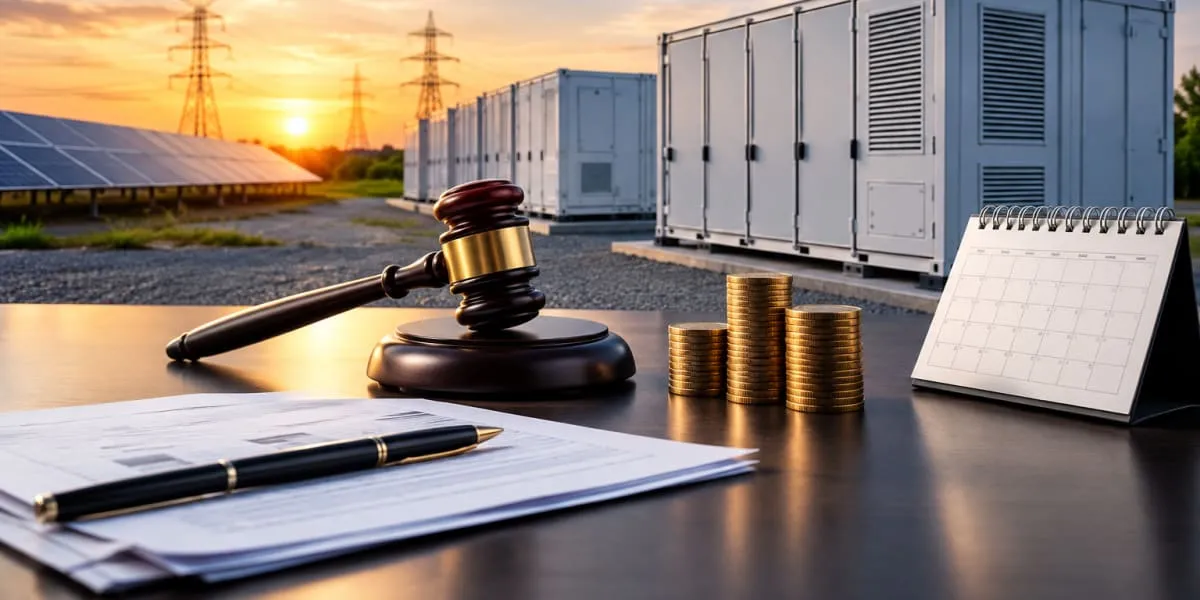
The Ministry of Power has proposed extending statutory late-payment safeguards to independent energy storage service providers, bringing standalone battery and other storage projects within the Electricity (Late Payment Surcharge and Related Matters) Rules, 2022. The amendment is intended to protect storage companies from delayed payments by distribution utilities and improve financing certainty for developers.

The proposal addresses a regulatory gap affecting independent storage developers, who do not currently receive the same payment protections as conventional generators and transmission companies. The ministry expects the changes to improve payment certainty, reduce financing costs and encourage investment in battery energy storage systems (BESS) and pumped hydro storage projects.

The existing rules require electricity bills to be paid by the due date specified in the relevant agreement. Where no date is specified, payment must be made within 45 days of the bill being presented. The late-payment surcharge is linked to the State Bank of India's one-year marginal cost of funds-based lending rate applicable on 1 April of the relevant financial year, plus 5 percentage points. The rate rises by 0.5 percentage points for each subsequent month of default, subject to a ceiling of 3 percentage points above the base rate.

The framework also requires distribution licensees to maintain an unconditional, irrevocable and adequate payment-security mechanism, which can include a letter of credit or a letter of credit backed by an escrow account. Restrictions on electricity procurement apply when distribution companies leave dues unpaid for extended periods. Short-term access is regulated after two-and-a-half months, while long- and medium-term access face restrictions after three-and-a-half months, with the reduction increasing by 10 percentage points for each subsequent month.

The proposed amendment would cover independent providers offering storage as a service or supplying electricity through storage systems, subject to specified ownership exclusions. India's BESS capacity is projected to rise from around 15 GWh in October 2026 to 321 GWh by 2035-36, while pumped hydro storage is expected to increase from 44 GWh in September 2026 to 630 GWh. The ministry said stronger payment protection could support investment, grid stability and greater use of renewable power.

The Ministry of Power has proposed extending statutory late-payment safeguards to independent energy storage service providers, bringing standalone battery and other storage projects within the Electricity (Late Payment Surcharge and Related Matters) Rules, 2022. The amendment is intended to protect storage companies from delayed payments by distribution utilities and improve financing certainty for developers. The proposal addresses a regulatory gap affecting independent storage developers, who do not currently receive the same payment protections as conventional generators and transmission companies. The ministry expects the changes to improve payment certainty, reduce financing costs and encourage investment in battery energy storage systems (BESS) and pumped hydro storage projects. The existing rules require electricity bills to be paid by the due date specified in the relevant agreement. Where no date is specified, payment must be made within 45 days of the bill being presented. The late-payment surcharge is linked to the State Bank of India's one-year marginal cost of funds-based lending rate applicable on 1 April of the relevant financial year, plus 5 percentage points. The rate rises by 0.5 percentage points for each subsequent month of default, subject to a ceiling of 3 percentage points above the base rate. The framework also requires distribution licensees to maintain an unconditional, irrevocable and adequate payment-security mechanism, which can include a letter of credit or a letter of credit backed by an escrow account. Restrictions on electricity procurement apply when distribution companies leave dues unpaid for extended periods. Short-term access is regulated after two-and-a-half months, while long- and medium-term access face restrictions after three-and-a-half months, with the reduction increasing by 10 percentage points for each subsequent month. The proposed amendment would cover independent providers offering storage as a service or supplying electricity through storage systems, subject to specified ownership exclusions. India's BESS capacity is projected to rise from around 15 GWh in October 2026 to 321 GWh by 2035-36, while pumped hydro storage is expected to increase from 44 GWh in September 2026 to 630 GWh. The ministry said stronger payment protection could support investment, grid stability and greater use of renewable power.

Related Stories

Gold Stories

Next Story
Infrastructure Transport

India to Develop Civil Aircraft Within Two Years, Build 100 Airports

India aims to develop its own civil aircraft within the next two years as it seeks to strengthen domestic aerospace capabilities and reduce dependence on foreign aircraft manufacturers, Civil Aviation Minister Ram Mohan Naidu said on November 12. He said the ambition extended beyond assembling aircraft to developing expertise in aircraft design and production. Speaking at the inaugural session of the Confederation of Indian Industry (CII) Partnership Summit 2026 in Visakhapatnam, Naidu said India wanted to establish itself as a major aerospace manufacturing hub. The government’s approach is ..

Next Story
Infrastructure Urban

Two Korean Firms to Invest Rs. 13.7 bn in Tamil Nadu

Two South Korean automotive component suppliers to Hyundai and Kia plan to invest a combined Rs. 13.7 bn in Tamil Nadu over the next five years, according to sources in the state industries department. The proposed investments come after a political dispute over the reported movement of some automotive investments to Andhra Pradesh. The state government has received letters of intent (LoIs) from Hwashin and Seoyon, while memorandums of understanding (MoUs) are expected to be signed shortly. Both companies communicated their investment plans in letters dated November 11, reaffirming their inten..
Next Story
Building Material

Cement Makers See Margin Relief as Oil Prices Lower Fuel Costs

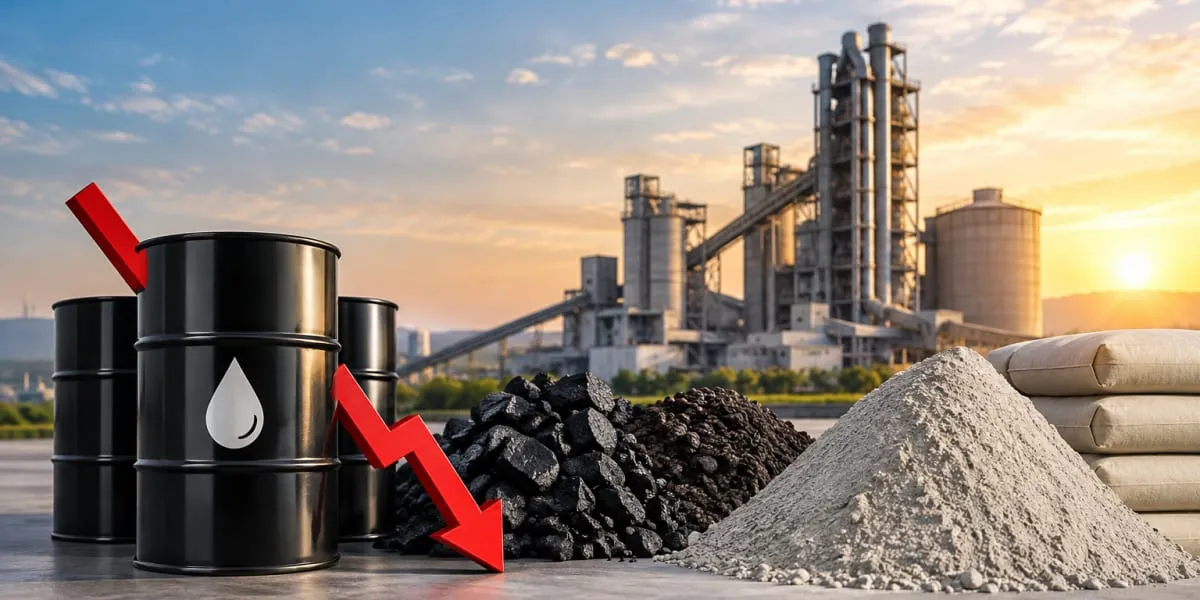
Cement makers are set to see a significant improvement in profitability in the second half of FY27 as falling global oil prices reduce the cost of key fuels, including petcoke and coal. Higher cement prices are also expected to support earnings, according to a report by Systematix Group. The cement sector remained resilient in Q2 FY27, with volumes across the companies covered by the brokerage rising 7.2 per cent year-on-year. Higher sales volumes and improved realisations contributed to top-line growth during the quarter, although fuel and packaging expenses remained near-term concerns for ma..

Advertisement

Subscribe to Our Newsletter

Get daily newsletters around different themes from Construction world.

STAY CONNECTED

Advertisement

SPECIAL OFFER
QR Code