Power Ministry Weighs Mandatory Imported Coal Blending
POWER & RENEWABLE ENERGY

Power Ministry Weighs Mandatory Imported Coal Blending

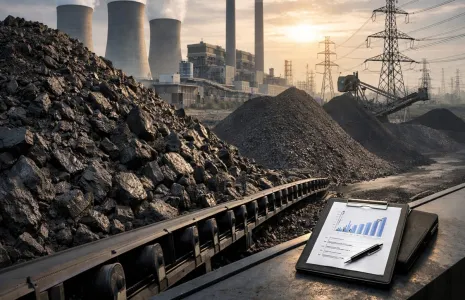
The Ministry of Power is considering a proposal to mandate imported coal blending at thermal power plants as coal inventories decline across the country. The proposal is among the options being examined to address critically low stocks, although the ministry has not taken a decision on the measure.

Coal inventories at India’s thermal power stations fell to 22.9 mn t on September 19, according to data cited in the report. The available stock represented seven days of fuel cover and was equivalent to only 39 per cent of the normative inventory required at the plants.

The decline has affected a growing number of generating facilities. Of the 190 thermal plants monitored, 74 had critically depleted stockpiles, up from 51 in August, indicating a deterioration in fuel availability over the period.

The Central Electricity Authority (CEA) classifies coal stocks at power plants as critical when inventories fall 25 per cent below the required level. Plants are also considered to have critical stocks when their available coal can support power generation for fewer than three days.

A senior power ministry official said the imported-coal proposal was being discussed as one possible response to the situation. The official also indicated that deliberations were continuing and that no final decision had been reached. Any mandate would therefore depend on the ministry’s further assessment of stock levels and supply conditions at thermal power stations.

The latest figures underscore the pressure on the domestic coal supply system, with the number of plants facing critically low inventories rising even as the government evaluates additional fuel options. Imported coal blending is being considered in the context of maintaining supplies for thermal generation, but the report does not specify a proposed blending proportion, implementation schedule or coverage of plants.

The Ministry of Power is considering a proposal to mandate imported coal blending at thermal power plants as coal inventories decline across the country. The proposal is among the options being examined to address critically low stocks, although the ministry has not taken a decision on the measure. Coal inventories at India’s thermal power stations fell to 22.9 mn t on September 19, according to data cited in the report. The available stock represented seven days of fuel cover and was equivalent to only 39 per cent of the normative inventory required at the plants. The decline has affected a growing number of generating facilities. Of the 190 thermal plants monitored, 74 had critically depleted stockpiles, up from 51 in August, indicating a deterioration in fuel availability over the period. The Central Electricity Authority (CEA) classifies coal stocks at power plants as critical when inventories fall 25 per cent below the required level. Plants are also considered to have critical stocks when their available coal can support power generation for fewer than three days. A senior power ministry official said the imported-coal proposal was being discussed as one possible response to the situation. The official also indicated that deliberations were continuing and that no final decision had been reached. Any mandate would therefore depend on the ministry’s further assessment of stock levels and supply conditions at thermal power stations. The latest figures underscore the pressure on the domestic coal supply system, with the number of plants facing critically low inventories rising even as the government evaluates additional fuel options. Imported coal blending is being considered in the context of maintaining supplies for thermal generation, but the report does not specify a proposed blending proportion, implementation schedule or coverage of plants.

Related Stories

Gold Stories

Next Story
Real Estate

Japanese companies expand GCC operations in India

More than 100 Japanese companies have established or are expanding Global Capability Centres (GCCs) in India, with a growing focus on artificial intelligence (AI), engineering, digital innovation, product development, cybersecurity and advanced analytics. The shift marks an expansion beyond traditional back-office and operational support functions towards higher-value technology and innovation activities.Japanese companies are increasingly using their Indian GCCs to support digital transformation, address talent shortages and contribute to global business strategies. These centres are taking o..

Next Story
Real Estate

India’s flexible office stock projected to reach 160 million sq ft by 2030

India retained its position as the world's most mature flexible office market, scoring 100 per cent on Cushman & Wakefield's Flexible Office Market Maturity Index, according to the firm's Global Trends in Flexible Office 2026 report.India's flexible office inventory reached 88.7 million sq ft (MSF) in H1 2026, accounting for 10.5 per cent of the country's total office stock. The report projects this to exceed 100 MSF in 2026 and reach approximately 160 MSF by 2030.Flexible office operators leased 8.5 MSF across India's top eight cities in H1 2026, their strongest first-half performance to ..

Next Story
Infrastructure Urban

K2 Infragen appoints Abhishek Sharma as DGM, supply chain

K2 Infragen has appointed Abhishek Sharma as Deputy General Manager, Supply Chain Management. He will oversee procurement planning, vendor partnerships and coordination with project teams.Sharma brings nearly two decades of experience in infrastructure procurement across railways, highways, expressways and hydropower. His experience includes procurement responsibilities associated with the Delhi–Meerut Expressway and the Delhi–Vadodara greenfield corridor. ..

Advertisement

Subscribe to Our Newsletter

Get daily newsletters around different themes from Construction world.

STAY CONNECTED

Advertisement

SPECIAL OFFER
QR Code