+
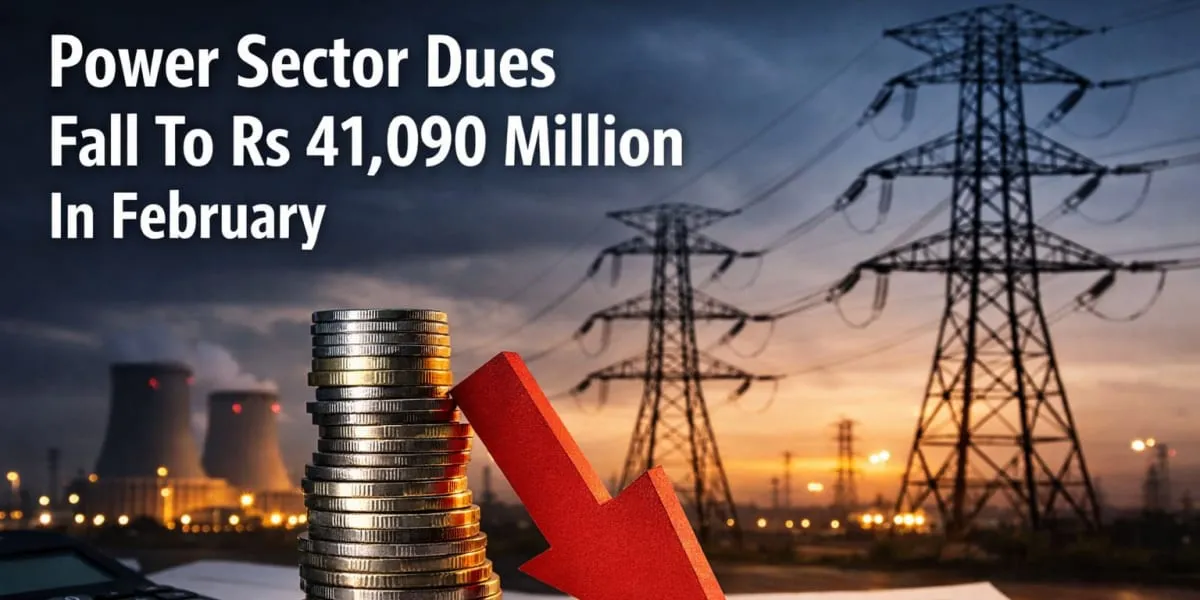
Power Sector Dues Fall To Rs 41,090 Million In February
POWER & RENEWABLE ENERGY

Power Sector Dues Fall To Rs 41,090 Million In February

Legacy dues in the power sector have been markedly reduced to Rs 41,090 million (mn) in February from Rs 1.4 trillion (tn) in June 2022 as a result of government measures, Parliament was informed. The reduction reflects the implementation of rules and rescheduling mechanisms aimed at addressing accumulated arrears. The change was outlined in a written reply to the Lok Sabha by the Union Minister of State for Power. The disclosure framed the improvement as outcome of regulatory action and repayment restructuring.

The government had notified the Electricity (Late Payment Surcharge and Related Matters) Rules, 2022 on 3 June 2022, under which dues, including late payment surcharges up to that date, were classified as arrears and designated for rescheduling. The rules required distribution licensees to repay those arrears through equated monthly instalments (EMIs) starting in August 2022. The mechanism provided for conversion of legacy liabilities into manageable EMIs and permitted pre-payment by some utilities. The approach was presented as helping restore fiscal discipline in power purchases.

A total of 13 states reported arrears amounting to Rs 1.4 trillion (tn) as of 3 June 2022 and these were rescheduled into EMIs, the reply stated. Distribution utilities had completed 43 EMIs and some utilities opted for pre-payment of legacy amounts, which accelerated the decline in outstanding liabilities. The rescheduling and selective pre-payments were credited with the sharp fall in legacy dues.

As of 10 February 2026 the outstanding legacy dues had reduced to Rs 41,090 million (mn) while total overdues combining current and legacy amounts stood at Rs 252,870 million (mn). The presentation to Parliament indicated that continued adherence to the EMI schedule and regulatory oversight would be critical to sustain the improvement. The government framed the outcome as progress in addressing systemic delays in payments and in strengthening the financial position of distribution entities.

Legacy dues in the power sector have been markedly reduced to Rs 41,090 million (mn) in February from Rs 1.4 trillion (tn) in June 2022 as a result of government measures, Parliament was informed. The reduction reflects the implementation of rules and rescheduling mechanisms aimed at addressing accumulated arrears. The change was outlined in a written reply to the Lok Sabha by the Union Minister of State for Power. The disclosure framed the improvement as outcome of regulatory action and repayment restructuring. The government had notified the Electricity (Late Payment Surcharge and Related Matters) Rules, 2022 on 3 June 2022, under which dues, including late payment surcharges up to that date, were classified as arrears and designated for rescheduling. The rules required distribution licensees to repay those arrears through equated monthly instalments (EMIs) starting in August 2022. The mechanism provided for conversion of legacy liabilities into manageable EMIs and permitted pre-payment by some utilities. The approach was presented as helping restore fiscal discipline in power purchases. A total of 13 states reported arrears amounting to Rs 1.4 trillion (tn) as of 3 June 2022 and these were rescheduled into EMIs, the reply stated. Distribution utilities had completed 43 EMIs and some utilities opted for pre-payment of legacy amounts, which accelerated the decline in outstanding liabilities. The rescheduling and selective pre-payments were credited with the sharp fall in legacy dues. As of 10 February 2026 the outstanding legacy dues had reduced to Rs 41,090 million (mn) while total overdues combining current and legacy amounts stood at Rs 252,870 million (mn). The presentation to Parliament indicated that continued adherence to the EMI schedule and regulatory oversight would be critical to sustain the improvement. The government framed the outcome as progress in addressing systemic delays in payments and in strengthening the financial position of distribution entities.

Next Story
Real Estate

Casagrand Launches Keystone In Tiruppur

Casagrand has launched Casagrand Keystone, a gated residential development at Rakkiyapalayam, off Avinashi Road, in Tiruppur. Spread across 2.2 acres, the B+G+5 structure comprises 142 units of 2 and 3 BHK homes, supported by 48 indoor and outdoor amenities. The project is introduced at a starting price of Rs 5,199 per sq. ft. The development allocates 1.3 acres to open space, including a central park of about 24,500 sq. ft. A 6,800 sq. ft. clubhouse includes a multipurpose hall, mini theatre and indoor recreation facilities. Other amenities include a 5,100 sq. ft. swimming pool, poolside par..

Next Story
Real Estate

Premium homes account for half of India’s housing sales in 2025

Knight Frank India, in its latest report on India’s office and residential property market, has highlighted a significant shift in housing demand, with homes priced above Rs 10 million accounting for 50 per cent of total residential sales across the top eight cities in 2025. The findings underscore the growing dominance of premium housing in the country’s real estate landscape.Out of 348,247 residential units sold during the year, approximately 175,091 units were in the Rs 10 million-plus category, marking a 14 per cent year-on-year increase. The data reflects changing buyer preferences, w..

Next Story
Infrastructure Energy

Xbattery launches XB-5K energy storage system for homes, offices

Xbattery, a Hyderabad-based deep-tech company specialising in next-generation energy storage and battery management technologies, has introduced its flagship XB-5K, a scalable 5kWh energy storage system designed for homes and offices in India.The XB-5K is built on the company’s indigenously developed BharatBMS platform, described as India’s first universal high-voltage battery management system architecture aimed at reducing import dependence and improving after-sales service capabilities. The launch comes as India seeks to strengthen domestic manufacturing and address reliance on imported..

Advertisement

Subscribe to Our Newsletter

Get daily newsletters around different themes from Construction world.

STAY CONNECTED

Advertisement

Advertisement

Advertisement

Open In App