PSA Mumbai Doubles Capacity to 4.8m TEUs With Phase 2
POWER & RENEWABLE ENERGY

PSA Mumbai Doubles Capacity to 4.8m TEUs With Phase 2

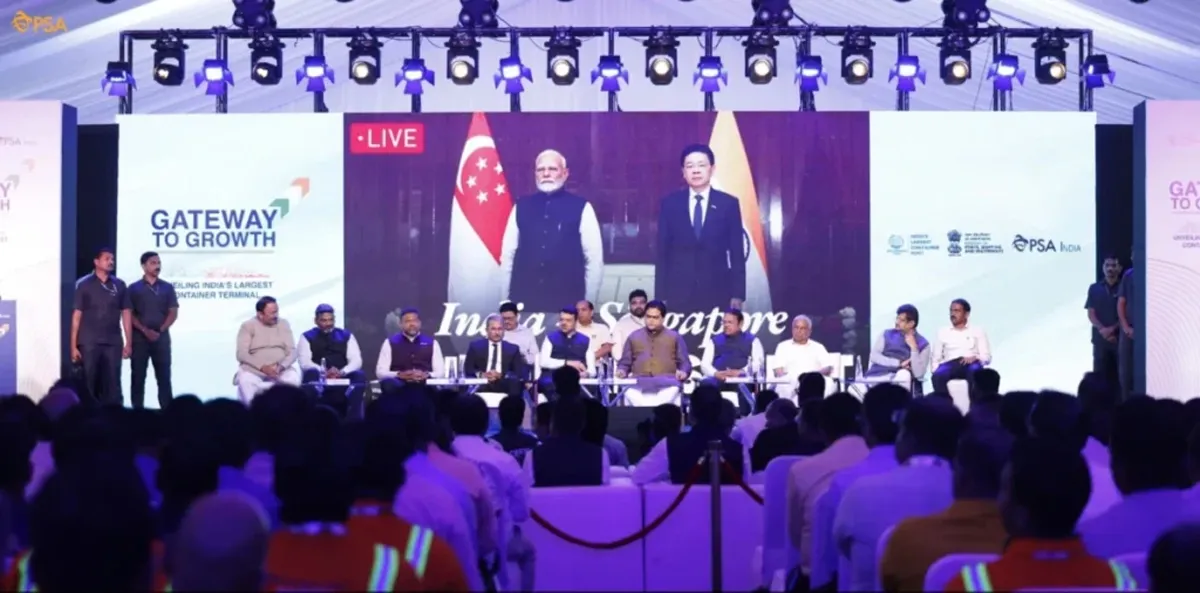
Prime Minister Narendra Modi and Singaporean Prime Minister Lawrence Wong on Thursday virtually inaugurated Phase 2 of the Bharat Mumbai Container Terminal (PSA Mumbai), developed by PSA International at the Jawaharlal Nehru Port Authority (JNPA) in Navi Mumbai.
With the commissioning of Phase 2, PSA Mumbai has doubled its annual handling capacity to 4.8 million TEUs, making it India’s largest container terminal. The terminal, spanning 2,000 metres of continuous quay length, has been designed to handle multiple mega container vessels simultaneously, supporting both domestic and global trade flows.
The expansion represents Singapore’s largest foreign direct investment in India to date, with SGD 1.7 billion (USD 1.3 billion / approximately Rs 109 billion) committed under a public-private partnership (PPP) model.
Ong Kim Pong, Group CEO of PSA International, said:
“PSA Mumbai’s Phase 2 expansion brings together capacity, connectivity, and sustainability, serving as a catalyst for India’s trade ambitions.”
Built across 200 hectares, the facility combines enhanced yard capacity with multimodal infrastructure, strengthening India’s maritime and inland logistics network.
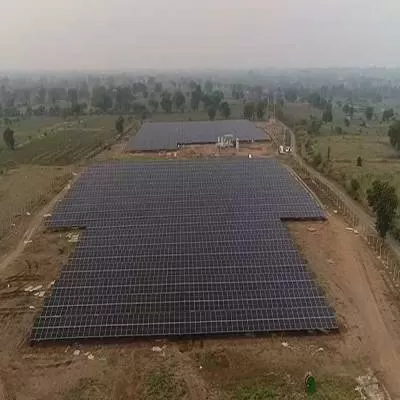
PSA highlighted that the terminal is powered by renewable energy, with plans to progressively electrify diesel-based assets, making it a sustainable hub for trade growth.
The Phase 2 expansion marks a major leap in India-Singapore cooperation in maritime infrastructure, positioning JNPA as the country’s most advanced container gateway. 

Prime Minister Narendra Modi and Singaporean Prime Minister Lawrence Wong on Thursday virtually inaugurated Phase 2 of the Bharat Mumbai Container Terminal (PSA Mumbai), developed by PSA International at the Jawaharlal Nehru Port Authority (JNPA) in Navi Mumbai.With the commissioning of Phase 2, PSA Mumbai has doubled its annual handling capacity to 4.8 million TEUs, making it India’s largest container terminal. The terminal, spanning 2,000 metres of continuous quay length, has been designed to handle multiple mega container vessels simultaneously, supporting both domestic and global trade flows.The expansion represents Singapore’s largest foreign direct investment in India to date, with SGD 1.7 billion (USD 1.3 billion / approximately Rs 109 billion) committed under a public-private partnership (PPP) model.Ong Kim Pong, Group CEO of PSA International, said:“PSA Mumbai’s Phase 2 expansion brings together capacity, connectivity, and sustainability, serving as a catalyst for India’s trade ambitions.”Built across 200 hectares, the facility combines enhanced yard capacity with multimodal infrastructure, strengthening India’s maritime and inland logistics network.PSA highlighted that the terminal is powered by renewable energy, with plans to progressively electrify diesel-based assets, making it a sustainable hub for trade growth.The Phase 2 expansion marks a major leap in India-Singapore cooperation in maritime infrastructure, positioning JNPA as the country’s most advanced container gateway. 

Next Story
Infrastructure Transport

MMRDA advances 250 m on Orange Gate–Marine Drive tunnel

The Mumbai Metropolitan Region Development Authority (MMRDA) has completed 250 m of underground tunnelling for the Orange Gate–Marine Drive Urban Road Tunnel using India’s largest slurry shield tunnel boring machine (TBM) deployed for an urban road project.The project involves twin tunnels extending over 7 km beneath critical transport corridors, including Central Railway, Western Railway and Metro Line 3. The work requires high-precision engineering to navigate densely developed urban infrastructure.Once completed, the tunnel is expected to reduce travel time between Orange Gate and Marin..

Next Story
Infrastructure Urban

Hindustan Zinc Pays Rs 188.46 Billion in FY26

Hindustan Zinc contributed Rs 188.46 billion to the public exchequer in FY 2025-26, according to its 9th Tax Transparency Report. The contribution, equivalent to 46 per cent of the company’s revenue, included direct and indirect taxes, government royalties, dividends to the Government of India, withholding taxes and other statutory levies.The company’s five-year cumulative contribution to the exchequer stood at Rs 915.72 billion. In FY26, Hindustan Zinc reported revenue of Rs 408.44 billion, EBITDA of Rs 221.62 billion and profit after tax of Rs 138.32 billion. It also achieved its highest..

Next Story
Infrastructure Urban

World of Concrete India 2026 Opens in Mumbai

Informa Markets in India will host the 12th edition of World of Concrete India 2026 from 3–5 June 2026 at the Bombay Exhibition Centre, Mumbai. The specialised B2B exhibition will bring together manufacturers, suppliers, contractors, developers, architects, consultants, infrastructure companies, project leaders and government stakeholders.The event is expected to feature over 350 brands and more than 18,000 trade professionals. It will cover concrete and cement, dry mortar, precast technologies, formwork, construction chemicals, industrial and commercial flooring, scaffolding, safety solutio..

Advertisement

Subscribe to Our Newsletter

Get daily newsletters around different themes from Construction world.

STAY CONNECTED

Advertisement

Advertisement

Advertisement