Puri Showcases Indo-Japan Energy Potential at Tokyo Meet
POWER & RENEWABLE ENERGY

Puri Showcases Indo-Japan Energy Potential at Tokyo Meet

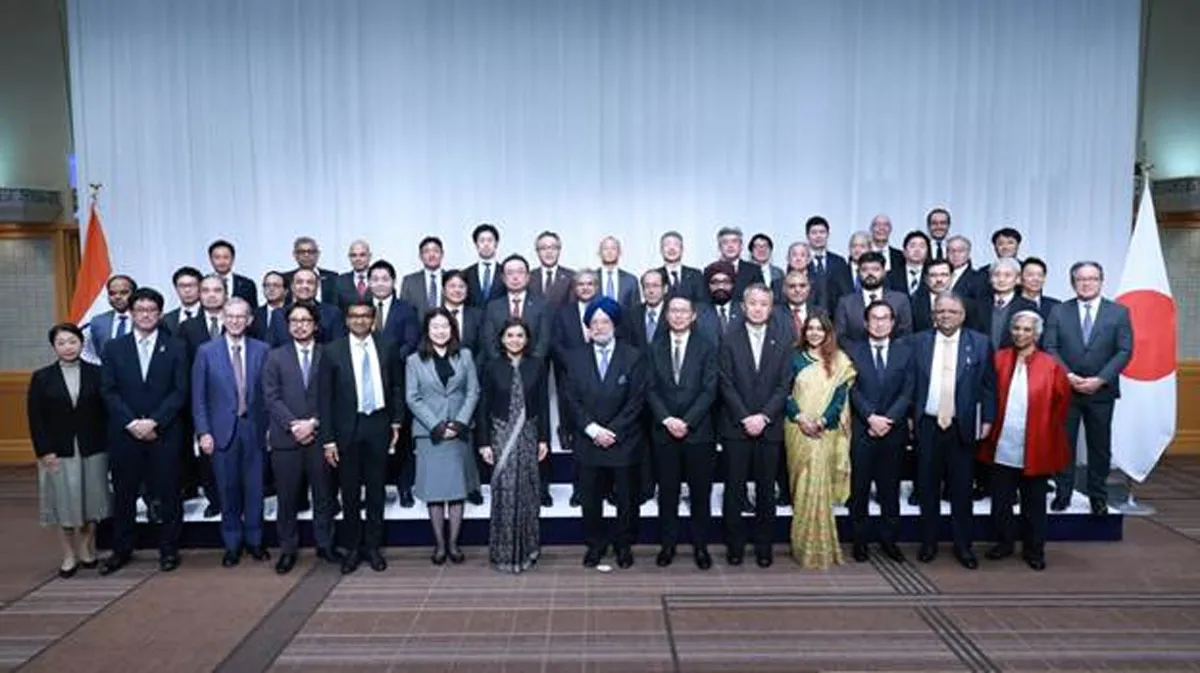
Petroleum and Natural Gas Minister Hardeep Singh Puri took part in a high-level roundtable with leading Japanese industry representatives in Tokyo, highlighting extensive opportunities for Indo-Japanese collaboration across the full energy value chain. He said that India’s scale, rising energy demand and major infrastructure expansion under Prime Minister Narendra Modi, combined with Japan’s strong technological capabilities, make the partnership central to building secure and sustainable energy systems in the Indo-Pacific.

The Minister recalled that during Prime Minister Modi’s visit to Japan in August, both countries adopted the India–Japan Joint Vision for the Next Decade. He noted that India and Japan have made strong progress towards the 2022–2026 target of JPY 5 trillion in combined public and private investment. A new and more ambitious goal of JPY 10 trillion (about USD 68 billion) in private investment has now been set, signalling growing alignment, especially in clean energy, innovation and advanced technologies.

Puri said India is opening investment avenues worth more than USD 500 billion across exploration and production, LNG, city gas networks, hydrogen, shipping and new fuels. He emphasised that India’s young workforce, reform-driven policy landscape and Make in India mission create significant potential for Japanese companies. Japan, he added, offers high-quality technology, sophisticated industrial systems and leadership in green and environmental solutions, making the partnership naturally complementary.

He highlighted India’s transformation through measures such as 100 per cent FDI across energy segments, transparent bidding and continuous exploration licensing, which together provide predictability and confidence for investors. India’s six major oil and gas PSUs collectively recorded revenues of about USD 315 billion in FY 2024–25—around 8 per cent of the country’s GDP—demonstrating the sector’s scale and global relevance.

Pointing out that India is already the world’s third-largest oil consumer and will contribute nearly 30 per cent of global incremental energy demand over the next twenty years, Puri said the country’s gas infrastructure—backed by an investment plan of roughly USD 72 billion—offers major avenues for collaboration with Japan, particularly in integrating gas systems with future energy solutions such as hydrogen.

He referenced the long-standing trust between the two nations, citing the Maruti-Suzuki partnership as an example that reshaped India’s industrial landscape. Puri said India and Japan are now positioned at a similar turning point in the energy sector, with opportunities to build advanced capabilities, co-develop resilient supply chains, create a skilled workforce and jointly strengthen energy security across the Indo-Pacific.

The Minister invited Japanese companies to participate more deeply in India’s evolving energy ecosystem and assured full support from the Government of India in enabling meaningful, long-term collaboration across the sector.

Petroleum and Natural Gas Minister Hardeep Singh Puri took part in a high-level roundtable with leading Japanese industry representatives in Tokyo, highlighting extensive opportunities for Indo-Japanese collaboration across the full energy value chain. He said that India’s scale, rising energy demand and major infrastructure expansion under Prime Minister Narendra Modi, combined with Japan’s strong technological capabilities, make the partnership central to building secure and sustainable energy systems in the Indo-Pacific.The Minister recalled that during Prime Minister Modi’s visit to Japan in August, both countries adopted the India–Japan Joint Vision for the Next Decade. He noted that India and Japan have made strong progress towards the 2022–2026 target of JPY 5 trillion in combined public and private investment. A new and more ambitious goal of JPY 10 trillion (about USD 68 billion) in private investment has now been set, signalling growing alignment, especially in clean energy, innovation and advanced technologies.Puri said India is opening investment avenues worth more than USD 500 billion across exploration and production, LNG, city gas networks, hydrogen, shipping and new fuels. He emphasised that India’s young workforce, reform-driven policy landscape and Make in India mission create significant potential for Japanese companies. Japan, he added, offers high-quality technology, sophisticated industrial systems and leadership in green and environmental solutions, making the partnership naturally complementary.He highlighted India’s transformation through measures such as 100 per cent FDI across energy segments, transparent bidding and continuous exploration licensing, which together provide predictability and confidence for investors. India’s six major oil and gas PSUs collectively recorded revenues of about USD 315 billion in FY 2024–25—around 8 per cent of the country’s GDP—demonstrating the sector’s scale and global relevance.Pointing out that India is already the world’s third-largest oil consumer and will contribute nearly 30 per cent of global incremental energy demand over the next twenty years, Puri said the country’s gas infrastructure—backed by an investment plan of roughly USD 72 billion—offers major avenues for collaboration with Japan, particularly in integrating gas systems with future energy solutions such as hydrogen.He referenced the long-standing trust between the two nations, citing the Maruti-Suzuki partnership as an example that reshaped India’s industrial landscape. Puri said India and Japan are now positioned at a similar turning point in the energy sector, with opportunities to build advanced capabilities, co-develop resilient supply chains, create a skilled workforce and jointly strengthen energy security across the Indo-Pacific.The Minister invited Japanese companies to participate more deeply in India’s evolving energy ecosystem and assured full support from the Government of India in enabling meaningful, long-term collaboration across the sector.

Next Story
Equipment

Schwing Stetter India Unveils New Innovations at Excon 2025

Schwing Stetter India unveiled more than 20 new machines at Excon 2025, marking one of its most significant showcases and introducing several India-first technologies to the construction equipment sector. The company launched the country’s first 56-metre boom pump designed and manufactured in India, the first fully electric truck mixer, the first CNG mixer variant and the first hybrid boom pump. Executives said the launch portfolio was engineered to support India’s move toward faster, greener and more vertically oriented infrastructure through advanced engineering, clean-energy solutions a..

Next Story
Infrastructure Energy

SEPC Resolves Hindustan Copper Dispute, Wins Rs 725 Mn Order

Engineering, procurement and construction firm SEPC Ltd has recently settled a dispute with Hindustan Copper Ltd (HCL) and secured a mining infrastructure order valued at Rs 725 million from the state-owned company. SEPC informed the stock exchanges that it has executed a settlement deed with HCL, bringing closure to all inter-se claims and counterclaims arising from arbitration proceedings. As part of the settlement, SEPC will receive Rs 304.5 million as full and final payment, marking the resolution of all pending disputes between the two entities. The company also stated that Hindustan Co..

Next Story
Infrastructure Energy

20% Ethanol Blending Cuts India’s CO2 Emissions by 73.6 Mn Tonnes

Union Road Transport and Highways Minister Nitin Gadkari recently said that India has reduced carbon dioxide emissions by 73.6 million metric tonnes due to the adoption of 20 per cent ethanol blending in petrol. He made the statement while replying to supplementary questions during the Question Hour in the Lok Sabha. Describing ethanol as a green fuel, the minister said it plays a key role in reducing pollution while also supporting higher incomes for farmers. He underlined that ethanol blending contributes both to environmental sustainability and rural economic growth. Nitin Gadkari also po..

Advertisement

Subscribe to Our Newsletter

Get daily newsletters around different themes from Construction world.

STAY CONNECTED

Advertisement

Advertisement

Advertisement

Advertisement

Open In App