+
Rajasthan Cabinet Approves Four Energy Sector Joint Ventures
POWER & RENEWABLE ENERGY

Rajasthan Cabinet Approves Four Energy Sector Joint Ventures

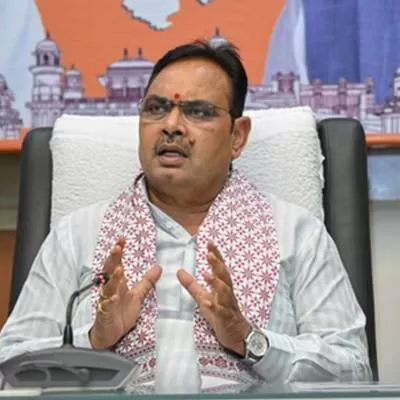
The Rajasthan Cabinet approved a proposal for the establishment of four joint venture companies in the energy sector. These companies are set to focus on projects related to renewable and thermal power generation and transmission. The state Cabinet, led by Chief Minister Bhajanlal Sharma, also gave the green light for the development of metro rail projects within the state.

In addition to the establishment of joint ventures for renewable and thermal power projects and power transmission, the Cabinet sanctioned the creation of an infrastructure investment trust, as outlined in an official statement.

The statement revealed that Deputy Chief Minister Premchand Bairwa, Industry and Commerce Minister Rajyavardhan Singh Rathore, and Parliamentary Affairs Minister Jogaram Patel were responsible for communicating the decisions.

Bairwa noted that in accordance with the Metro Rail Policy 2017, the Cabinet approved the formation of a joint venture company between the central government and the state. This joint venture will oversee the development, operation, and implementation of both current and future metro rail projects in Rajasthan. It will have access to financial assistance from the Centre, including share capital and loans, as well as technical and administrative support for the metro projects.

Patel indicated that the government is persistently working to make the state self-reliant in the energy sector.

In line with the Memorandum of Understanding (MoU) signed between the state government and various central public sector enterprises on March 10, 2024, the Cabinet approved the proposals for forming joint venture companies with central public sector units.

The Rajasthan Cabinet approved a proposal for the establishment of four joint venture companies in the energy sector. These companies are set to focus on projects related to renewable and thermal power generation and transmission. The state Cabinet, led by Chief Minister Bhajanlal Sharma, also gave the green light for the development of metro rail projects within the state. In addition to the establishment of joint ventures for renewable and thermal power projects and power transmission, the Cabinet sanctioned the creation of an infrastructure investment trust, as outlined in an official statement. The statement revealed that Deputy Chief Minister Premchand Bairwa, Industry and Commerce Minister Rajyavardhan Singh Rathore, and Parliamentary Affairs Minister Jogaram Patel were responsible for communicating the decisions. Bairwa noted that in accordance with the Metro Rail Policy 2017, the Cabinet approved the formation of a joint venture company between the central government and the state. This joint venture will oversee the development, operation, and implementation of both current and future metro rail projects in Rajasthan. It will have access to financial assistance from the Centre, including share capital and loans, as well as technical and administrative support for the metro projects. Patel indicated that the government is persistently working to make the state self-reliant in the energy sector. In line with the Memorandum of Understanding (MoU) signed between the state government and various central public sector enterprises on March 10, 2024, the Cabinet approved the proposals for forming joint venture companies with central public sector units.

Related Stories

Gold Stories

Next Story
Infrastructure Urban

Beyond Building Faster

India’s cities are expanding at an unprecedented pace, bringing new infrastructure and development opportunities while also intensifying challenges around mobility, public spaces, liveability and supporting infrastructure. The question, therefore, is not simply whether India can build faster, but whether it can build cities that work better.At a CW webinar, Are We Designing Better Cities – or Just Building Faster?, moderator Ar. Samir Shaikh, Founding Principal, AR&UD Studio, brought together perspectives from design, development, master planning and technology...To read the full artic..

Next Story
Infrastructure Transport

Risk is the Roadblock

For an industry often described as capital-intensive, India’s roads and highways sector faces an interesting paradox: Capital is available, but not every form of capital is willing to take every kind of risk.The discussion on Financing Roads & Highways in a Capital-Constrained Era, moderated by Suneet K Maheshwari, Managing Partner, Udvik Infra, and Independent Board Director, brought together Pratik Panwala, Vice President, Investments, NIIFL; Vishal Gupta, Senior Vice President - PA&SF, SBI Capital Markets; Sandeep Upadhyay, Managing Director - Infrastructure Advisory, Centrum Capi..

Next Story
Infrastructure Urban

When the Clause Bars Damages

In large-scale infrastructure and construction projects, delays are often an inevitable reality. To shield themselves from financial liabilities arising out of project prolongations, employers – particularly government entities and public-sector undertakings (PSUs) – frequently incorporate standard ‘No Damage for Delay’ or ‘No Liability’ clauses. These clauses aim to restrict the contractor's remedy solely to an extension of time (EOT), barring any monetary claims for extra overheads, idling costs or lost profits.Origin and relevanceUnderstanding the nature, enforceability and judi..

Advertisement

Subscribe to Our Newsletter

Get daily newsletters around different themes from Construction world.

STAY CONNECTED

Advertisement

SPECIAL OFFER
QR Code