+
Rajasthan Clears Tariffs For 500 MW Battery Storage Projects
POWER & RENEWABLE ENERGY

Rajasthan Clears Tariffs For 500 MW Battery Storage Projects

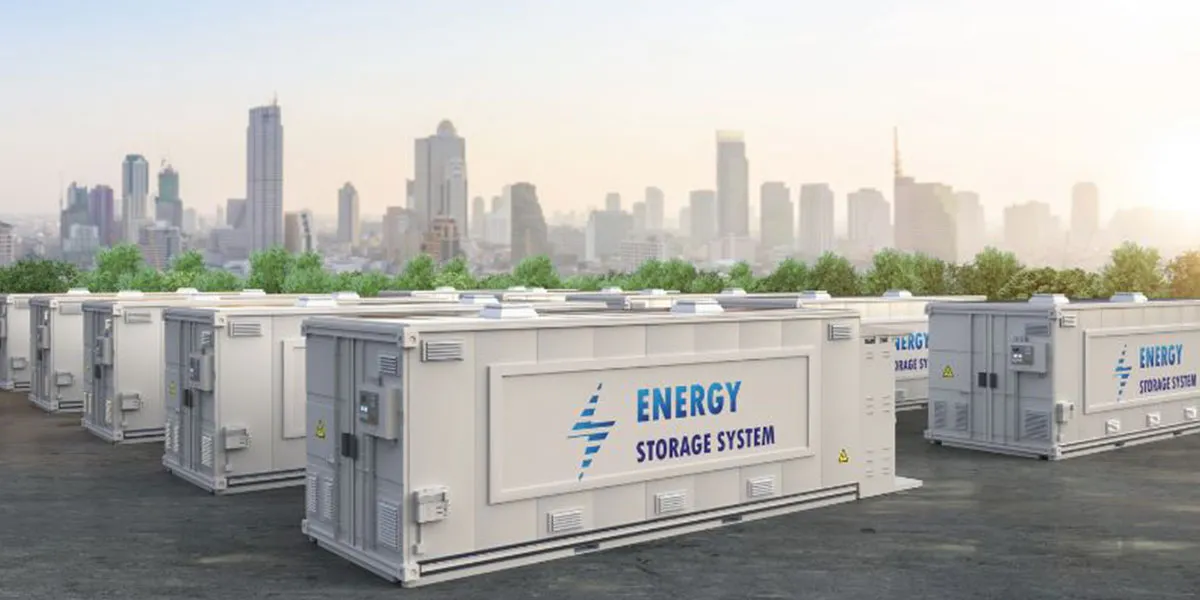
The Rajasthan Electricity Regulatory Commission has approved tariffs for 500 MW/1,000 MWh of standalone battery energy storage systems in the state, marking a key step towards improving renewable energy integration and grid stability. The project is being implemented by NTPC Vidyut Vyapar Nigam Limited, which was nominated by the Ministry of Power under the Viability Gap Funding scheme to accelerate the deployment of energy storage solutions.

NVVN carried out a tariff-based competitive bidding process, including an e-reverse auction held on June 21, 2025, through which five bidders were selected. The discovered monthly tariffs per MW stood at Rs 216,000 for Solar91 Cleantech Limited, Rs 218,700 for Rays Power Experts, Rs 218,998 for Stockwell Solar Services, Rs 218,999 for Oriana Power, and Rs 219,000 for Inox Renewable Solutions. These tariffs were approved after the Commission reviewed the bidding outcomes and supporting documentation.

During the proceedings, Rajasthan Urja Vikas and IT Services Limited sought a reduction in the trading margin from 7 paise per unit to 2 paise per unit, citing earlier Commission observations that higher margins could increase costs for end consumers. NVVN stated that the margin could not be revised, following which both parties signed the Battery Energy Storage Sale Agreement on August 26, 2025, retaining the trading margin at 7 paise per unit.

The Commission noted that battery energy storage systems play a crucial role in managing renewable energy surpluses by releasing stored power during peak demand periods. This reduces reliance on costly short-term power purchases and leads to savings for distribution companies and consumers. The procurement is also aligned with Rajasthan’s Energy Storage Obligation trajectory, which mandates a 2.0 per cent storage requirement for the 2025–26 financial year.

The state government intervened to ensure timely implementation of the projects, underscoring their strategic importance. NVVN confirmed that the selected sites in the Jaisalmer–Barmer–Jodhpur belt have been chosen to minimise transmission congestion and enable efficient power evacuation.

In its final order, the Commission approved the discovered tariffs and directed RUVITL to track project progress through quarterly reports. It also encouraged the use of advanced, AI-enabled battery storage technologies in future projects to enhance efficiency, safety and performance. With this approval, Rajasthan is set to strengthen its renewable energy infrastructure, improve grid reliability and move closer to meeting its energy storage and sustainability targets.

The Rajasthan Electricity Regulatory Commission has approved tariffs for 500 MW/1,000 MWh of standalone battery energy storage systems in the state, marking a key step towards improving renewable energy integration and grid stability. The project is being implemented by NTPC Vidyut Vyapar Nigam Limited, which was nominated by the Ministry of Power under the Viability Gap Funding scheme to accelerate the deployment of energy storage solutions. NVVN carried out a tariff-based competitive bidding process, including an e-reverse auction held on June 21, 2025, through which five bidders were selected. The discovered monthly tariffs per MW stood at Rs 216,000 for Solar91 Cleantech Limited, Rs 218,700 for Rays Power Experts, Rs 218,998 for Stockwell Solar Services, Rs 218,999 for Oriana Power, and Rs 219,000 for Inox Renewable Solutions. These tariffs were approved after the Commission reviewed the bidding outcomes and supporting documentation. During the proceedings, Rajasthan Urja Vikas and IT Services Limited sought a reduction in the trading margin from 7 paise per unit to 2 paise per unit, citing earlier Commission observations that higher margins could increase costs for end consumers. NVVN stated that the margin could not be revised, following which both parties signed the Battery Energy Storage Sale Agreement on August 26, 2025, retaining the trading margin at 7 paise per unit. The Commission noted that battery energy storage systems play a crucial role in managing renewable energy surpluses by releasing stored power during peak demand periods. This reduces reliance on costly short-term power purchases and leads to savings for distribution companies and consumers. The procurement is also aligned with Rajasthan’s Energy Storage Obligation trajectory, which mandates a 2.0 per cent storage requirement for the 2025–26 financial year. The state government intervened to ensure timely implementation of the projects, underscoring their strategic importance. NVVN confirmed that the selected sites in the Jaisalmer–Barmer–Jodhpur belt have been chosen to minimise transmission congestion and enable efficient power evacuation. In its final order, the Commission approved the discovered tariffs and directed RUVITL to track project progress through quarterly reports. It also encouraged the use of advanced, AI-enabled battery storage technologies in future projects to enhance efficiency, safety and performance. With this approval, Rajasthan is set to strengthen its renewable energy infrastructure, improve grid reliability and move closer to meeting its energy storage and sustainability targets.

Related Stories

Gold Stories

Next Story
Infrastructure Urban

KONE Opens India's First Digital Experience Centre in Pune

KONE, a global elevator and escalator manufacturer, has inaugurated its first Digital Experience Centre (DEC) in India, located in Pune. The facility aims to showcase how artificial intelligence (AI), connectivity and data-driven technologies can enhance customer experiences and improve building operations.The centre was inaugurated by Jussi Herlin, Executive Vice Chair, KONE Corporation; Philippe Delorme, President and CEO, KONE; and Nandan Nilekani, Co-founder and Chairman of the Board, Infosys.Designed as an interactive customer environment, the facility demonstrates digital solutions cover..

Next Story
Infrastructure Urban

CII GreenCo Launches Circularity Guidelines for Indian Industry

The Confederation of Indian Industry (CII) GreenCo Council has launched the CII GreenCo Circularity Guidelines – Pilot Version at the 17th CII GreenCo Waste & Resource Management Summit 2026 in Chennai. The initiative aims to strengthen resource efficiency, waste reduction and circular economy practices across Indian manufacturing and process industries.The guidelines introduce a structured framework with circularity indices covering raw materials, consumables, packaging and other resource inputs. These indicators will help industries assess existing practices, identify opportunities to ..

Next Story
Infrastructure Energy

Global Electronics Association Launches IPC-1783-CO2E Standard

The Global Electronics Association has introduced IPC-1783-CO2E, a new international standard aimed at improving consistency, transparency and comparability in product carbon footprint reporting across the electronics manufacturing industry.The standard, titled International Standard for Data Collection and Reporting of CO2 Equivalent (CO2e) Emissions for the Electronics Manufacturing Supply Chain, provides industry-specific guidance for collecting, estimating and reporting carbon emissions data.With increasing regulatory requirements and customer expectations, electronics manufacturers face c..

Advertisement

Subscribe to Our Newsletter

Get daily newsletters around different themes from Construction world.

STAY CONNECTED

Advertisement

SPECIAL OFFER
QR Code