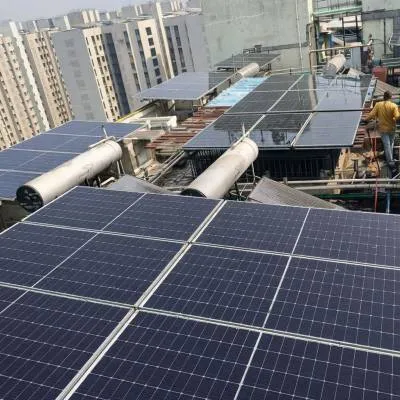





Rays Power Infra Secures 200 MW RTC Project
POWER & RENEWABLE ENERGY

Rays Power Infra Secures 200 MW RTC Project

Rays Power Infra has secured a 200 megawatt (MW) round-the-clock renewable energy (RTC) project from Indian Railways, marking a significant contract for the company. The award is expected to deliver continuous renewable power to support rail operations and ancillary services. The project underlines the growing role of firm renewable supply in critical infrastructure.

Round-the-clock renewable energy (RTC) denotes arrangements that provide a dependable flow of clean power across daily cycles and seasonal variations. Such contracts typically combine generation from diverse renewable sources with dispatch mechanisms to ensure availability. The structure reduces reliance on fossil fuel peaking plants and supports grid stability. Implementation phases will include planning, procurement and commissioning.

To deliver RTC, technical integration is likely to require energy storage, advanced dispatch algorithms and close coordination with grid operators. The arrangement will test the company's capability in asset management and power procurement for firm supply. The project may also stimulate local supply chain activity connected to renewable deployment.

For Rays Power Infra the contract strengthens its presence in the rail sector and broadens its firm power portfolio in the Asia Pacific region. The company can leverage this award to pursue further long-term supply agreements with institutional customers. The project enhances its credentials in providing utility-scale solutions that balance sustainability and reliability. The award may attract investor interest and support job creation during rollout.

For Indian Railways the move represents another step towards decarbonisation of a large transport operator and aligns with national energy transition objectives. The award sends a market signal that demand for dependable renewable energy is rising among large power consumers. Stakeholders will watch deployment and operational outcomes as the project moves into execution. The progress will be monitored by regulators and industry observers.

Rays Power Infra has secured a 200 megawatt (MW) round-the-clock renewable energy (RTC) project from Indian Railways, marking a significant contract for the company. The award is expected to deliver continuous renewable power to support rail operations and ancillary services. The project underlines the growing role of firm renewable supply in critical infrastructure. Round-the-clock renewable energy (RTC) denotes arrangements that provide a dependable flow of clean power across daily cycles and seasonal variations. Such contracts typically combine generation from diverse renewable sources with dispatch mechanisms to ensure availability. The structure reduces reliance on fossil fuel peaking plants and supports grid stability. Implementation phases will include planning, procurement and commissioning. To deliver RTC, technical integration is likely to require energy storage, advanced dispatch algorithms and close coordination with grid operators. The arrangement will test the company's capability in asset management and power procurement for firm supply. The project may also stimulate local supply chain activity connected to renewable deployment. For Rays Power Infra the contract strengthens its presence in the rail sector and broadens its firm power portfolio in the Asia Pacific region. The company can leverage this award to pursue further long-term supply agreements with institutional customers. The project enhances its credentials in providing utility-scale solutions that balance sustainability and reliability. The award may attract investor interest and support job creation during rollout. For Indian Railways the move represents another step towards decarbonisation of a large transport operator and aligns with national energy transition objectives. The award sends a market signal that demand for dependable renewable energy is rising among large power consumers. Stakeholders will watch deployment and operational outcomes as the project moves into execution. The progress will be monitored by regulators and industry observers.

Next Story
Infrastructure Energy

India Adds Record 44.61 GW Solar Capacity in FY2026

India’s solar sector reached a milestone in FY2026, with cumulative installed capacity crossing 150 GW and annual additions hitting a record 44.61 GW, exceeding the government target of 34 GW and nearly doubling FY2025’s 23.83 GW. Distributed Renewable Energy contributed 16.3 GW, while PPA and C&I segments accounted for 34 per cent and 30 per cent, respectively.India has risen from 9th globally in 2015 to 3rd in cumulative solar capacity by 2025 and is set to become the world’s second-largest solar market in annual installations in 2026. Seven states, led by Rajasthan and Gujarat, ac..

Next Story
Real Estate

Abhee Ventures unveils Scottish-themed 45-acre township in Bengaluru

Abhee Ventures, a leading South Indian real estate developer, has announced “Codename New Dimension,” a 45-acre Scottish-themed residential township at Gunjur on Whitefield–Sarjapur Road, Bengaluru. Strategically located between Whitefield and Sarjapur Road, Gunjur benefits from strong connectivity to the Outer Ring Road IT corridor, ITPL, EPIP, the upcoming Dommasandra Metro Station, and the proposed SWIFT City and Peripheral Ring Road.The township, designed in collaboration with London-based UHA London and India’s RSP Architects, offers low-density living with 85 per cent open spaces..

Next Story
Infrastructure Urban

BPE launches world’s thinnest Active Tile for legacy data centres

Best Power Equipments (India) Pvt Ltd (BPE), a leading provider of power solutions, data centre systems, and Battery Energy Storage Systems (BESS), has launched the BPE Active Tile, the world’s thinnest active tile designed for legacy data centres and telecom infrastructure. At just 65 mm thick, the tile requires significantly less space than conventional active tiles, which need nearly 450 mm floor depth.“Most legacy data centres were built decades ago for lower IT loads and traditional airflow patterns,” said A Prabhu, Executive Director – Technical (Global Operations), BPE. “As ra..

Advertisement

Subscribe to Our Newsletter

Get daily newsletters around different themes from Construction world.

STAY CONNECTED

Advertisement

Advertisement

Advertisement