+
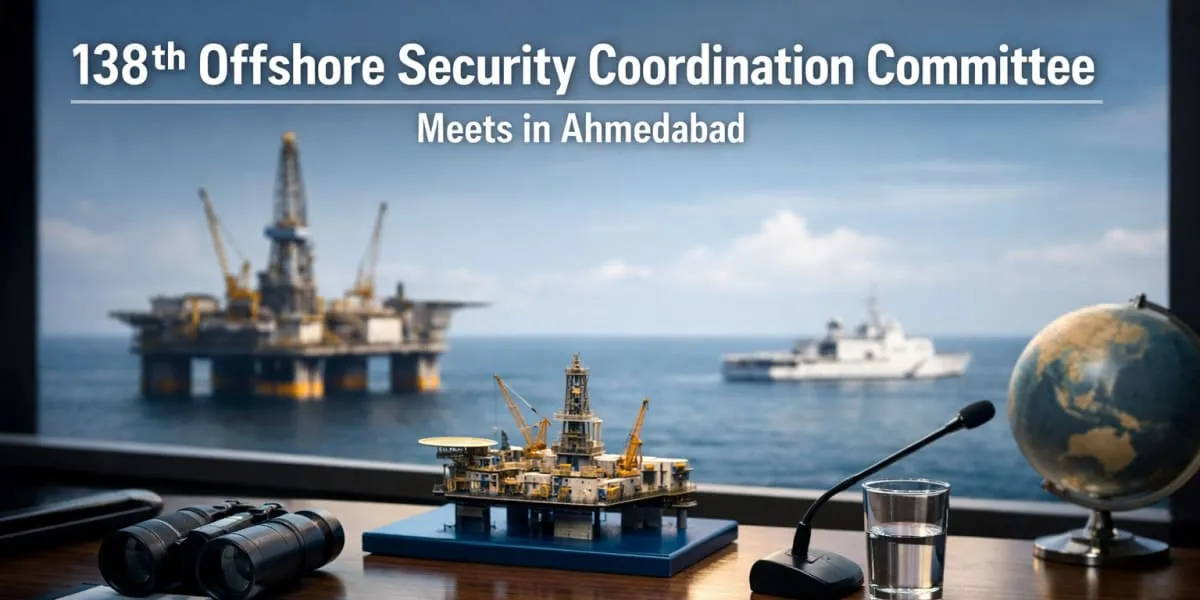
138th Offshore Security Coordination Committee Meets in Ahmedabad
POWER & RENEWABLE ENERGY

138th Offshore Security Coordination Committee Meets in Ahmedabad

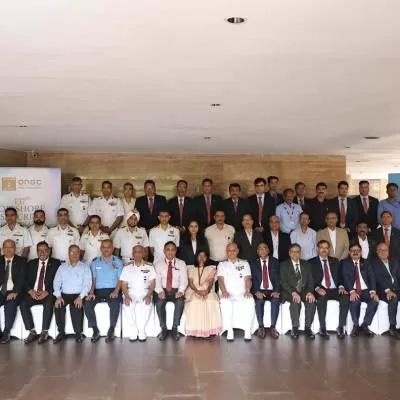
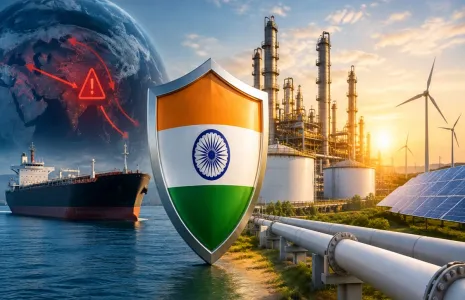
The 138th Offshore Security Coordination Committee meeting took place in Ahmedabad on 21 May 2026 under the chairpersonship of the Director General of the Indian Coast Guard (ICG), Paramesh Sivamani, to review and strengthen the security framework for India's offshore installations and critical energy infrastructure. The committee convened senior officials and agency representatives to assess current threats and capabilities. The purpose was to align strategic priorities and operational measures across agencies.

Deliberations concentrated on enhancing maritime domain awareness, strengthening inter-agency coordination, augmenting surveillance capabilities and improving joint response mechanisms to address emerging offshore security challenges. Participants examined the evolving global and regional security environment and modern warfare dynamics, with particular attention to unmanned and drone enabled threats. The meeting also considered the implications of expanding offshore exploration activities in the Andaman and Nicobar region.

The session included representatives from the ICG, the Indian Navy and the Indian Air Force alongside officials from the Ministry of Home Affairs, the Ministry of External Affairs and the Ministry of Petroleum and Natural Gas. Additional attendees comprised the Director General Hydrographer, Directorate General of Shipping, Intelligence Bureau, Oil and Natural Gas Commission and representatives of state police forces. Discussions emphasised interoperability, information sharing and coordinated surveillance postures.

The committee reviewed mechanisms to enhance situational awareness using surveillance assets and to refine joint response protocols for incidents affecting critical maritime infrastructure. Emphasis was placed on institutionalising routine multi agency exercises, technology enabled surveillance and clear command frameworks to reduce response times. The meeting reaffirmed collective commitment to safeguard offshore assets and to maintain the resilience of the maritime energy supply chain. Follow up actions were planned.

The 138th Offshore Security Coordination Committee meeting took place in Ahmedabad on 21 May 2026 under the chairpersonship of the Director General of the Indian Coast Guard (ICG), Paramesh Sivamani, to review and strengthen the security framework for India's offshore installations and critical energy infrastructure. The committee convened senior officials and agency representatives to assess current threats and capabilities. The purpose was to align strategic priorities and operational measures across agencies. Deliberations concentrated on enhancing maritime domain awareness, strengthening inter-agency coordination, augmenting surveillance capabilities and improving joint response mechanisms to address emerging offshore security challenges. Participants examined the evolving global and regional security environment and modern warfare dynamics, with particular attention to unmanned and drone enabled threats. The meeting also considered the implications of expanding offshore exploration activities in the Andaman and Nicobar region. The session included representatives from the ICG, the Indian Navy and the Indian Air Force alongside officials from the Ministry of Home Affairs, the Ministry of External Affairs and the Ministry of Petroleum and Natural Gas. Additional attendees comprised the Director General Hydrographer, Directorate General of Shipping, Intelligence Bureau, Oil and Natural Gas Commission and representatives of state police forces. Discussions emphasised interoperability, information sharing and coordinated surveillance postures. The committee reviewed mechanisms to enhance situational awareness using surveillance assets and to refine joint response protocols for incidents affecting critical maritime infrastructure. Emphasis was placed on institutionalising routine multi agency exercises, technology enabled surveillance and clear command frameworks to reduce response times. The meeting reaffirmed collective commitment to safeguard offshore assets and to maintain the resilience of the maritime energy supply chain. Follow up actions were planned.

Related Stories

Gold Stories

Next Story
Infrastructure Urban

Beyond Building Faster

India’s cities are expanding at an unprecedented pace, bringing new infrastructure and development opportunities while also intensifying challenges around mobility, public spaces, liveability and supporting infrastructure. The question, therefore, is not simply whether India can build faster, but whether it can build cities that work better.At a CW webinar, Are We Designing Better Cities – or Just Building Faster?, moderator Ar. Samir Shaikh, Founding Principal, AR&UD Studio, brought together perspectives from design, development, master planning and technology...To read the full artic..

Next Story
Infrastructure Transport

Risk is the Roadblock

For an industry often described as capital-intensive, India’s roads and highways sector faces an interesting paradox: Capital is available, but not every form of capital is willing to take every kind of risk.The discussion on Financing Roads & Highways in a Capital-Constrained Era, moderated by Suneet K Maheshwari, Managing Partner, Udvik Infra, and Independent Board Director, brought together Pratik Panwala, Vice President, Investments, NIIFL; Vishal Gupta, Senior Vice President - PA&SF, SBI Capital Markets; Sandeep Upadhyay, Managing Director - Infrastructure Advisory, Centrum Capi..

Next Story
Infrastructure Urban

When the Clause Bars Damages

In large-scale infrastructure and construction projects, delays are often an inevitable reality. To shield themselves from financial liabilities arising out of project prolongations, employers – particularly government entities and public-sector undertakings (PSUs) – frequently incorporate standard ‘No Damage for Delay’ or ‘No Liability’ clauses. These clauses aim to restrict the contractor's remedy solely to an extension of time (EOT), barring any monetary claims for extra overheads, idling costs or lost profits.Origin and relevanceUnderstanding the nature, enforceability and judi..

Advertisement

Subscribe to Our Newsletter

Get daily newsletters around different themes from Construction world.

STAY CONNECTED

Advertisement

SPECIAL OFFER
QR Code