Shell Warns Australia Over Proposed Windfall Tax
POWER & RENEWABLE ENERGY

Shell Warns Australia Over Proposed Windfall Tax

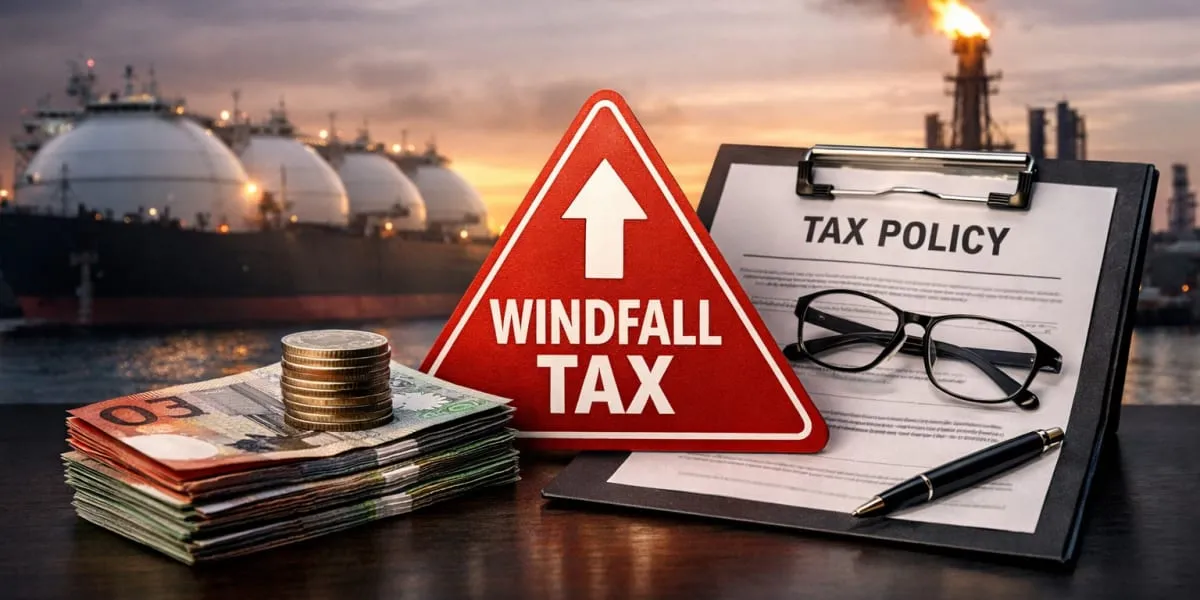
Shell has cautioned the Australian government against introducing a windfall tax on gas exporters as policymakers consider measures to capture rising revenues from liquefied natural gas (LNG). The warning arrived amid a sharp rise in global LNG prices following the Iranian conflict, which prompted Canberra to ask the Treasury to develop a new tax model for LNG exports and to consider reforms to the Petroleum Resources Rent Tax (PRRT). The debate has become central to fiscal discussions in Canberra.

Shell Australia portrayed short term policy responses as capable of undermining long term economic growth and diminishing the value of existing and planned projects. The company argued that abrupt fiscal measures risk deterring the investment required to maintain supply and to support future development of domestic gas fields. Concern was also expressed that measures targeting windfall gains could reduce Australia’s competitiveness in global energy markets.

Industry executives acknowledged that elevated commodity prices are already increasing government receipts, yet they maintained that revenue considerations need to be weighed against the potential long term costs to the investment climate. The discussion has been shaped by criticism of historically low tax contributions from some gas producers, which has intensified public pressure for a reassessment of the fiscal regime. Advisers and analysts have urged a carefully designed approach that seeks to preserve investor confidence while addressing legitimate concerns about revenue fairness.

Canberra faces the task of balancing the objective of securing additional revenue for the public purse with the need to ensure energy security and to attract the capital necessary for long term projects. Officials are expected to consult widely with industry and independent experts as the Treasury prepares options for the government to consider. The outcome will hinge on whether policymakers can craft a mechanism that captures extraordinary gains without discouraging the investment the sector requires.

Shell has cautioned the Australian government against introducing a windfall tax on gas exporters as policymakers consider measures to capture rising revenues from liquefied natural gas (LNG). The warning arrived amid a sharp rise in global LNG prices following the Iranian conflict, which prompted Canberra to ask the Treasury to develop a new tax model for LNG exports and to consider reforms to the Petroleum Resources Rent Tax (PRRT). The debate has become central to fiscal discussions in Canberra. Shell Australia portrayed short term policy responses as capable of undermining long term economic growth and diminishing the value of existing and planned projects. The company argued that abrupt fiscal measures risk deterring the investment required to maintain supply and to support future development of domestic gas fields. Concern was also expressed that measures targeting windfall gains could reduce Australia’s competitiveness in global energy markets. Industry executives acknowledged that elevated commodity prices are already increasing government receipts, yet they maintained that revenue considerations need to be weighed against the potential long term costs to the investment climate. The discussion has been shaped by criticism of historically low tax contributions from some gas producers, which has intensified public pressure for a reassessment of the fiscal regime. Advisers and analysts have urged a carefully designed approach that seeks to preserve investor confidence while addressing legitimate concerns about revenue fairness. Canberra faces the task of balancing the objective of securing additional revenue for the public purse with the need to ensure energy security and to attract the capital necessary for long term projects. Officials are expected to consult widely with industry and independent experts as the Treasury prepares options for the government to consider. The outcome will hinge on whether policymakers can craft a mechanism that captures extraordinary gains without discouraging the investment the sector requires.

Next Story
Infrastructure Transport

Civil Aviation Minister Reviews Hub And Spoke Readiness

The Minister of Civil Aviation, Ram Mohan Naidu, chaired a high-level meeting at Delhi Airport to review readiness for hub-and-spoke operations. Senior officials from the Ministry of Home Affairs, Ministry of Civil Aviation, Bureau of Immigration, Bureau of Civil Aviation Security, Customs, Airports Authority of India, Directorate General of Civil Aviation, CISF, DigiYatra, Delhi International Airport Limited and leading airlines attended. He led an on-ground walkthrough of passenger flows and inspected the Security Hold Area at Terminal 3. The ministry noted that the National Civil Aviation P..

Next Story
Infrastructure Energy

BCCL Announces PI Relaxation And Cash Discount For Power Sector

Bharat Coking Coal Limited (BCCL) has announced a scheme providing relaxation in Performance Incentive (PI) and offering a cash discount to power sector consumers for the first quarter of Financial Year 2026–27, covering April to June 2026. The scheme is applicable to all eligible power sector consumers covered under Fuel Supply Agreements (FSA), including those under the Flexi?Linkage arrangement. Incentives will be linked to actual coal offtake through rail, road and rail?cum?road (RCR) modes and implemented on the basis of proportion of offtake against the Quarterly Quantity (QQ) in defin..

Next Story
Technology

Union Minister Concludes Czech Republic Visit To Deepen Economic Ties

Union Minister of State for Commerce and Industry Shri Jitin Prasada concluded an official visit to the Czech Republic from 22 to 23 April 2026 at the invitation of the Czech government. The visit reaffirmed India’s commitment to strengthening strategic and economic engagement with key European partners and to deepening bilateral trade, investment and innovation linkages. The programme focused on identifying practical opportunities for industrial collaboration and technology partnerships. During the visit, the minister held bilateral meetings with senior Czech leaders, including Mr Karel Hav..

Advertisement

Subscribe to Our Newsletter

Get daily newsletters around different themes from Construction world.

STAY CONNECTED

Advertisement

Advertisement

Advertisement