+
Solar Industry Accelerates Shift From Silver As Costs Soar
POWER & RENEWABLE ENERGY

Solar Industry Accelerates Shift From Silver As Costs Soar

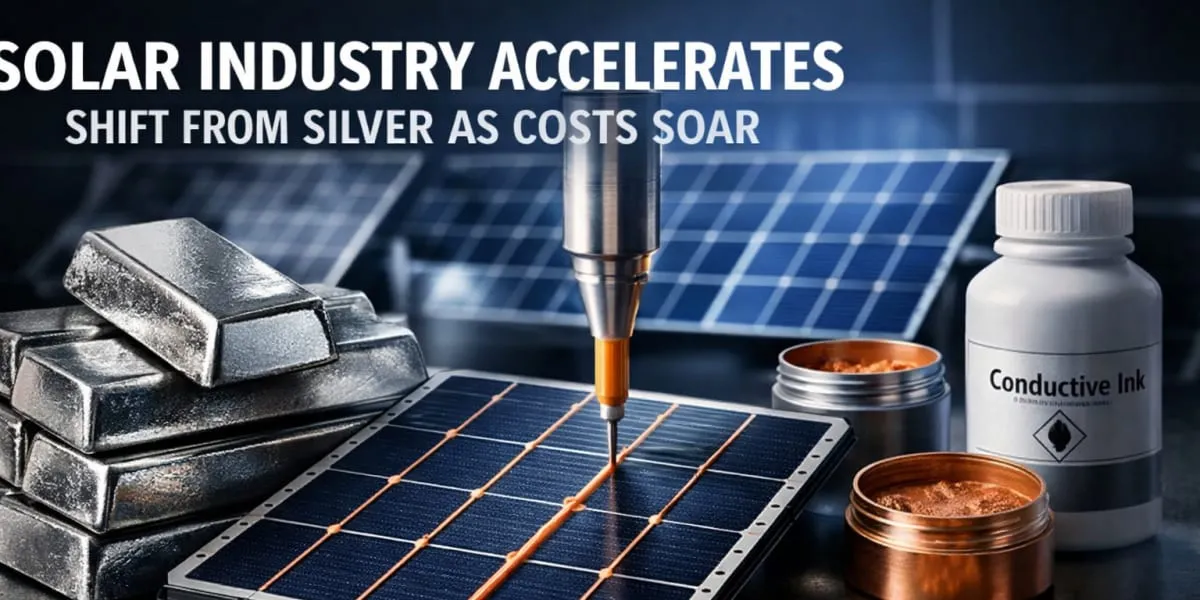
The solar industry is accelerating a shift away from silver in the metallisation of photovoltaic cells (PV) as the metal's price has risen sharply. Manufacturers are increasingly experimenting with alternative conductive materials such as copper pastes and conductive inks and are redesigning cell patterns to reduce metal usage. This move is driven by the need to preserve margins while meeting rising demand for renewable energy technologies. Industry engineers and procurement teams are reported to be prioritising lower cost input materials without compromising long term reliability.

Cell designers are adapting screen printing and plating methods to accommodate substitute metals and to limit contact resistance losses. Some assembly lines are being retrofitted to handle copper based pastes, which require different barrier layers and sealing processes. Firms are also exploring hybrid approaches that retain minimal silver use in critical junctions while substituting cheaper conductors elsewhere. Analysts say the change requires capital expenditure but promises sustained savings over the module life cycle.

The shift is affecting upstream silver suppliers and prompting investment into recycling to recover precious metal from end of life panels and manufacturing scrap. Recycling facilities are being evaluated for economic viability as recovered silver can offset costs for module makers and reduce dependence on volatile markets. Market participants note that the pace of substitution will be influenced by raw material price trajectories, availability of qualified alternatives and regulatory standards for module warranties. Policymakers may need to consider rules that ensure performance and safety while allowing material innovation.

Research laboratories and start ups are scaling trials to demonstrate long term reliability of non silver metallisation under varied environmental stresses. The industry outlook anticipates a gradual transition rather than an abrupt switch, with silver remaining in specialised applications until alternatives match durability standards. Suppliers and buyers are re negotiating contracts to reflect changing input costs and to manage supply chain risk across multiple regions. Overall the trend is likely to temper module price inflation and support wider deployment of solar capacity.

The solar industry is accelerating a shift away from silver in the metallisation of photovoltaic cells (PV) as the metal's price has risen sharply. Manufacturers are increasingly experimenting with alternative conductive materials such as copper pastes and conductive inks and are redesigning cell patterns to reduce metal usage. This move is driven by the need to preserve margins while meeting rising demand for renewable energy technologies. Industry engineers and procurement teams are reported to be prioritising lower cost input materials without compromising long term reliability. Cell designers are adapting screen printing and plating methods to accommodate substitute metals and to limit contact resistance losses. Some assembly lines are being retrofitted to handle copper based pastes, which require different barrier layers and sealing processes. Firms are also exploring hybrid approaches that retain minimal silver use in critical junctions while substituting cheaper conductors elsewhere. Analysts say the change requires capital expenditure but promises sustained savings over the module life cycle. The shift is affecting upstream silver suppliers and prompting investment into recycling to recover precious metal from end of life panels and manufacturing scrap. Recycling facilities are being evaluated for economic viability as recovered silver can offset costs for module makers and reduce dependence on volatile markets. Market participants note that the pace of substitution will be influenced by raw material price trajectories, availability of qualified alternatives and regulatory standards for module warranties. Policymakers may need to consider rules that ensure performance and safety while allowing material innovation. Research laboratories and start ups are scaling trials to demonstrate long term reliability of non silver metallisation under varied environmental stresses. The industry outlook anticipates a gradual transition rather than an abrupt switch, with silver remaining in specialised applications until alternatives match durability standards. Suppliers and buyers are re negotiating contracts to reflect changing input costs and to manage supply chain risk across multiple regions. Overall the trend is likely to temper module price inflation and support wider deployment of solar capacity.

Next Story
Infrastructure Transport

Guwahati Airport New Terminal Set To Begin Operations

The new terminal at Lokpriya Gopinath Bardoloi International Airport in Guwahati is scheduled to begin operations on February 22, state officials said. The announcement was made by the Chief Minister of Assam, who indicated that the facility will open to passengers on that date. The terminal forms part of a broader effort to upgrade aviation infrastructure in the region. The facility is expected to offer enhanced passenger amenities and streamlined movement across terminals. The integrated Terminal-2 building was inaugurated by the Prime Minister on 20 December last year and was constructed at..

Next Story
Infrastructure Urban

India–France Centre of Excellence in Aeronautics Announced for Kanpur

The Prime Minister announced the establishment of a National Centre of Excellence (NCoE) for skilling in aeronautics and defence at the National Skill Training Institute (NSTI), Kanpur, in collaboration with the Government of the French Republic under the Pradhan Mantri Skilling and Employability Transformation through Upgraded ITIs (PM-SETU) scheme of the Ministry of Skill Development and Entrepreneurship (MSDE). The announcement was made during a joint press statement with the President of France at the inauguration of the India–France Year of Innovation. The centre will focus on advanced ..

Next Story
Infrastructure Urban

Embraer And Mahindra Deepen Partnership For C-390 MRO In India

Brazilian aerospace manufacturer Embraer and Indian conglomerate Mahindra Group have agreed to deepen cooperation to develop Maintenance, Repair and Overhaul capabilities for the C-390 Millennium aircraft in India, contingent on the Indian Air Force selecting the type for its Medium Transport Aircraft programme. The initiative is intended to align with the government’s Make in India drive and to strengthen indigenous defence manufacturing capacities. The partners envisage the proposed facility supporting both military and civil operators and creating significant employment across manufacturi..

Advertisement

Subscribe to Our Newsletter

Get daily newsletters around different themes from Construction world.

STAY CONNECTED

Advertisement

Advertisement

Advertisement

Open In App