+
Tata Motors expects CNG, EV sales to grow by 20% in next 3-5 years
POWER & RENEWABLE ENERGY

Tata Motors expects CNG, EV sales to grow by 20% in next 3-5 years

Tata Motors is expecting CNG cars contribution to increase up to 20% gradually in its total sales in the next three to five years as it expects higher entry-level petrol and diesel customers to choose for these models.

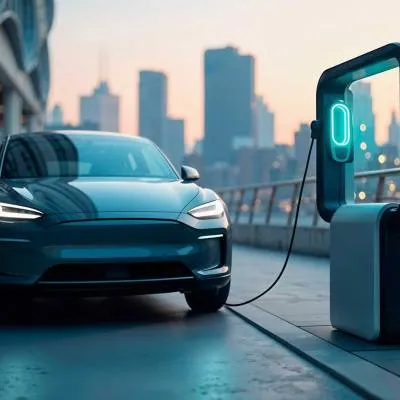
The auto major based in Mumbai is bullish on the electric vehicle (EV) segment having sales expectations of around 20% of their overall dispatches in the upcoming few years.

Tata Motors President Passenger Vehicle and Electric Vehicles Shailesh Chandra mentioned that he thinks the CNG segment is going to grow in the coming years. This will be a result of petrol, due to the ever-increasing cost of petrol as well as diesel.

The company, therefore, foresees a solid future growth for the same, given there’s a deeper penetration as well as expansion of the CNG outlets taking place across India.

Currently, the car sales (diesel) across the portfolio are at approximately 15%, and the petrol and CNG car sales are at approximately 66% and 12%, respectively.

In the upcoming three to five years, the petrol portfolio is expected to decrease by around 50%, diesel is expected to decrease by around 10%, and CNG is expected to increase by 20%. For Electric Vehicles (EV) the target set is an increase of 20%.

Tata is currently focusing on the segments of hatchbacks and compact sedans for the expansion of their CNG model range.

Image Source

Also read: Tata Motors expects growth momentum to continue in 2022

Tata Motors is expecting CNG cars contribution to increase up to 20% gradually in its total sales in the next three to five years as it expects higher entry-level petrol and diesel customers to choose for these models. The auto major based in Mumbai is bullish on the electric vehicle (EV) segment having sales expectations of around 20% of their overall dispatches in the upcoming few years. Tata Motors President Passenger Vehicle and Electric Vehicles Shailesh Chandra mentioned that he thinks the CNG segment is going to grow in the coming years. This will be a result of petrol, due to the ever-increasing cost of petrol as well as diesel. The company, therefore, foresees a solid future growth for the same, given there’s a deeper penetration as well as expansion of the CNG outlets taking place across India. Currently, the car sales (diesel) across the portfolio are at approximately 15%, and the petrol and CNG car sales are at approximately 66% and 12%, respectively. In the upcoming three to five years, the petrol portfolio is expected to decrease by around 50%, diesel is expected to decrease by around 10%, and CNG is expected to increase by 20%. For Electric Vehicles (EV) the target set is an increase of 20%. Tata is currently focusing on the segments of hatchbacks and compact sedans for the expansion of their CNG model range. Image Source Also read: Tata Motors expects growth momentum to continue in 2022

Related Stories

Gold Stories

Next Story
Infrastructure Urban

KONE Opens India's First Digital Experience Centre in Pune

KONE, a global elevator and escalator manufacturer, has inaugurated its first Digital Experience Centre (DEC) in India, located in Pune. The facility aims to showcase how artificial intelligence (AI), connectivity and data-driven technologies can enhance customer experiences and improve building operations.The centre was inaugurated by Jussi Herlin, Executive Vice Chair, KONE Corporation; Philippe Delorme, President and CEO, KONE; and Nandan Nilekani, Co-founder and Chairman of the Board, Infosys.Designed as an interactive customer environment, the facility demonstrates digital solutions cover..

Next Story
Infrastructure Urban

CII GreenCo Launches Circularity Guidelines for Indian Industry

The Confederation of Indian Industry (CII) GreenCo Council has launched the CII GreenCo Circularity Guidelines – Pilot Version at the 17th CII GreenCo Waste & Resource Management Summit 2026 in Chennai. The initiative aims to strengthen resource efficiency, waste reduction and circular economy practices across Indian manufacturing and process industries.The guidelines introduce a structured framework with circularity indices covering raw materials, consumables, packaging and other resource inputs. These indicators will help industries assess existing practices, identify opportunities to ..

Next Story
Infrastructure Energy

Global Electronics Association Launches IPC-1783-CO2E Standard

The Global Electronics Association has introduced IPC-1783-CO2E, a new international standard aimed at improving consistency, transparency and comparability in product carbon footprint reporting across the electronics manufacturing industry.The standard, titled International Standard for Data Collection and Reporting of CO2 Equivalent (CO2e) Emissions for the Electronics Manufacturing Supply Chain, provides industry-specific guidance for collecting, estimating and reporting carbon emissions data.With increasing regulatory requirements and customer expectations, electronics manufacturers face c..

Advertisement

Subscribe to Our Newsletter

Get daily newsletters around different themes from Construction world.

STAY CONNECTED

Advertisement

SPECIAL OFFER
QR Code