Tata Motors To Start Hydrogen Bus Production In Lucknow
POWER & RENEWABLE ENERGY

Tata Motors To Start Hydrogen Bus Production In Lucknow

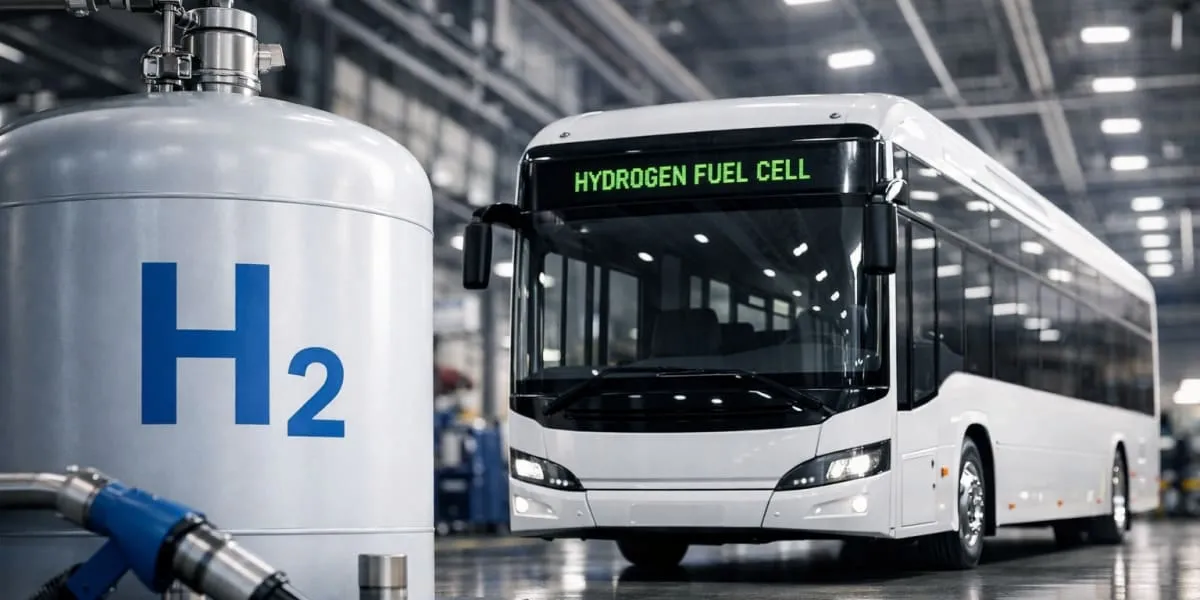
Tata Motors has announced that it will begin production of hydrogen fuel cell buses at a manufacturing facility in Lucknow as part of its strategy to expand low emission commercial vehicle offerings. The company indicated the move will focus on buses designed for urban public transport and intercity services and will leverage its existing engineering and manufacturing capabilities. The announcement positioned the new line as a response to growing demand for cleaner mobility solutions and as part of the firm's broader shift towards alternative powertrains.

The project will form part of efforts to decarbonise surface transport and to support municipal fleets seeking lower carbon options. Tata Motors described the initiative as aligned with its research into hydrogen storage and fuel cell integration and said production will be supported by adaptations of assembly lines and supplier partnerships. The company noted training programmes will be instituted for technicians and plant staff to support the new technology and manufacturing processes.

Industry reaction highlighted potential acceleration of hydrogen bus adoption in regional markets and creation of opportunities for local suppliers, while commercial scale and total investments were not specified in the announcement. The choice of Lucknow was framed as reflecting manufacturing ecosystem strengths and logistical advantages for distribution to northern and central states. Tata Motors added it will continue to evaluate market demand and regulatory incentives as it scales output.

The expansion will support development of an ecosystem of component manufacturing and service providers in the region and create employment through skilled roles in engineering and plant operations. Authorities and industry partners were described as collaborating on logistics and safety standards in order to facilitate deployment. The announcement was presented as part of a wider shift across the automotive sector towards alternative fuels and advanced powertrain technologies. Market observers will watch deployment and uptake of hydrogen buses as municipal operators consider fleet renewals and environmental targets.

Tata Motors has announced that it will begin production of hydrogen fuel cell buses at a manufacturing facility in Lucknow as part of its strategy to expand low emission commercial vehicle offerings. The company indicated the move will focus on buses designed for urban public transport and intercity services and will leverage its existing engineering and manufacturing capabilities. The announcement positioned the new line as a response to growing demand for cleaner mobility solutions and as part of the firm's broader shift towards alternative powertrains. The project will form part of efforts to decarbonise surface transport and to support municipal fleets seeking lower carbon options. Tata Motors described the initiative as aligned with its research into hydrogen storage and fuel cell integration and said production will be supported by adaptations of assembly lines and supplier partnerships. The company noted training programmes will be instituted for technicians and plant staff to support the new technology and manufacturing processes. Industry reaction highlighted potential acceleration of hydrogen bus adoption in regional markets and creation of opportunities for local suppliers, while commercial scale and total investments were not specified in the announcement. The choice of Lucknow was framed as reflecting manufacturing ecosystem strengths and logistical advantages for distribution to northern and central states. Tata Motors added it will continue to evaluate market demand and regulatory incentives as it scales output. The expansion will support development of an ecosystem of component manufacturing and service providers in the region and create employment through skilled roles in engineering and plant operations. Authorities and industry partners were described as collaborating on logistics and safety standards in order to facilitate deployment. The announcement was presented as part of a wider shift across the automotive sector towards alternative fuels and advanced powertrain technologies. Market observers will watch deployment and uptake of hydrogen buses as municipal operators consider fleet renewals and environmental targets.

Next Story
Equipment

MYCRANE Crosses 1,000 Customers in India

MYCRANE, the global platform for crane rental and purchase, has achieved major commercial milestones in India, reinforcing the country’s position as one of its fastest-growing strategic markets. The company has surpassed 1,000 registered customers and 1,000 crane suppliers nationwide, while completing more than 100 paid orders.The growth reflects rising adoption of digital procurement solutions across India’s construction, infrastructure, energy and industrial sectors. Equipment sourced through the platform is supporting projects across the country, with several leading contractors and EPC..

Next Story
Infrastructure Urban

AMTOE 2026 Opens Global Machine Tool Sourcing Hub

The Asian Machine Tool Online Exhibition 2026 (AMTOE 2026) has officially opened as a B2B sourcing platform connecting global buyers with verified Asian suppliers across the machine tool and manufacturing sector. The exhibition will run until 31 October 2026 through a hybrid online and offline model, offering extended sourcing and business networking opportunities.Co-organised by AsianNet and TradeAsia, the event aims to strengthen links between Asian manufacturers and international importers while improving cross-border procurement efficiency and supplier matching.Since launching in 2022, AMT..

Next Story
Infrastructure Energy

Vedanta Lifts Renewable Energy Use by Over 50%

On World Earth Day, Vedanta Limited announced that its renewable energy usage rose by over 50 per cent year on year to 3.97 billion units in FY26, helping avoid 3 million tonnes of carbon dioxide emissions.The company said its portfolio of metals, minerals, power, and oil & gas continues to support advanced manufacturing, electrification, energy transition and clean technology. Aluminium, copper and silver remain critical for applications such as mobility, power transmission, renewable infrastructure and solar photovoltaics, while iron, steel and zinc continue to support energy infrastruct..

Advertisement

Subscribe to Our Newsletter

Get daily newsletters around different themes from Construction world.

STAY CONNECTED

Advertisement

Advertisement

Advertisement