+
US And China Challenge Modi's Make In India Factory Incentives
POWER & RENEWABLE ENERGY

US And China Challenge Modi's Make In India Factory Incentives

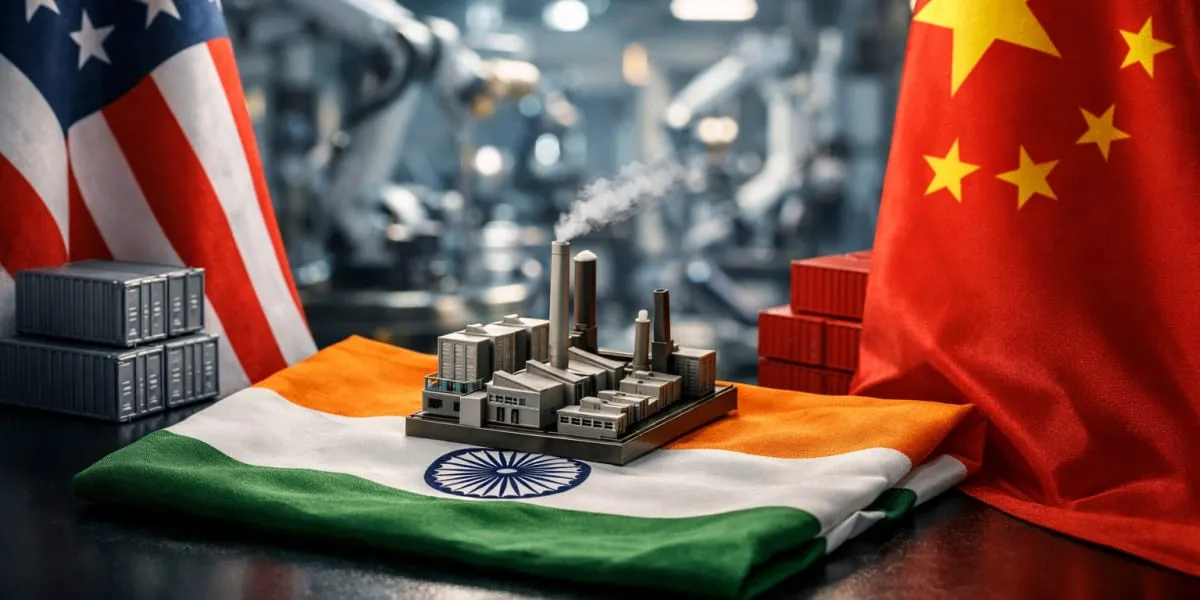
The United States and China have challenged incentives offered under Prime Minister Modi's Make In India factory programmes, raising concerns about the impact on fair competition and global trade norms. The challenges were reported by officials and trade analysts who said the measures favour domestic producers and may distort markets. The development has added a new layer of diplomatic and commercial tension for New Delhi.

New Delhi has defended the incentives as essential for industrialisation and job creation, emphasising the need to attract manufacturing investment to support economic growth. Government spokespeople pointed to the objective of building local supply chains and reducing reliance on imports. They also signalled willingness to engage with international partners to address concerns while preserving policy space for development.

Trade lawyers said the disputes could move to formal adjudication if bilateral talks do not yield compromise, raising the possibility of rulings that may require adjustments to incentive schemes. Investors and manufacturers are reported to be watching closely for regulatory certainty, as sudden policy shifts would affect project timelines and cost structures. Some industry groups are understood to favour clearer guidelines and time bound measures to reduce uncertainty. Observers noted that the outcome could influence how other countries design industrial policies.

Analysts said a negotiated solution would be preferable to protracted disputes, stressing the importance of dialogue between capitals and multilateral engagement. New Delhi faces the task of balancing domestic development goals with commitments to international trade rules. The debate over incentives intersects with broader discussions on supply chain resilience and strategic autonomy. Policymakers in India and abroad are expected to continue discussions as they seek pragmatic pathways that support industrialisation while addressing legitimate trade concerns.

The United States and China have challenged incentives offered under Prime Minister Modi's Make In India factory programmes, raising concerns about the impact on fair competition and global trade norms. The challenges were reported by officials and trade analysts who said the measures favour domestic producers and may distort markets. The development has added a new layer of diplomatic and commercial tension for New Delhi. New Delhi has defended the incentives as essential for industrialisation and job creation, emphasising the need to attract manufacturing investment to support economic growth. Government spokespeople pointed to the objective of building local supply chains and reducing reliance on imports. They also signalled willingness to engage with international partners to address concerns while preserving policy space for development. Trade lawyers said the disputes could move to formal adjudication if bilateral talks do not yield compromise, raising the possibility of rulings that may require adjustments to incentive schemes. Investors and manufacturers are reported to be watching closely for regulatory certainty, as sudden policy shifts would affect project timelines and cost structures. Some industry groups are understood to favour clearer guidelines and time bound measures to reduce uncertainty. Observers noted that the outcome could influence how other countries design industrial policies. Analysts said a negotiated solution would be preferable to protracted disputes, stressing the importance of dialogue between capitals and multilateral engagement. New Delhi faces the task of balancing domestic development goals with commitments to international trade rules. The debate over incentives intersects with broader discussions on supply chain resilience and strategic autonomy. Policymakers in India and abroad are expected to continue discussions as they seek pragmatic pathways that support industrialisation while addressing legitimate trade concerns.

Next Story
Real Estate

Perceptive Ideas Designs Structure for Vanijya Bhawan

Perceptive Ideas Consulting Engineers has recently contributed to the structural design of Vanijya Bhawan, a major government office complex located at 16A Akbar Road on the C-Hexagon in New Delhi. The facility serves as the official office of the Ministry of Commerce, Government of India, and represents a blend of modern engineering design with architectural elements reflecting national heritage.The complex houses offices of the Minister of Commerce and Industry, the Secretary’s office and accommodates approximately 1,800–2,000 officers. The project highlights the firm’s capabilities in..

Next Story
Resources

Deepak Halder Appointed CEO Of Sarvottam India

Sarvottam India has appointed Deepak Halder as its Chief Executive Officer. With over 23 years of professional experience, including nearly two decades in the real estate sector, Halder brings extensive leadership and strategic expertise to the organisation. Halder began his career in real estate in 2007 and has held senior leadership roles with developers such as Bestech Group, Paras Buildtech, Hero Realty, ATS Infrastructure and Rajdarbar Group. During his career, he has been involved in strategic expansion, brand positioning, major project launches and revenue growth across residential and..

Next Story
Real Estate

India Drives APAC Office Leasing Growth in 2025: Colliers

Office demand across Asia Pacific’s 11 major markets reached 9.8 million sq m (105.5 million sq ft) in 2025, marking an 11 per cent year-on-year increase, according to Colliers’ Asia Pacific Office Market Insights February 2026 report. India, Mainland China and Japan accounted for over 90 per cent of the region’s total demand during the year, with India emerging as the dominant leasing market.India alone contributed nearly 68 per cent of total office leasing across the region and accounted for 55 per cent of new office supply among the top 11 APAC markets in 2025. The report highlights t..

Advertisement

Subscribe to Our Newsletter

Get daily newsletters around different themes from Construction world.

STAY CONNECTED

Advertisement

Advertisement

Advertisement

Open In App