West Bengal Links 69 Per Cent Of Budget To SDGs
POWER & RENEWABLE ENERGY

West Bengal Links 69 Per Cent Of Budget To SDGs

West Bengal has linked nearly Rs 3.01 trillion (tn) to the United Nations sustainable development goals, equal to about 69 per cent of a state budget of Rs 4.38 tn. The budget document presents the exercise as the state's first effort to align fiscal commitments with the UN 2030 Agenda and to embed the goals into governance. Environmental sustainability is highlighted with emphasis on the Sundarbans and ecosystem restoration.

Highest allocation is linked to SDG 10 on reducing inequalities, at about Rs 530 billion (bn). Other major allocations address poverty, economic growth and education, at about Rs 314.08 bn, Rs 285.49 bn and Rs 283.5 bn respectively. A finance department official said the SDG budget work began under the previous administration and was completed with support from the new finance minister.

Budget documents indicate a shift in Sundarbans policy towards waterways and pontoon based jetties rather than bridge led connectivity, with an allocation of Rs 1 bn for related infrastructure. Promotion of solar operated boats is planned and initial work on the Gangasagar bridge has been cleared. Two delta projects are listed for multilateral funding at estimated costs of Rs 13.53 bn and Rs 41 bn.

Climate finance proposals include a West Bengal Climate Resilient Fund and a West Bengal Climate Finance Facility, with a proposed Rs 2 bn allocation to mobilise finance and support projects. The budget links carbon credit mechanisms to potential revenue for the State Action Plan on Climate Change. Analysts welcomed the climate focus while urging robust governance for delivery.

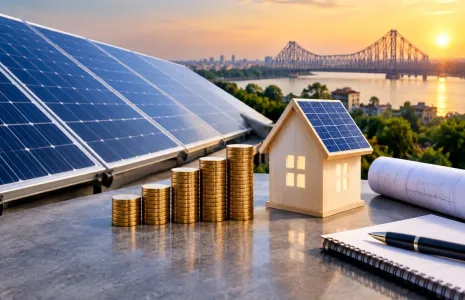
Energy plans aim to meet demand, currently 13 gigawatts (GW) and projected to reach 16 GW in two years and 27 GW by 2035, through new thermal capacity and a floating solar project at Bakreshwar Dam estimated at Rs 20 bn. The plan targets 200,000 rooftop solar installations and notes gaps in environment allocations.

West Bengal has linked nearly Rs 3.01 trillion (tn) to the United Nations sustainable development goals, equal to about 69 per cent of a state budget of Rs 4.38 tn. The budget document presents the exercise as the state's first effort to align fiscal commitments with the UN 2030 Agenda and to embed the goals into governance. Environmental sustainability is highlighted with emphasis on the Sundarbans and ecosystem restoration. Highest allocation is linked to SDG 10 on reducing inequalities, at about Rs 530 billion (bn). Other major allocations address poverty, economic growth and education, at about Rs 314.08 bn, Rs 285.49 bn and Rs 283.5 bn respectively. A finance department official said the SDG budget work began under the previous administration and was completed with support from the new finance minister. Budget documents indicate a shift in Sundarbans policy towards waterways and pontoon based jetties rather than bridge led connectivity, with an allocation of Rs 1 bn for related infrastructure. Promotion of solar operated boats is planned and initial work on the Gangasagar bridge has been cleared. Two delta projects are listed for multilateral funding at estimated costs of Rs 13.53 bn and Rs 41 bn. Climate finance proposals include a West Bengal Climate Resilient Fund and a West Bengal Climate Finance Facility, with a proposed Rs 2 bn allocation to mobilise finance and support projects. The budget links carbon credit mechanisms to potential revenue for the State Action Plan on Climate Change. Analysts welcomed the climate focus while urging robust governance for delivery. Energy plans aim to meet demand, currently 13 gigawatts (GW) and projected to reach 16 GW in two years and 27 GW by 2035, through new thermal capacity and a floating solar project at Bakreshwar Dam estimated at Rs 20 bn. The plan targets 200,000 rooftop solar installations and notes gaps in environment allocations.

Related Stories

Gold Stories

Next Story
Resources

Schindler named among Forbes’ World’s Best Employers 2026

Schindler has been named among Forbes’ World’s Best Employers 2026, a global ranking recognising companies for their workplace environments.Compiled by Forbes in partnership with Statista, the ranking is based on independent employee feedback, including whether employees would recommend their organisation to friends and family.The company said the recognition reflected its focus on creating a workplace where employees can develop their expertise and build careers. ..

Next Story
Infrastructure Urban

India needs an export-execution mindset: Vishesh Jain

Interview with Vishesh Jain, Founder & CEO, EximpleWhat gaps in India’s global trade ecosystem led you to build Eximple, and what problem did you see businesses struggling with most?Eximple came out of a problem that all three founders had seen from different choke points in the trade ecosystem. India has millions of MSMEs and manufacturers, and many of them can make products that are genuinely competitive on quality. Yet only a small fraction is able to build meaningful international businesses. In our experience, the gap is usually not manufacturing capability; it is the ability to exe..

Next Story
Building Material

Nuvoco reports 13.5% revenue growth in Q2 FY27

Nuvoco Vistas Corp. Ltd. reported consolidated revenue of Rs 27.9 billion for Q2 FY27, up 13.5% year on year. Cement sales volume rose 9% to 4.7 million tonnes (MMT), while EBITDA increased 11% to Rs 4.11 billion.The company said it began its cement operations in 2014 with a 2.3 MMT per annum (MMTPA) operation at Nimbol. It now aims to reach 35 MMTPA of cement capacity by FY28, nearly 15 times its initial capacity. Its portfolio spans cement, ready-mix concrete and modern building materials.On sustainability and cost efficiency, Nuvoco partnered with CleanMax for a 46.4 MW wind-solar hybrid re..

Advertisement

Subscribe to Our Newsletter

Get daily newsletters around different themes from Construction world.

STAY CONNECTED

Advertisement

SPECIAL OFFER
QR Code