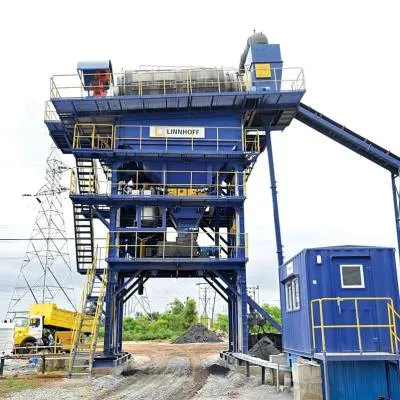
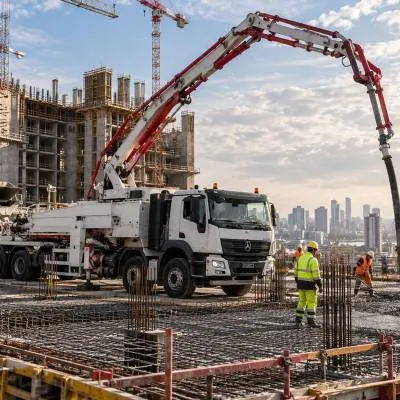
The year 2021 is expected to end with sales of 82,000 units of construction equipment, 11 per cent higher than the previous year, according to Off-Highway Research. This would boost sales past the pre-COVID level of 83,470 units.Multiple factors favour the long-term growth of the market, but with the caveat that India would have overcome the pandemic by the beginning of 2022, explains Samir Bansal, General Manager, Off-Highway Research.In 2022, Off-Highway Research expects construction equipment sales to grow 15 per cent to touch 94,100 units, still lower than the last decadal high of 98,386 units in 2018. That peak is forecast to be crossed in 2023, when 11 per cent growth will take the overall tally to 104,650 units. “Sales are predicted to fall 8 per cent to 96,650 units in 2024, an outcome of the general election, an event that usually tends to disrupt economic activity,” he adds. Sales should bounce back in 2025, when 11 per cent growth may push the volume to 107,450 units.So, what types of equipment will witness growth?Growth driversToday, nine in 10 units sold are from a leader pack made up of backhoe loaders, crawler excavators, mobile cranes, compaction equipment and wheeled loaders. “By 2025, we see no change in this leader pack; however, the share of individual constituents will change,” shares Bansal. “For instance, sales of crawler excavators are expected to grow 95 per cent from 16,382 units in 2020 to 32,000 units in 2025 while backhoe loaders will grow 18 per cent from 38,030 units to 45,000 units in the same period.”Sales will be boosted by the Government’s ambitious target of making India a $ 5 trillion economy by March 2025 and the National Infrastructure Pipeline (NIP) that will call for Rs 111 trillion in investment through to 2025, majorly in energy (24 per cent), roads (18 per cent), urban development (17 per cent) and railways (12 per cent), opines Bansal.Preferred featuresGiven the pace of infrastructure development and the challenges posed by innovative building designs, the proper selection of equipment is crucial, avers Chaitanya Bhagde, Manager, P&M, Shapoorji Pallonji. “However, the challenge in equipment selection is that every project has different needs and a machine that suits one project may not suit another. Job-specific analysis can help understand the job details, intricacies and challenges in advance, and determine the suitability of the machine for the job.”Having said that, what features are generally preferred?“We look for equipment made of good-quality material to resist harsh conditions and save on maintenance and repair costs, responds BM Thakur, General Manager, Projects, New Modern Buildwell. “Good-quality products give the best output, especially in varied weather conditions and land or soil conditions,” agrees Bhagde. “Evaluate the external body structure and integral parts like the engine, oils used for lubrication, the cooling process and stability.” “Equipment that features the latest technologies helps enhance overall performance,” continues Thakur. “Equipment must also be cost-effective for the maximum output and fuel efficiency. We also look for versatile machines.”Using new technology helps complete projects before time with minimal manpower and lower working costs, opines Md Arif, Senior Manager (P&M), MKC Infrastructure. “Wherever possible, we buy automated machines to help reduce spending on manpower, save time and maintain a standard quality.”Advanced technology helps machines deliver the best performance and eventually impacts the overall performance and business, adds Bhagde. “Technology-loaded machines help to work faster, more efficiently and with less human interference.”“We prioritise maximum safety and lower fuel consumption,” says Pramod B Joshi, Additional General Manager (P&M Head, All India), Ahluwalia Contracts India. “Equipment features sought for safety include limit switches.”Safety features for the operator, the end-user and the environment are the most important parameter in equipment selection, according to Bhagde. “A construction site can be the best place to work if everything is secure. Safety features include an upgraded low pollution engine, extra guards, overload controls, height lifting controls, speed controls, higher visibility, anti-collision devices in cranes and the colour coding of machines.”Additionally, equipment must be easily installable and dismantable, and help the timely completion of projects without compromising on the structural design, strength and integrity, he continues. Feature wishlistToday, dynamic situations develop at construction sites and timelines have been squeezed. Business information modelling systems provide stakeholders a closer look at the project workflow and help streamline project planning and coordination, observes Bhagde. “All this makes development in mechanisation and better technology in construction a necessity.”What better technology does the industry need?“More R&D in heavy machine automation is essential so that these machines also acquire automation as a standard feature,” says Arif. “We hope manufacturers come out with equipment that costs relatively less and is easy to service and operate so that it can be used even by unskilled workers,” says Thakur. “More versatile equipment is also desirable. Equipment should be easy to move to a location.”India lacks construction equipment running on alternative fuel to diesel fuel, perhaps gas or electricity, observes Joshi. “Such equipment would be preferred to cut costs and pollution. We also need smaller mobile asphalt plants and RMC plants, which can be easily shifted from project to project.” Fuel conservation is a widespread concern and, so, machines using alternative fuels like green fuel without compromising on efficiency are desirable, according to Bhagde. “Electric or battery-operated small tools are available but such advancement in heavy machines is still in development and testing.”“Location, movement and fuel consumption data helps analyse the productivity and efficiency of a machine to ensure its optimum use, reduce downtime, keep the machine safe and justify the investment,” he adds. “Some machines offer this, but not all. Further, self-driven or remotely operated equipment would help work and reduce the risk of working in confined, poorly illuminated and ventilated places. Flexible solutions from equipment manufacturers are desirable whereby machines accustom to the requirement of each structure and its elevation and design, rather than just a standard profile.”Last but not the least, Bhagde points out that there is no end to the safety features that can be introduced. “Manufacturers must think out of the box while designing machines considering every worst-case scenario or extreme levels that could be logged.”A tall order indeed!Hire or buy?Construction companies buy some heavy equipment and rent some. As Pramod B Joshi, Additional General Manager (P&M Head, All India), Ahluwalia Contracts India, explains, “We replenish our equipment bank annually, buying tower cranes (seven to 10), passenger hoists (six to seven), batching plants (four to five), concrete pumps (eight to 10) and backhoe loaders (eight to 10) for our building projects, and pavers for asphalt and concrete (two to three), motor graders (four to five), hot mix plant (two to three), excavators (five to six), air compressors and diesel generator sets for road projects. Beyond that, we hire equipment as needed, especially excavators. Our decision to buy or hire depends on the project location and duration. If the location is far from our equipment depot and the project duration is relatively short, say up to about eight to nine months, we tend to hire equipment.”The general trend is to buy new machines as opposed to renting, opines Md Arif, Senior Manager (P&M), MKC Infrastructure. “Owned machines can be put to multiple uses. Owning also works out to be less expensive in the long run. Owned machines symbolise a company’s strength and growth, and help bag new projects.”At MKC Infrastructure, the annual procurement list extends to more than 100 different types of equipment, typically, one to two units of hot-mix plants, paver-laying machines, batching plants, wet-mix macadam plants, asphalt plants, slipform pavers, heavy excavators, loaders, backhoe loaders, tippers and transmit mixers, from reputed brands such as Volvo, Hyundai, Komatsu, etc.For better equipment outcomesNotwithstanding the contribution of features to equipment performance, Chaitanya Bhagde, Manager, P&M, Shapoorji Pallonji, suggests two more best practices:Ensure timely after-sales service: Heavy-lifting machines are large in size and reflect refined technology but are expensive. After-sales service tends to be a challenge with high-tech machines. Highly skilled engineers are in demand and expensive to hire. Also, spares, especially critical components, must be imported so repairs take longer. Before procurement, conduct surveys and vendor audits to understand whether the vendor qualifies your criteria. Choose dealers with a setup in your vicinity.Engage skilled operators: Heavy machinery when handled carefully can deliver optimal performance; else, it can become a hazard. Engage skilled operators who comply with legal requirements such as a license to operate, medical fitness, etc.