The state of opportunities
Real Estate

The state of opportunities

The year gone by showed resilience and helped bring back some of the mojo that had faced the onslaught of the demonetisation and GST interventions. Large projects were cleared and several initiatives like RERA and PMAY helped new projects accelerate.  Samsung India inaugurated its ...

The year gone by showed resilience and helped bring back some of the mojo that had faced the onslaught of the demonetisation and GST interventions. Large projects were cleared and several initiatives like RERA and PMAY helped new projects accelerate.  Samsung India inaugurated its Rs 50-billion factory of mobile phones, the world’s largest, completed in 24 months from the date of announcement. This consumer goods project was one of Make in India’s successes. In aviation, the much delayed Pakyong-Sikkim airport was completed, which was developed at a cost of Rs 6 billion with a cost overrun of Rs 4.5 billion and a time overrun of 81 months. Further, there was a sudden spike in completion of irrigation projects, especially in Madhya Pradesh and Uttar Pradesh. And Chhattisgarh, Punjab, Tamil Nadu and Madhya Pradesh saw the largest completion of road projects in recent times. Projects worth Rs 4.4 trillion are scheduled to be completed in the quarter ended December 2018, and another Rs 2.6 trillion worth are scheduled for completion in the quarter ending March 2019. The accelerated pace of implementation seen in recent quarters could yield a higher completion rate in the second half of the year. This could take the total commissioning of projects to over Rs 5 trillion in the year, compared to Rs 4.9 trillion in the previous year, according to CMIE. In fact, from April to September 2018, NHAI constructed, widened and strengthened 1,363 km of National Highways to four, six or eight lanes, which was 11.84 per cent lower than the target of 1,546 km for the period. But it recorded a growth of 22.79 per cent over the 1,110 km achieved from April to September 2017.  Considering the above, the pace of project execution is likely to remain hectic until the clouds of elections gather on the horizon by March 2019. The Union Budget to be declared on February 1, 2019, will be the last opportunity for the current Finance Minister to woo the voters with populist measures.  My column last month indicated the need for technology and project management in accelerating the pace of project execution, but our research on delayed projects this month shows that our record remains abysmal. Our Cover Story indicates that the average time overrun in 296 delayed projects (costing over Rs 1.5 billion) is over 48 months with a cost overrun of over 20 per cent! Huge resources are being lost owing to polity, bureaucracy and faulty planning. Given that we now need to prune our development schemes as we are stretching the fiscal deficit limits, there needs to be a tough law against cost and time overruns. States are going to lead the growth from the front in times to come. Hitherto, Maharashtra and Gujarat have shown a strong ability to grow their economies.  But Tamil Nadu has trumped them all. Its top ranking among big states has been recognised by India Today and this state has the second highest GSDP with a CAGR of 9 per cent over the past decade. Similarly, Haryana and Kerala have improved as per numbers too. These states are now driven by the development agenda and will offer the best opportunities for growth in time to come. So come 2019, while we have our focus on the power swing at the Centre, the states are where the new sunrise of business opportunities will be.

Next Story
Infrastructure Urban

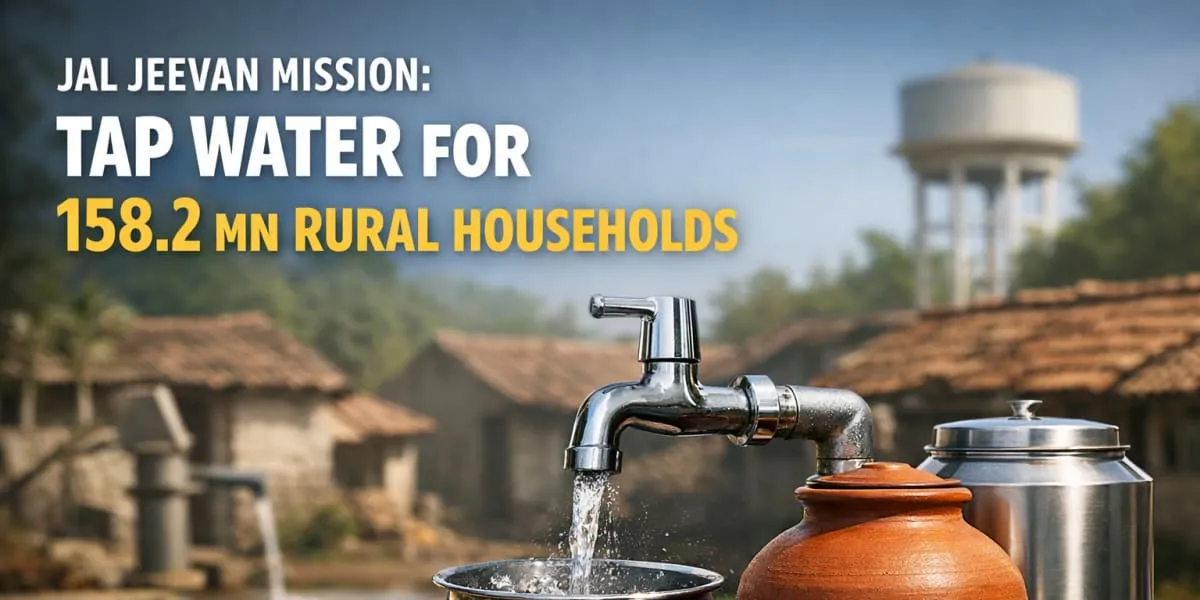
Jal Jeevan Mission Reports Tap Water For 158.2 mn Rural Households

Since August 2019 the Government of India, in partnership with states, has been implementing the Jal Jeevan Mission (JJM) to enable every rural household to have assured potable water through tap connections. The mission is overseen by the Ministry of Jal Shakti and seeks regular long term supply of prescribed quality water. At the launch only 3.23 Crore, equivalent to 32.3 million (mn), or 16.7 per cent, of rural households had tap connections. As reported by states and union territories on three March 2026 an additional 12.58 Crore, or 125.8 mn households, have been provided connections brin..
Next Story
Infrastructure Urban

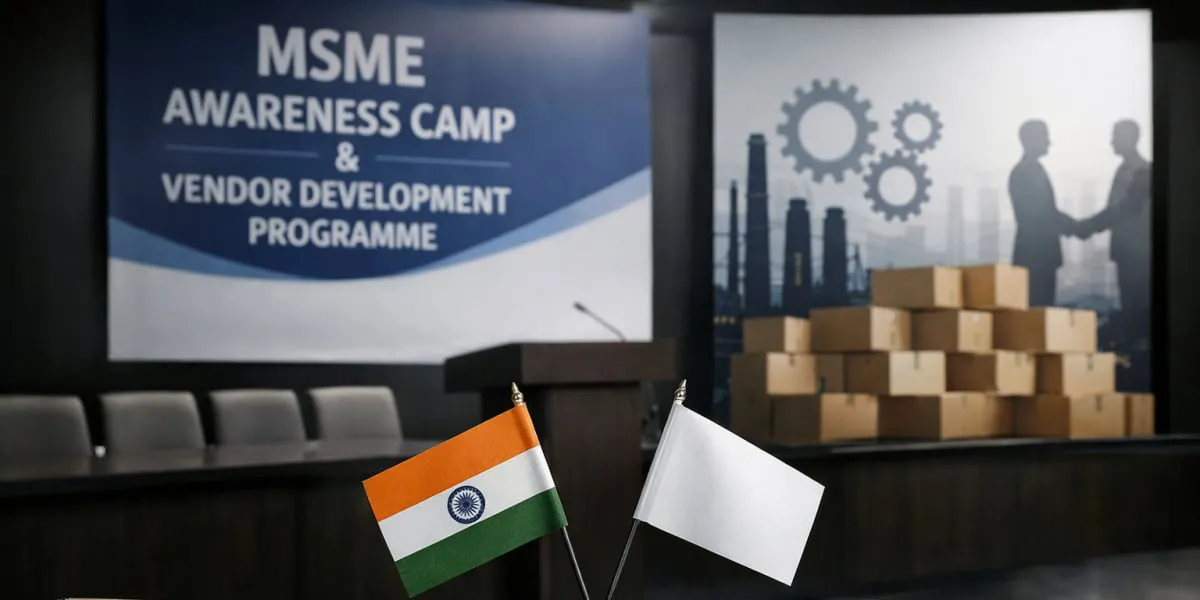
MSME Ministry Holds Awareness Camp And Vendor Programme In Dimapur

The Ministry of Micro, Small and Medium Enterprises (MSME Ministry) organised an Entrepreneur Awareness Camp and a Special Vendor Development Programme in Seden Riju, Purana Bazar, Dimapur, Nagaland on 30 March 2026. The programme aimed to create awareness of central initiatives including the National SC-ST Hub (NSSH) scheme and to bridge the gap between demand from central public sector enterprises (CPSEs) and the supply capabilities of SC/ST enterprises. It focused on quality standards, supply chain integration and offered Udyam registration to participants. The programme sought to improve m..

Next Story
Infrastructure Urban

ESDP Aids Over One Point Eight Million Participants In Five Years

The Entrepreneurship and Skill Development Programme reached 39,280 programmes and benefited 1,825,181 participants across India during the period from FY 2021-22 to 2025-26, as on 23 March 2026. The scheme aims to motivate young people from different sections of society, including Scheduled Castes, Scheduled Tribes and women, to consider self employment or entrepreneurship as a career option. Activities under the programme focus on basic enterprise skills, handholding for start ups and capacity building of existing micro, small and medium enterprises. Financial allocations and expenditures ar..

Advertisement

Subscribe to Our Newsletter

Get daily newsletters around different themes from Construction world.

STAY CONNECTED

Advertisement

Advertisement

Advertisement